

What Is a Muscle Strain?
A muscle strain is an injury to a muscle or tendon — the connective tissue that attaches muscle to bone. When muscle fibers or tendons are stretched beyond their normal range or partially torn, a strain occurs. This most commonly happens when a muscle is forcefully contracted or overloaded.
Common examples include hamstring strains in sprinters, calf strains in tennis players, and lower back strains from heavy lifting.
What Is a Ligament Sprain?
A sprain is an injury to a ligament — the fibrous tissue that connects bone to bone at a joint. Sprains happen when a joint is twisted or bent past its normal range of motion, overstretching or tearing the ligament that stabilizes it.
The ankle is the most commonly sprained joint, followed by the knee and wrist.
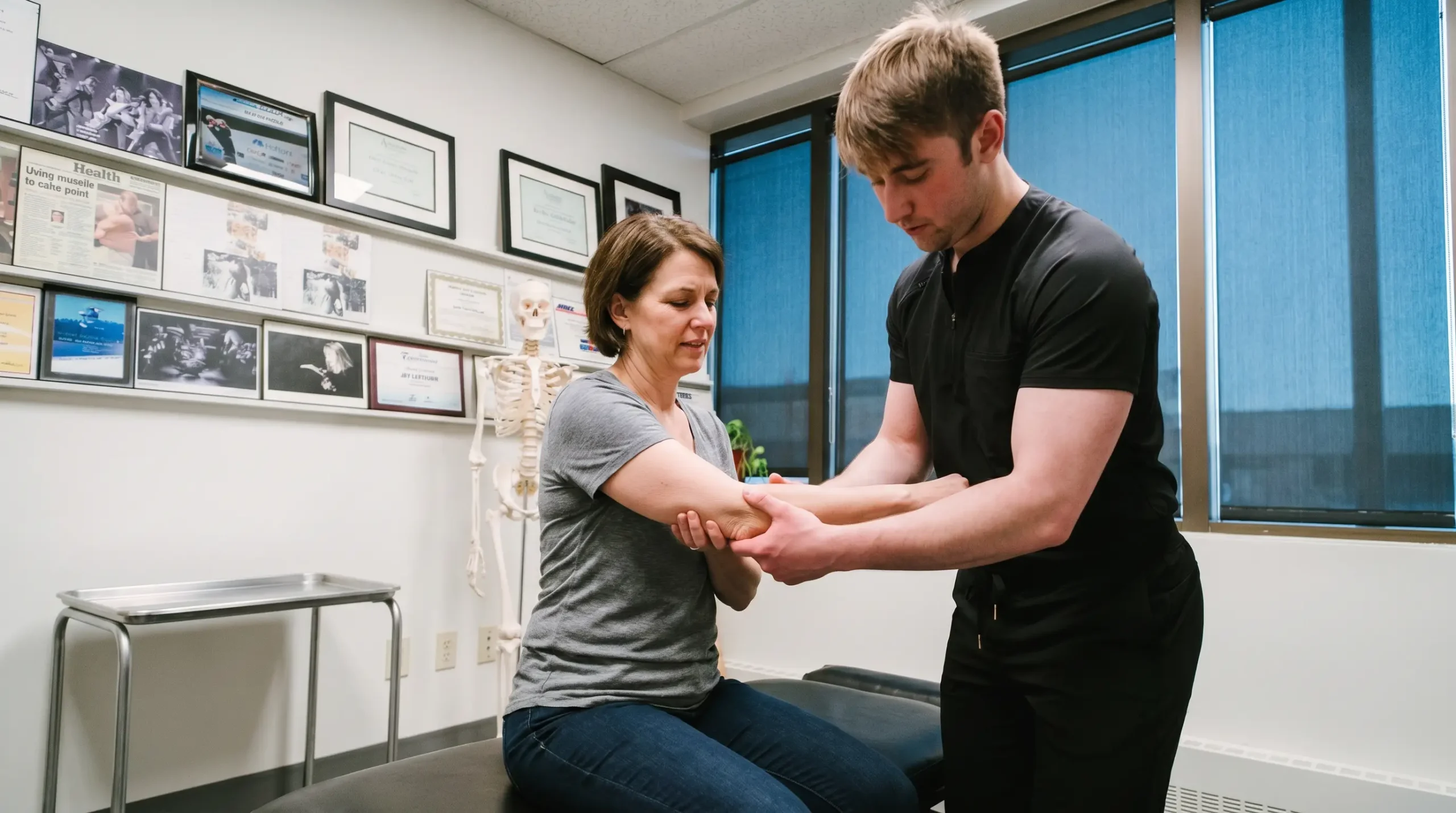
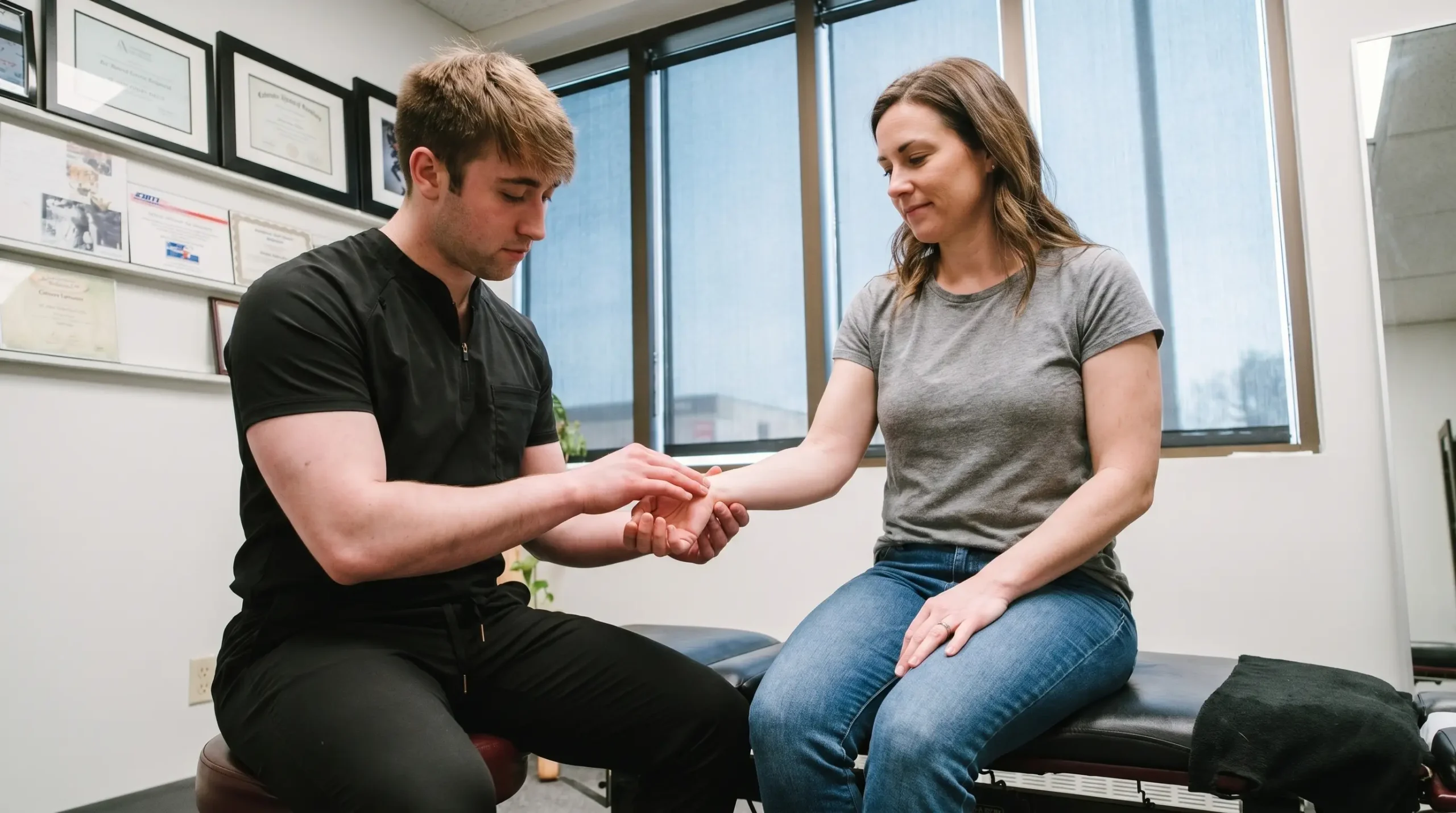
Both strains and sprains are classified into three grades of severity. Understanding which grade you're dealing with guides treatment decisions and sets realistic recovery expectations.
Grade 1 — Mild
Only a small number of muscle or ligament fibers are stretched or microtorn. The injury is painful and tender but overall structure and function are preserved. Swelling is minimal and most people can continue light activity with modification.
Grade 2 — Moderate
A partial tear of muscle or ligament tissue. This results in moderate-to-significant pain, noticeable swelling, bruising, and a meaningful reduction in strength or joint stability. Grade 2 injuries require more structured treatment and benefit strongly from professional care.
Grade 3 — Severe
A complete rupture of the muscle, tendon, or ligament. These injuries involve severe pain, major swelling and bruising, and a significant loss of function. In some cases, surgical repair is required for a full recovery.
While strains and sprains share some overlap, certain symptoms can help you distinguish between them.
Signs of a Muscle Strain
- Sharp or aching pain localized to the muscle
- Muscle weakness in the affected area
- Muscle spasms or cramping
- Stiffness that worsens after rest and improves briefly with movement
- Limited range of motion in the muscle belly
- Swelling and tenderness, typically less pronounced than with sprains
Signs of a Ligament Sprain
- Immediate pain at or around the joint
- Rapid swelling at the joint site
- Bruising appearing hours to days after the injury
- A feeling of looseness, wobbling, or instability in the joint
- Difficulty bearing weight or using the joint normally
- In severe cases, an audible pop at the moment of injury
Muscle Strain Recovery Times
Grade 1 Strain (Mild) — 2 to 4 Weeks
Most people can resume light activities within a few days with rest and ice. Full tissue healing typically occurs within 3–4 weeks, though some residual tightness may linger.
Grade 2 Strain (Moderate) — 4 to 8 Weeks
An initial rest period of 5–7 days is recommended before rehabilitation begins. Return to activity starts around weeks 2–3, with full recovery taking 6–8 weeks. Professional therapy significantly improves outcomes at this grade.
Grade 3 Strain (Severe) — 3 to 6 Months or Longer
Complete tears may require surgical repair, followed by immobilization and an extended rehabilitation program. Without proper rehab, long-term muscle weakness is likely.
Ligament Sprain Recovery Times
Grade 1 Sprain (Mild) — 2 to 4 Weeks
Rest and ice control swelling quickly. Functional recovery occurs within 2–3 weeks, with full strength and proprioception restored by week 4.
Grade 2 Sprain (Moderate) — 4 to 12 Weeks
A short immobilization period is followed by structured rehabilitation. Return to normal activity takes 6–8 weeks; full functional recovery including joint stability may take up to 12 weeks.
Grade 3 Sprain (Severe) — 3 to 6 Months or Longer
Severe sprains often require surgical stabilization and extended rehabilitation. Without proper treatment, chronic joint instability is a real and lasting risk.
Regardless of whether you've strained a muscle or sprained a ligament, the same first aid principles apply during the first 48–72 hours.
Rest — Stop the aggravating activity immediately. Continuing to use the injured tissue delays healing and risks turning a mild injury into a moderate one.
Ice — Apply ice wrapped in a cloth for 15–20 minutes every 2–3 hours. Ice reduces swelling and numbs acute pain. Never apply ice directly to bare skin.
Compression — Wrap the injured area with an elastic bandage to help control swelling. Wrap it snugly — you should be able to slide a finger underneath — but not so tight that circulation is restricted.
Elevation — Keep the injured area raised above heart level wherever possible, especially during the first 24–48 hours. This helps fluid drain away from the injury site and reduces swelling.
Proper rehabilitation is what separates a full recovery from a partial one.
Weeks 1–2 — Acute Management
Pain and swelling control remain the priority. The R.I.C.E. protocol is primary, with very gentle pain-free range-of-motion exercises introduced toward the end of this phase if tolerated.
Weeks 2–4 — Early Rehabilitation
As swelling settles, active rehabilitation begins. This includes gentle stretching to restore flexibility, isometric exercises to begin rebuilding strength, and heat therapy to improve tissue extensibility and blood flow.
Weeks 4–8 — Progressive Strengthening
The focus shifts to rebuilding functional strength and joint stability through progressive resistance exercises, proprioception training (balance and coordination work), and gradually increasing activity demands.
Week 8 and Beyond — Return to Function
Advanced conditioning, activity-specific training, and a carefully managed return to full sport or work — with ongoing attention to maintaining strength and mobility to prevent re-injury.
Beyond basic first aid, several specialized therapies can significantly accelerate healing and improve long-term outcomes.
Cold Laser Therapy
Uses targeted wavelengths of light to stimulate cellular repair, reduce inflammation, and accelerate tissue regeneration. Non-invasive and effective when started early in recovery.
Shockwave Therapy
Delivers acoustic waves to stimulate the body's natural healing mechanisms. Particularly useful for chronic strains or sprains that haven't responded adequately to conventional treatment.
Chiropractic Care
Restores proper joint alignment and movement mechanics — especially important when injury has created compensatory patterns in surrounding areas.
Massage Therapy
Improves circulation, reduces muscle guarding, and supports tissue recovery during rehabilitation.
Fascial Stretch Therapy (FST)
Restores flexibility and mobility across the entire fascial system — critical for achieving full, pain-free movement after a soft tissue injury.
The Graston Technique
Instrument-assisted soft tissue mobilization that breaks up scar tissue and adhesions formed during the healing process, restoring mobility and reducing long-term stiffness.
Many mild strains and sprains can be managed conservatively at home, but professional evaluation is important if you experience any of the following:
- Severe pain that doesn't settle with rest and ice
- Significant swelling that persists or worsens after 48 hours
- Inability to bear weight or use the injured area after 48 hours
- A visible deformity or obvious misalignment
- Numbness or tingling in or around the injury
- A pop or tearing sensation at the moment of injury
- Any previous injury to the same area that hasn't fully resolved
The best recovery is the one you never have to go through again. These habits significantly reduce your re-injury risk.
Prevention Strategies
- Warm up properly before every training session or physical activity
- Build strength in stabilizing muscles — weak stabilizers are a leading cause of soft tissue injury
- Maintain flexibility through consistent stretching and mobility work
- Wear footwear appropriate to your activity and terrain
- Progress training loads gradually — sudden spikes in intensity or volume are a common cause of strains
- Take rest days — tissue needs recovery time to adapt and strengthen
- Address previous injuries fully before returning to full activity
- Stay aware of your environment to reduce the risk of slips, trips, and falls
One of the most common and costly rehabilitation mistakes is stopping treatment as soon as symptoms resolve. Research consistently shows that people who don't complete their full rehabilitation program have significantly higher re-injury rates.
Even when a strain or sprain feels better, the underlying tissue may still be in the process of remodelling and isn't yet capable of handling the full demands of sport or work. Completing the strengthening and conditioning phase — even when you feel good — is what protects you long-term.
At Shephard Health, our experienced team assesses your specific injury, creates a personalized rehabilitation plan, and provides access to advanced therapeutic treatments designed to optimize your recovery.
Whether you're managing a minor sprain or working through a significant soft tissue injury, getting proper professional support makes a measurable difference in how quickly and how completely you recover.
Contact Shephard Health today to schedule your assessment and start your journey back to full strength.
Same Day Appointments Available
We Direct Bill!