

Sports massage and deep tissue massage are not interchangeable, and choosing the wrong one can slow your recovery rather than speed it up. Sports massage is built around athletic performance, injury prevention, and pre- or post-event muscle care. Deep tissue massage targets chronic tension and rehabilitation, using sustained pressure to reach the deeper layers of muscle and connective tissue. If you are training regularly or recovering from a sports injury, the distinction shapes how quickly you get back to full function.
Quick comparison at a glance:
Want hands-on help? Start with a $67 new patient visit
A chiropractor assesses what is driving the tightness and treats it the same day when it is safe. See massage therapy in Calgary. Book online.
Sports massage is designed specifically for physically active people, whether you are a competitive runner in Edmonton, a recreational hockey player in Calgary, or someone who trains consistently at the gym. The goal is to prepare your body for activity, support recovery between sessions, and reduce the risk of injury over time.
What sets sports massage apart is its assessment-led approach. Practitioners evaluate your range of motion and muscle function before selecting techniques, rather than following a fixed protocol. Sessions typically combine effleurage (long palm strokes), petrissage (lifting and kneading soft tissue), tapotement (rhythmic tapping), trigger point therapy, myofascial release, and dynamic stretching. The mix shifts depending on whether you are heading into a competition or recovering from one.
Sports massage benefits include:
Sessions are generally shorter and more targeted than deep tissue work, often running 30–60 minutes focused on specific muscle groups relevant to your sport or training load.
Deep tissue massage targets the deeper layers of muscle and connective tissue, using slow, deliberate strokes and firm, sustained pressure. The pace is intentional. Therapists use fingers, knuckles, forearms, and elbows to work through superficial muscle layers and reach the structures underneath. The aim is to release chronic tension, break down scar tissue, and address areas that have been tight or restricted for weeks, months, or longer.
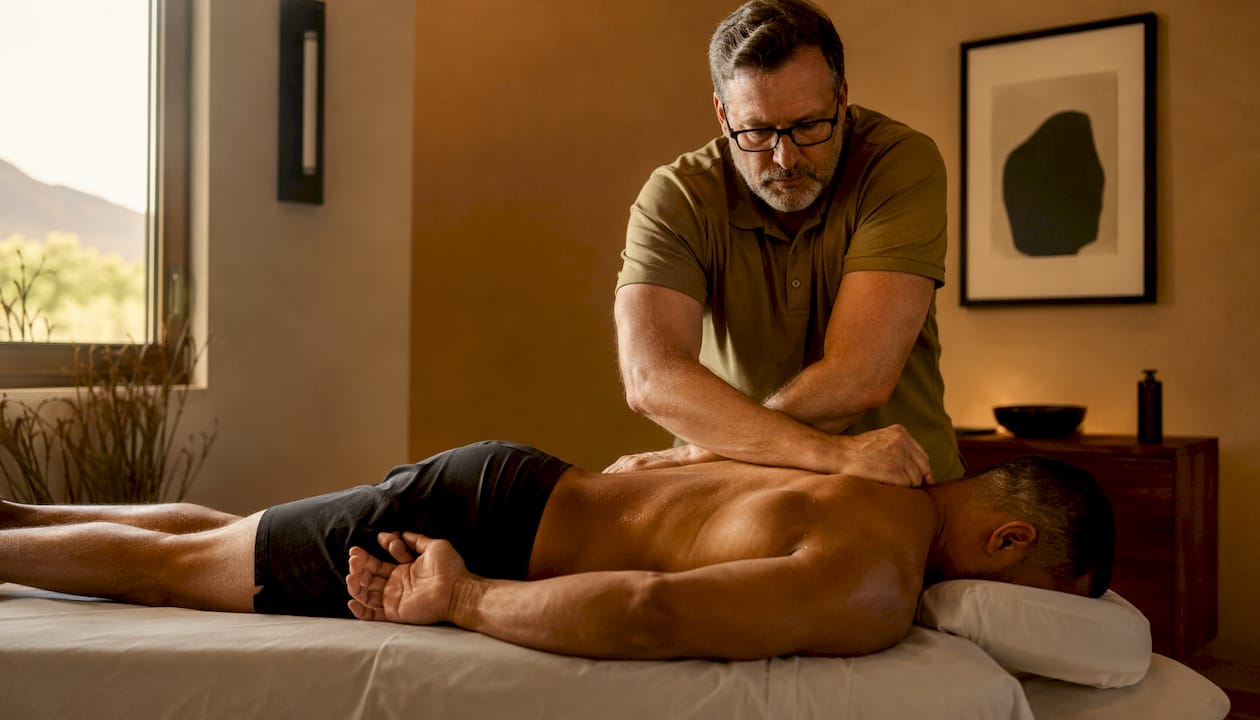
In Canada, deep tissue massage is frequently part of rehabilitation protocols for clients managing chronic musculoskeletal conditions, not just athletes. A desk worker with persistent neck and shoulder tension, someone recovering from a motor vehicle accident, or a person dealing with postural pain from years of repetitive movement are all strong candidates.
Deep tissue massage benefits include:
Sessions tend to run longer, often 60–90 minutes, because sustained work on deep tissue requires time to be effective without causing unnecessary trauma to the surrounding area.
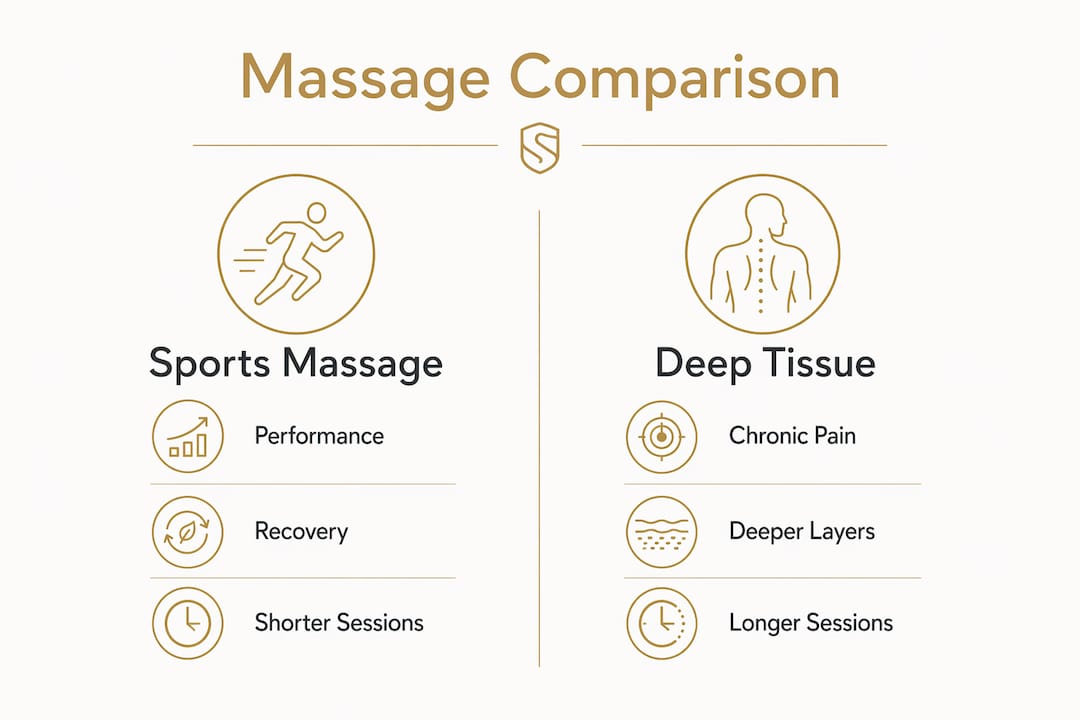
The clearest way to understand the difference between these two approaches is to look at what each one is trying to accomplish, and for whom.
| Sports massage | Deep tissue massage | |
|---|---|---|
| Purpose | Performance, injury prevention, event recovery | Chronic pain relief, rehabilitation, scar tissue release |
| Technique | Variable: stretching, joint mobilization, trigger point work | Slow, sustained strokes with heavy, consistent pressure |
| Pressure | Changes throughout session based on goal | Steady and deep throughout |
| Benefits | Faster recovery, reduced DOMS, improved flexibility | Chronic pain relief, improved posture, adhesion breakdown |
| When to choose | Before/after training or competition, during active training | Ongoing tension, injury rehab, chronic musculoskeletal pain |
| Session length | Typically 30–60 minutes | Typically 60–90 minutes |
Critical distinctions worth knowing:
Choosing between the two is not about which feels more intense. It is about matching the therapy to your actual goal.
Choose sports massage when:
Choose deep tissue massage when:
Frequency guidance: Therapists generally recommend sports massage weekly or fortnightly during heavy training periods. Deep tissue massage is typically scheduled every two to four weeks, giving your body time to respond and recover between sessions.
Contraindications to discuss with your therapist before booking either type:
Alberta is working toward formal provincial regulation of massage therapy, aligning with standards already in place in provinces like Ontario, British Columbia, and New Brunswick. The National Health Practitioner Regulation framework guides this process. Until full regulation is in place, the responsibility falls on you to verify your therapist’s credentials before booking.
Look for practitioners who hold recognized training credentials, carry professional liability insurance, and have experience with your specific needs, whether that is sports performance or injury rehabilitation. Many Alberta clinics offer direct billing to insurance providers, which can make regular massage therapy more accessible.
When choosing a provider, ask directly about their training in sports or clinical massage, and confirm whether they can bill your insurance plan.
Massage therapy works best when it is part of a broader care plan, particularly for athletes managing recurring injuries or complex musculoskeletal issues. Shephardhealth takes a multidisciplinary approach, combining massage therapy with advanced non-invasive therapies to address the full picture of your recovery needs.
Therapeutic offerings at Shephardhealth that complement massage:
Shephardhealth offers same-day appointments and direct insurance billing, making it practical to integrate these therapies into a regular training and recovery schedule. If you are managing a soft tissue injury that is not responding to massage alone, a multidisciplinary assessment can identify what else your body needs.
Sports massage tends to feel active and targeted. Your therapist may move your limbs through ranges of motion, apply firm pressure to specific muscle groups, and shift techniques several times within a single session. The pressure can be intense in areas of tightness, but it should never feel like uncontrolled pain. Most people feel a noticeable release during the session and some residual soreness in the treated areas afterward, which typically resolves within a day or two.
Deep tissue massage feels slower and more deliberate. The therapist works methodically into layers of tissue, and you may feel a “good hurt” sensation as pressure builds on a tight area. Mild soreness after the session is common, particularly if significant adhesions were addressed. Staying hydrated and avoiding strenuous activity for the rest of the day helps your body process the work.
Pro Tip: Communicate openly with your therapist throughout the session. Pressure that feels productive is different from pain that makes you brace or hold your breath. Feedback helps your therapist adjust and get better results.
Sports massage sessions typically run 30–60 minutes. Your therapist will usually begin with a brief assessment of your movement and any areas of concern, then work through the targeted muscle groups using a combination of techniques. You may be asked to actively move a limb while the therapist applies pressure, which is part of the assessment-led approach that distinguishes sports massage from general relaxation work.
Deep tissue sessions run longer, often 60–90 minutes, because the work requires time to sink into deeper structures without rushing. Expect the therapist to focus on specific problem areas identified in your intake conversation. The pace is slower, with sustained holds and deliberate strokes rather than the varied rhythm of a sports session. Wear or bring comfortable clothing, and plan to rest afterward rather than heading straight back to training.
Sports massage targets performance and recovery for active individuals; deep tissue massage addresses chronic tension and rehabilitation, and matching the right approach to your actual goal is what determines results.
| Point | Details |
|---|---|
| Different goals, different tools | Sports massage serves performance and prevention; deep tissue serves chronic pain and rehabilitation. |
| Frequency varies by type | Sports massage fits weekly or fortnightly in training; deep tissue is typically every two to four weeks. |
| Alberta regulation is evolving | Verify therapist credentials now, as full provincial regulation is still in progress. |
| Soreness is normal | Mild post-session soreness is expected with both types; it typically resolves within a day or two. |
| Massage works best in a care plan | Pairing massage with therapies like ART or shockwave therapy produces better outcomes for complex injuries. |

Active individuals in Alberta managing recurring injuries or performance plateaus often benefit from care that goes beyond a single modality. Shephardhealth combines massage therapy with evidence-based treatments like Active Release Technique, shockwave therapy, and laser therapy to address what massage alone cannot reach. Learn more about the unexpected benefits of chiropractic care and how a multidisciplinary approach can support your recovery and long-term performance.
Same Day Appointments Available
We Direct Bill!