

Start with immediate acute care, then follow a phased, clinician-guided progressive loading program that restores eccentric strength and full mobility. That’s the fastest safe route to hamstring strain recovery, and it’s exactly what the evidence supports. For the first few days: protect the area, apply ice regularly, use compression, and keep walking to a comfortable, pain-free range. Avoid aggressive stretching, heat, or any high-speed activity during this window.
Recovery timelines depend on severity. Lower-grade strains often resolve within a few weeks; more severe injuries can take longer recovery periods, sometimes longer. If you cannot bear weight, notice significant bruising spreading down the thigh, or heard a pop at the moment of injury, book a clinical assessment the same day.
Where to get assessed in Calgary: Shephardhealth offers same-day appointments, direct billing, Active Release Technique, and shockwave therapy.
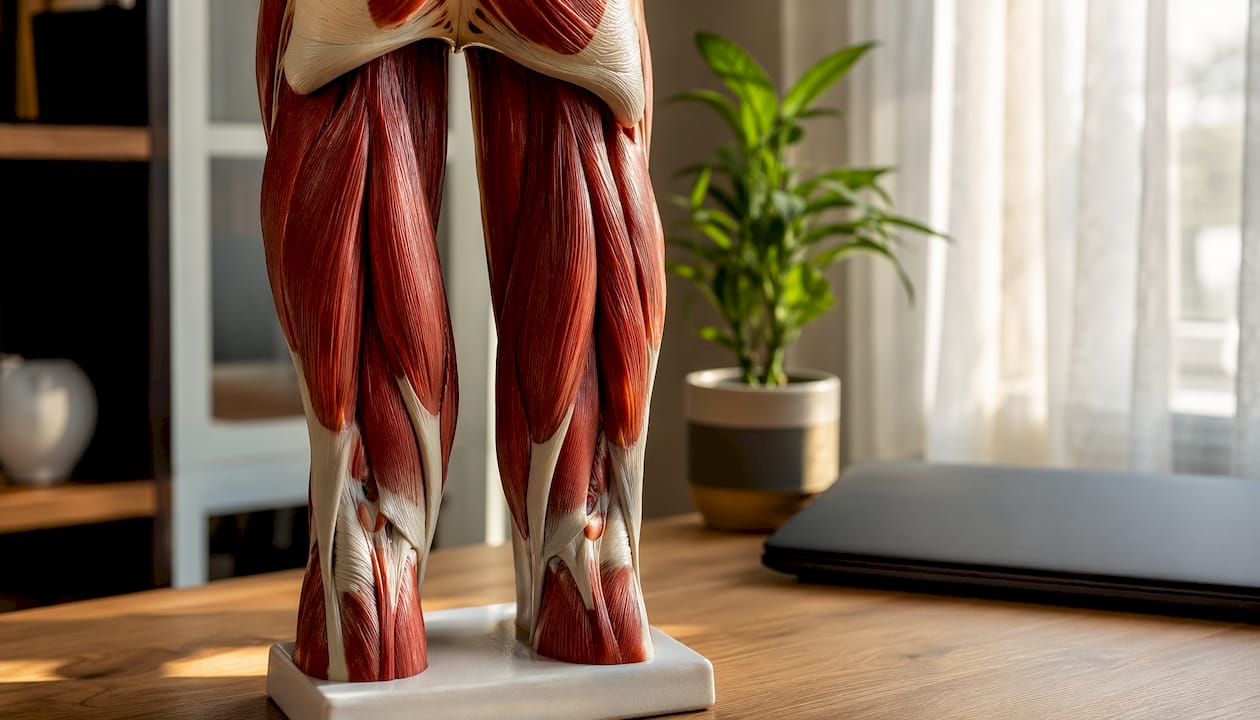
A hamstring strain is a tear of muscle or tendon fibers in the three muscles running along the back of your thigh, ranging from a few overstretched fibers to a complete rupture. The grade system tells you how much tissue is involved.
| Grade | Tissue damage | Common signs | Expected timeline |
|---|---|---|---|
| I | Minor fiber tearing | Mild tightness, tenderness, no strength loss | Days to a few weeks |
| II | Partial tear | Moderate pain, swelling, bruising, measurable strength loss | 4–8 weeks or longer |
| III | Complete rupture | Severe pain, large hematoma, inability to contract muscle | Several months; possible surgical repair |
A Grade 2 strain is a partial tear with noticeable swelling and a clear drop in strength. Structured physiotherapy is generally indicated at this level and above.
Signs that point toward a higher-grade tear requiring same-day clinical evaluation include:
Protect the muscle from further loading. That means relative rest: you can walk at a comfortable pace, but avoid sprinting, lunging, or any movement that pulls the hamstring into a stretched position under load.
Do:
Avoid:
Pro Tip: Switch from ice to heat only after the acute phase (roughly 72 hours), when swelling has stabilized. Heat at this stage improves blood flow and tissue extensibility, supporting the transition into early loading.
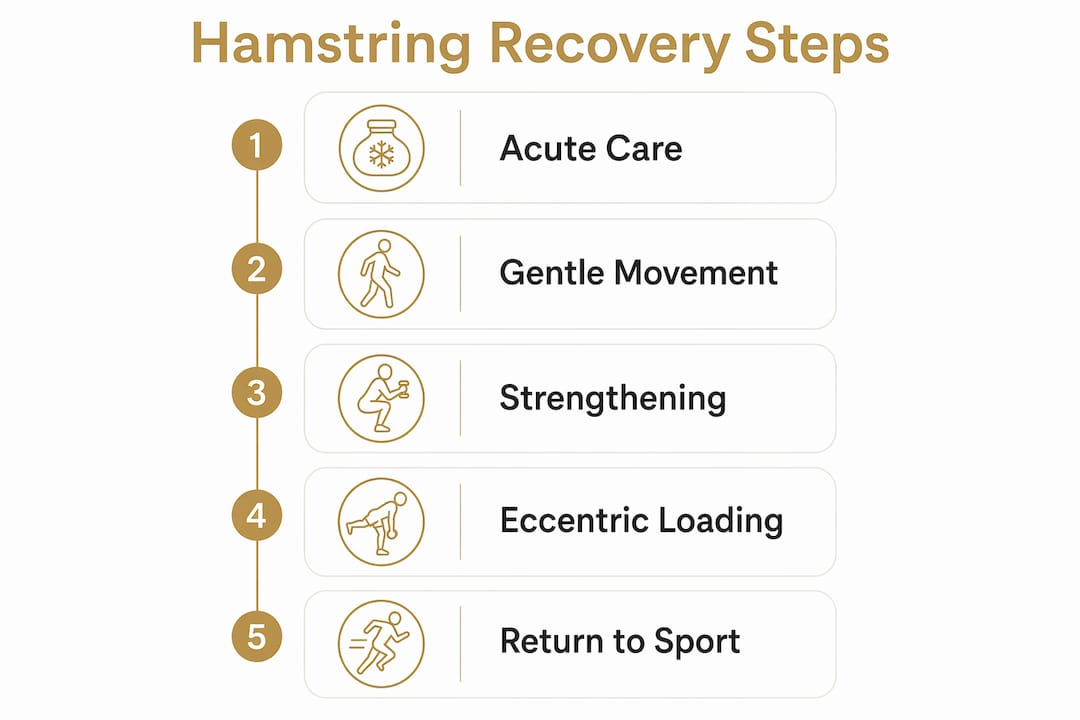
Evidence consistently shows that progressive lengthening and eccentric exercises produce faster return-to-sport and lower reinjury rates than passive rest alone. Here is how a structured program typically unfolds.
Phase I — Acute (Days 1–14): Goals are pain control, protection, and preventing atrophy. Exercises include quad sets, glute sets, and pain-free active-assisted hip and knee flexion. Avoid any movement that creates a stretch sensation in the hamstring.
Phase II — Intermediate (Weeks 2–4): Begin gentle, pain-free hamstring stretching with a strap in supine. Add double-leg bridges, side-lying hip abduction, and stationary cycling. Manual therapy (soft tissue mobilization, trigger point release) supports tissue remodeling at this stage.
Phase III — Transitional (Weeks 4–8): Full weight-bearing, normalized gait, and progressive strengthening. Introduce single-leg bridges, step-ups, partial squats, and hamstring curls. Reactive neuromuscular training can also be introduced here to rebuild proprioception.
Phase IV — Early Return to Sport (Weeks 8–12): Sport-specific loading, plyometrics, and progressive running speed. No pain during strength training or cardiovascular activity is a firm prerequisite.
Phase V — Unrestricted Return (12+ weeks): Nordic hamstring curls, kettlebell swings, reverse lunge sliders, and jump training. Clearance requires ≥90% strength symmetry to the uninjured side and passing a single-leg hop cluster test.
Pro Tip: Eccentric loading — where the hamstring contracts while lengthening — is the single most important element of late-stage rehab. It aligns collagen fibers and builds the tensile strength that prevents reinjury during high-speed running.
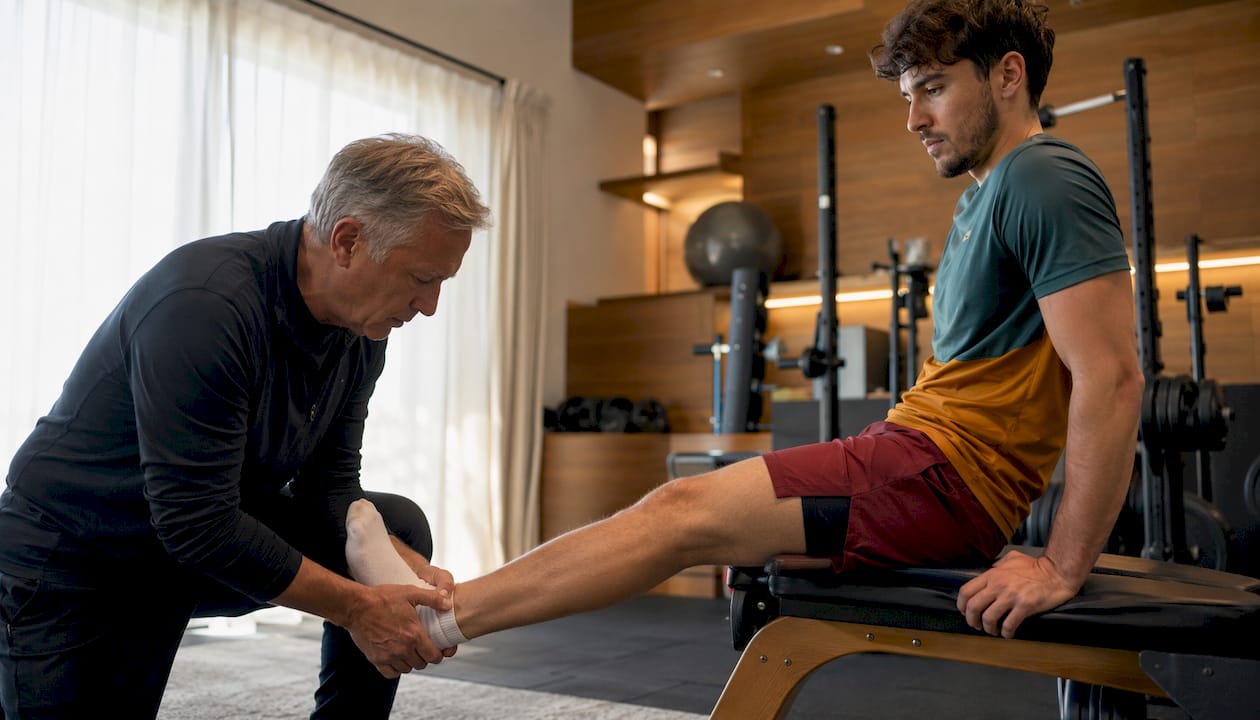
See a physiotherapist or chiropractor promptly if you cannot walk without significant pain, notice a large hematoma, experience neurological symptoms (numbness, tingling down the leg), or suspect a complete avulsion at the ischial tuberosity. For proximal complete avulsions, early orthopedic consultation matters because acute surgical repair can produce better outcomes than delayed intervention.
At a Calgary clinic, you can expect a combination of manual therapy, exercise prescription, and one or more of the following modalities:
Selection checklist:
Questions to ask when booking:
Red flags: A clinic that promises a quick fix with no exercise plan, cannot describe how they measure strength recovery, or relies entirely on passive modalities without a loading program is worth reconsidering.
Shephardhealth holds strong Google ratings from patients who highlight the clinic’s attentive, personalized approach and the effectiveness of its combined chiropractic and soft-tissue care for sports injuries.
Physiotherapy and chiropractic session costs in Calgary vary based on session length and included modalities. Shockwave therapy and Active Release Technique sessions may be priced separately or bundled into a treatment plan. Most extended health benefit plans in Canada cover a portion of physiotherapy and chiropractic fees; direct billing at clinics like Shephardhealth removes the need to pay out of pocket and wait for reimbursement. If your injury occurred at work, WCB Alberta covers approved treatment costs through a separate billing pathway. Always confirm your specific coverage limits with your insurer before booking.
Shephardhealth offers same-day appointments and direct billing; visit shephardhealth.com or call the clinic directly to confirm availability. When you call or book online, describe your injury grade if known, how many days post-injury you are, and whether you need direct billing confirmed before your first visit.
Phased, clinician-guided loading with eccentric strengthening is the most reliable path from a hamstring strain to full return to sport, and Calgary has several qualified clinics to guide that process.
| Point | Details |
|---|---|
| Acute care window | Ice, compression, and relative rest for the first 48–72 hours; avoid aggressive stretching. |
| Grade-based timelines | Grade 1: days to a few weeks; Grade 2: 4–8 weeks or longer; Grade 3: several months, possibly requiring surgery. |
| Eccentric loading is critical | Reaching ≥90% strength symmetry before return to sport significantly lowers reinjury risk. |
| See a clinician promptly | Inability to bear weight, a large hematoma, or neurological symptoms require same-day assessment. |
| Shephardhealth in Calgary | Offers same-day appointments, direct billing, ART, shockwave, and a full soft tissue injury care pathway. |
The most common mistake is treating pain relief as the finish line. Patients feel better at three or four weeks, return to their sport, and re-tear the same muscle within a month. The reason is straightforward: pain resolves before eccentric strength does. A hamstring that no longer hurts at rest can still be significantly weaker than the uninjured side, and that asymmetry is exactly what gives way under high-speed running or a sudden change of direction.
The second misconception is that passive modalities alone will fix the problem. Shockwave, dry needling, and manual therapy are genuinely useful tools, but they work best as adjuncts to a structured loading program, not as replacements for it. The tissue needs mechanical stress, applied progressively, to remodel properly. Clinicians who combine hands-on care with a clear exercise progression are giving you both halves of the solution.
Finally, the return-to-sport criteria matter more than the calendar. Twelve weeks is a rough guide, not a clearance date. Objective testing — eccentric strength symmetry, single-leg hop performance, pain-free high-speed running — is what actually tells you the tissue is ready.
Shephardhealth gives you a direct path from acute injury to full return to sport, without the wait. The clinic combines Active Release Technique and shockwave therapy with a structured exercise rehab program, Kinesio taping, and laser therapy — all under one roof, with same-day appointments available and direct insurance billing handled at the front desk.

Your first visit includes a thorough assessment of injury grade, strength, and functional movement so your clinician can build a plan specific to your recovery stage. Whether you’re three days post-injury or stuck in a frustrating plateau at week six, the team at Shephardhealth can assess where you are and map out what comes next. Book your appointment at shephardhealth.com or call the clinic directly to confirm same-day availability.
This article is general information, not a substitute for in-person clinical assessment. Recovery timelines and treatment needs vary by individual. Confirm your specific situation with a qualified clinician before beginning any rehabilitation program.
Same Day Appointments Available
We Direct Bill!