

Massage can relieve sciatic symptoms for many people when applied safely and as part of a broader plan that includes movement and education. It won’t fix a herniated disc, but it can reduce the muscle tension and nervous-system sensitization that make sciatica feel unbearable day to day. If your symptoms are new or severe, get a diagnosis first. If you’ve already been evaluated and there are no red flags, gentle massage techniques are a reasonable, evidence-supported place to start.
Here’s how to approach it:
Want hands-on help? Start with a $67 new patient visit
A chiropractor assesses what is driving the tightness and treats it the same day when it is safe. See massage therapy in Calgary. Book online.
Massage can meaningfully reduce sciatic pain and improve mobility when applied safely, sequenced correctly, and combined with movement-based rehabilitation.
| Point | Details |
|---|---|
| Start with a diagnosis | New or severe sciatica warrants medical evaluation before massage begins. |
| Sequence techniques correctly | Begin with broad Swedish strokes, then progress to deep tissue and trigger-point work only after tissue relaxes. |
| Target the right areas | Piriformis, gluteals, lumbar paraspinals, and hamstrings are the primary soft-tissue contributors to sciatic pain. |
| Know the red flags | Bladder or bowel changes, saddle anesthesia, or rapidly worsening leg weakness require immediate emergency care. |
| Shephardhealth’s approach | Massage is integrated with Active Release Technique, laser therapy, and chiropractic care for a coordinated, assessment-first sciatica plan. |
Sciatica is a symptom, not a diagnosis. The term describes pain that travels along the sciatic nerve’s distribution — typically from the low back through the buttock and down one leg. Massage doesn’t change the structural cause (a disc herniation, for example), but it can meaningfully shift several of the factors that amplify how much that pain hurts.
The primary mechanisms are well described in clinical literature. Massage reduces muscle tension and improves circulation, which matters because tight gluteal muscles — especially the piriformis — can compress or irritate the sciatic nerve directly. Releasing that tension reduces one source of mechanical pressure on the nerve. Improved local blood flow helps clear inflammatory byproducts that sensitize nerve endings and make pain feel sharper than the underlying injury warrants.
There’s also a neurological dimension. Massage stimulates pressure receptors in the skin and deeper tissues, which activates pathways that dampen pain signaling in the spinal cord. Cortisol drops and endorphin release increases with therapeutic touch, which lowers the nervous system’s overall threat response. When pain is partly driven by stress and central sensitization — which is common in chronic sciatica — this mechanism is clinically meaningful, not just relaxing.
The practical limit is equally important to understand. Massage treats the soft-tissue contributors and symptom sensitivity around the nerve, not the structural spine pathology itself. A disc herniation compressing the nerve root needs decompression, exercise-based rehab, or in some cases medical intervention. Massage makes movement easier and reduces protective guarding, which then allows exercise and rehabilitation to work better. That’s the real clinical pathway.
Statistic to know: A 2025 systematic review of 50 randomized trials involving 4,920 participants concluded that the evidence for non-surgical interventions — including massage — for chronic sciatica is very uncertain, with no single approach showing clear superiority. That finding should calibrate expectations: massage is a useful tool, not a cure.
These techniques are listed in the order a skilled therapist would typically sequence them — from broad and calming to targeted and specific. Each one has a distinct purpose, a sensory cue for when it’s being applied correctly, and a caution worth knowing.
Pro Tip: Never start with aggressive deep pressure. Begin with broad strokes to calm the nervous system and soften superficial tissue, then progress to targeted work only after the area has relaxed. If neurological symptoms — sharp electric pain, increasing numbness, or tingling down the leg — reproduce during any technique, stop immediately.
Swedish massage uses long, gliding strokes along the length of the muscle, applied with the palm or forearm. For sciatica, it targets the lumbar paraspinals, gluteals, and hamstrings — the three muscle groups most consistently involved in sciatic irritation. It should feel warm and progressively relaxing, never sharp. This is always the starting point, regardless of what targeted work follows. Caution: avoid sustained pressure directly over the sacrum in people with acute inflammation.
Deep tissue work uses slower strokes and sustained pressure to reach deeper muscle layers — the gluteus medius, piriformis, and deeper lumbar muscles that Swedish strokes can’t access. When done correctly, it produces a “good hurt”: a dull, releasing ache that fades within seconds of pressure being released. If the sensation is sharp, electric, or shoots down the leg, the pressure is too deep or misdirected. Deep tissue massage is one of the most commonly recommended techniques for sciatica, but it requires a therapist who understands nerve-distribution anatomy. Caution: avoid aggressive deep pressure directly over the sciatic nerve’s path through the posterior thigh.
Myofascial release applies slow, sustained traction to the connective tissue (fascia) surrounding muscles rather than the muscle fibers themselves. It’s particularly useful for the thoracolumbar fascia and the fascial sleeve around the piriformis, both of which can restrict movement and contribute to sciatic irritation. The sensation is a slow, spreading warmth or mild stretch — not pain. Caution: this technique requires patience; forcing the release by adding pressure defeats the purpose and can increase guarding.
Trigger points are hyperirritable spots within a muscle that refer pain to a predictable distant location. The piriformis, gluteus minimus, and deep hip rotators all have trigger-point referral patterns that closely mimic sciatic pain — pain down the back of the leg, into the calf, even into the foot. Trigger-point therapy applies sustained, moderate pressure (typically 5–8 seconds) to the point until the referral sensation diminishes. It should feel like a “good pressure” that gradually releases. Caution: this technique is best performed by a trained therapist; self-application with a ball is reasonable for the gluteals but should stay away from the posterior thigh where the nerve runs superficially.
Neuromuscular therapy (NMT) combines trigger-point work with assessment of posture, movement patterns, and nerve compression sites. It’s more systematic than standard trigger-point therapy and often involves repeated passes over the same area to monitor tissue response. For sciatica, NMT is particularly useful when the pain pattern is complex or when multiple muscles are involved. Caution: NMT is a clinical technique — it’s not appropriate for self-application and should be performed by a therapist with specific NMT training.
The piriformis muscle sits directly over the sciatic nerve in most people. When it’s tight or in spasm, it can compress the nerve — a condition sometimes called piriformis syndrome. Targeted release involves positioning the hip in slight flexion and internal rotation, then applying sustained pressure to the belly of the muscle through the gluteal tissue. A skilled therapist can locate the piriformis precisely; self-release with a tennis ball is a reasonable approximation. Caution: if direct pressure reproduces the full leg-pain pattern and doesn’t ease within 10–15 seconds, the nerve may be directly compressed — reduce pressure immediately.
Nerve gliding, sometimes called nerve flossing, isn’t massage in the traditional sense, but it pairs naturally with soft-tissue work. Gentle, rhythmic movement of the leg through a range that tensions and then releases the sciatic nerve can reduce neural adhesions and improve nerve mobility after surrounding muscles have been relaxed by massage. It should feel like a mild stretch, never a sharp electric sensation. Caution: nerve gliding is contraindicated in acute disc herniation with severe radiculopathy — confirm with a clinician before adding it.
Knowing where to apply pressure is as important as knowing which technique to use. Sciatica’s pain pattern is predictable because the sciatic nerve follows a consistent anatomical path, and the muscles that surround it are the ones most likely to contribute to irritation.
The primary targets:
Pro Tip: Position matters as much as pressure. For piriformis and gluteal work, prone positioning with a pillow under the abdomen reduces lumbar lordosis and opens the posterior hip — making the target muscles more accessible and reducing the risk of nerve compression during treatment.
Safety note: avoid sustained, aggressive pressure directly over the posterior thigh where the sciatic nerve runs close to the surface. Broad strokes are fine; sustained focal pressure in this area can compress the nerve and worsen symptoms.
Self-care between professional sessions extends the benefit of treatment and gives you something concrete to do when pain flares. These techniques are safe for most people with sciatica, provided you follow the pressure guidelines and stop if neurological symptoms worsen.
1. Tennis ball glute release
Sit on a firm chair or the floor. Place a tennis ball under one buttock, roughly where the piriformis sits (midway between your tailbone and the bony point of your hip). Shift your weight slowly until you feel moderate pressure — not sharp pain. Hold for 20–60 seconds, breathing steadily. Move the ball slightly and repeat. Do 2–3 spots per session, once or twice daily.

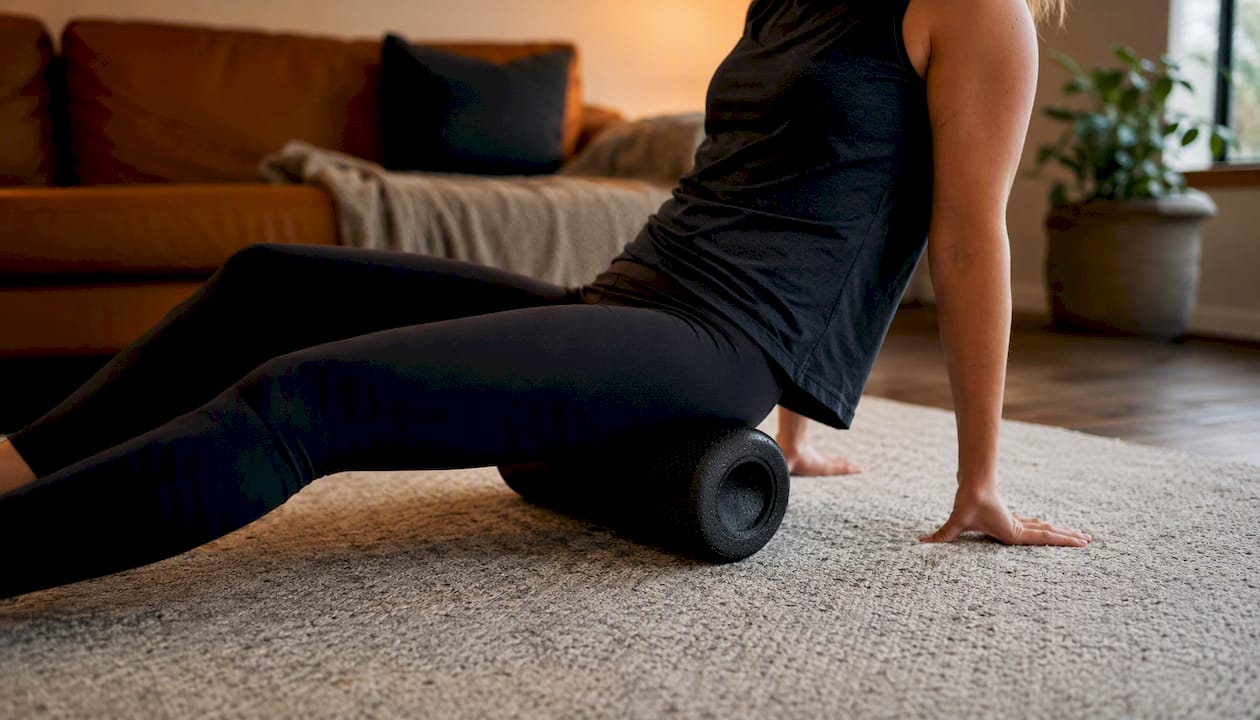
2. Foam roller hamstring release
Sit on the floor with a foam roller under one thigh, just below the sit bone. Support your weight on your hands. Slowly roll from the sit bone toward the back of the knee, pausing for 3–5 seconds on any tender spot. Avoid rolling directly behind the knee. Two to three passes per leg, once daily.
3. Self-piriformis stretch (figure-four)
Lie on your back with both knees bent. Cross your right ankle over your left knee, forming a figure-four shape. Gently pull your left thigh toward your chest until you feel a stretch deep in the right buttock. Hold for 30 seconds, repeat 3 times per side. This is one of the most effective home stretches for piriformis tension.
4. Nerve slider (sciatic nerve glide)
Sit upright in a chair. Slowly extend one knee while simultaneously flexing your foot (toes toward you). Hold for 2–3 seconds, then return to the starting position. Repeat 10–15 times per side. This should feel like a mild stretch — never a sharp electric sensation. If symptoms worsen, stop and consult a clinician. You can also find guided nerve flossing protocols that pair well with this approach.
5. Lumbar self-massage (prone press-up)
Lie face down. Place your hands under your shoulders as if for a push-up. Slowly press your upper body up while keeping your hips on the floor, allowing your lumbar spine to extend gently. Hold 5 seconds, lower, repeat 10 times. This isn’t massage in the traditional sense, but it mobilizes the lumbar spine and can reduce disc-related nerve pressure.
Do’s and don’ts for home self-care:
Stop and seek professional care if: symptoms worsen after two or three home sessions, you develop new numbness or weakness, or pain begins to spread rather than localize.
Massage is safe for most people with sciatica, but there are specific situations where it must be stopped and medical evaluation sought without delay. Knowing these criteria protects you — and any therapist working with you.
Seek emergency care immediately if you experience:
See a physician urgently (within 24–48 hours) if you have:
Schedule a routine medical evaluation if:
For therapists: document the patient’s response after each session. If objective markers — pain intensity, range of motion, functional ability — are not improving after four sessions, escalate to physician referral and consider whether imaging is warranted. A lack of progress is information, not a reason to continue the same approach.
Not every massage therapist has the training to work safely with nerve-related pain. Choosing the right one significantly affects both your safety and your outcomes.
Qualifications to look for:
Questions to ask when booking:
A therapist who answers these questions confidently and specifically — rather than generically — is a good sign. One who dismisses the red-flag question or promises to “fix” your sciatica with massage alone is not.
What a good clinic workflow looks like:
Shephardhealth integrates massage therapy within a multidisciplinary clinic that includes chiropractic care, Active Release Technique, and laser therapy — which means your massage therapist works alongside clinicians who can assess structural contributors and escalate care if needed. That kind of integration is exactly what the evidence supports for complex nerve-related pain.
The honest answer is that the evidence is promising but limited, and anyone telling you otherwise is overstating it.
A 2025 systematic review that analyzed 50 randomized controlled trials involving 4,920 participants concluded that the evidence for non-surgical interventions — including massage — for chronic sciatica is very uncertain. No single approach demonstrated clear superiority. This doesn’t mean massage doesn’t work; it means the research quality is too variable to make strong claims about long-term outcomes.
At the individual level, the picture is more encouraging. A controlled 10-week study found that structured manual therapy reduced low back pain intensity and increased range of motion in a patient with sciatica symptoms, with maintained improvements in daily activities. That kind of outcome is consistent with what clinicians observe in practice: massage helps many people, particularly in the short to medium term.
Smaller trials and clinical reports show short-term reductions in pain and improved mobility after massage protocols, but results are heterogeneous. Some patients respond well; others see minimal change. The variation likely reflects differences in the underlying cause of sciatica, the techniques used, and how massage is combined with other care.
| Evidence level | Finding | Practical implication |
|---|---|---|
| Systematic review (2025, 50 RCTs) | Very uncertain evidence for non-surgical care overall | Use massage as one tool, not a standalone treatment |
| Controlled case study (10 weeks) | Reduced pain intensity, improved range of motion | Structured protocols can produce meaningful individual gains |
| Smaller trials and clinical reports | Short-term pain and mobility improvements, mixed results | Expect symptom relief; don’t expect structural correction |
| Mechanistic evidence | Reduces tension, cortisol, and nerve sensitization | Supports use as an adjunct to exercise-based rehab |
Clinical bottom line: The AMTA and Spine-health both frame massage as a symptom-management tool within a broader conservative plan. That framing is consistent with the 2025 systematic review and with what non-surgical back pain treatment research supports more broadly. Use it to make movement easier, then use movement to drive recovery.
When a patient presents at Shephardhealth with sciatica symptoms, the first session is never straight to the table. The intake begins with a focused history: How long have symptoms been present? Is the pain constant or intermittent? Does it worsen with sitting, walking, or bending forward? Are there any neurological symptoms — numbness, tingling, weakness? That history shapes everything that follows.
A brief movement screen comes next. Straight-leg raise, slump test, and active lumbar range of motion give the clinician a working picture of whether the nerve is sensitized, where the primary restriction is, and how much tissue irritability to expect. High irritability means starting with very gentle, broad-contact work and staying there for the first session. Lower irritability opens the door to more targeted techniques sooner.
In practice, the workflow looks like this:
Most patients with soft-tissue-driven sciatica notice a meaningful reduction in pain intensity and an improvement in movement ease within one to four sessions. If there is no objective improvement by session four, the clinical plan is reviewed, imaging may be recommended, and referral to a physician or specialist is discussed. Progress is tracked at every visit — not assumed.
Sciatica responds best when soft-tissue care, nerve work, and active rehabilitation are coordinated rather than delivered in isolation. At Shephardhealth, massage therapy for sciatica is delivered within a clinic that also offers Active Release Technique, laser therapy, and chiropractic assessment — so the therapist working on your piriformis and hamstrings is supported by clinicians who can evaluate the structural contributors and adjust the plan if your symptoms aren’t moving in the right direction.

The first visit includes a thorough intake, red-flag screening, and a movement assessment before any hands-on work begins. Direct insurance billing is available, and same-day appointments are often accessible. You won’t be handed a generic treatment plan — the approach is built around your specific symptom pattern, tolerance, and goals. If you’re ready to move from managing pain day to day toward actually recovering, book your first visit and find out what a coordinated, assessment-first approach feels like.
The following sources informed this article and are worth reviewing if you want to go deeper into the evidence or clinical guidance:
This article is for general informational purposes only and is not a substitute for professional medical advice. If you are experiencing new, worsening, or neurologically significant sciatica symptoms, consult a qualified healthcare provider before beginning any treatment.
Same Day Appointments Available
We Direct Bill!