

Yes. When your doctor has cleared you, massage therapy for whiplash can reduce pain and muscle tension while speeding up functional recovery, especially when it’s paired with active rehabilitation. Massage alone rarely resolves whiplash-associated disorder, but as one piece of a coordinated plan, it’s one of the more effective tools available to you.
Before your first session, three things matter: medical clearance first to rule out serious injury, avoiding any technique involving anterior-neck compression until it’s confirmed safe, and ensuring your therapist uses a stage-based approach adapted to your recovery progress.
Pro Tip: A randomized clinical trial comparing cervical manipulation to a structured rehabilitation program found both produced comparable short-term gains in pain and mobility, reinforcing that manual therapy works best as part of a broader plan, not a solo fix. At Shephardhealth, we build that broader plan around you.
Want hands-on help? Start with a $67 new patient visit
A chiropractor assesses what is driving the tightness and treats it the same day when it is safe. See massage therapy in Calgary. Book online.
Massage therapy for whiplash works best as one part of a staged, multimodal recovery plan built around your specific symptoms and timeline.
| Point | Details |
|---|---|
| Get cleared first | Confirm with a physician that there’s no fracture or serious neurological injury before booking massage. |
| Match technique to stage | Expect light, drainage-focused work early and deeper cross-fiber friction only once you’re stable. |
| Avoid anterior-neck risks | A qualified therapist avoids carotid compression and limits front-of-neck work in early recovery. |
| Combine with active rehab | Pair massage with supervised exercise and chiropractic or physiotherapy for better functional outcomes. |
| Shephardhealth coordinates care | Shephardhealth combines clinical massage with ART, laser therapy, and chiropractic under one treatment plan. |
This article is general information, not a substitute for advice from a qualified doctor. Consult a qualified healthcare professional about your own circumstances before acting on anything here.
Whiplash symptoms don’t always show up right away. Some people feel stiff within hours; others wake up the next morning barely able to turn their head.
The common symptom cluster includes:
Recovery generally moves through three phases. The acute phase covers the first one to two weeks, when inflammation and muscle guarding dominate. The subacute phase runs from roughly two to twelve weeks, as tissue healing progresses and mobility work becomes more productive. The chronic phase applies to symptoms lasting beyond three months, which affects a meaningful share of whiplash patients and usually calls for a more structured, multidisciplinary approach.
Certain symptoms are red flags, not just discomfort. Severe or worsening headache, loss of consciousness at the time of injury, arm weakness that progresses, or difficulty with bladder or bowel control need urgent medical evaluation, not a massage appointment. Our whiplash recovery timeline breaks down what to expect week by week if you want a fuller picture of your own trajectory.
Physician clearance isn’t a formality. It’s the step that rules out fractures, ligamentous instability, and serious neurological injury, conditions that massage could worsen if missed. Expert guidance is consistent on this point: interventions should wait until clinicians have confirmed there’s no structural damage, and early, medically cleared treatment tends to lower the risk of symptoms turning chronic.
Before booking a session, run through this checklist:
A qualified therapist will avoid direct pressure over the carotid arteries, limit anterior-neck work in the early weeks, and progress slowly if there’s any suspicion of ligament injury. Field-level protocols built for whiplash-specific massage care specifically call out carotid avoidance and cautious pacing as non-negotiable safety steps, not optional refinements.
Pro Tip: If a massage therapist offers to “really dig in” on your neck during week one, that’s a sign to ask more questions, not a sign of thoroughness.
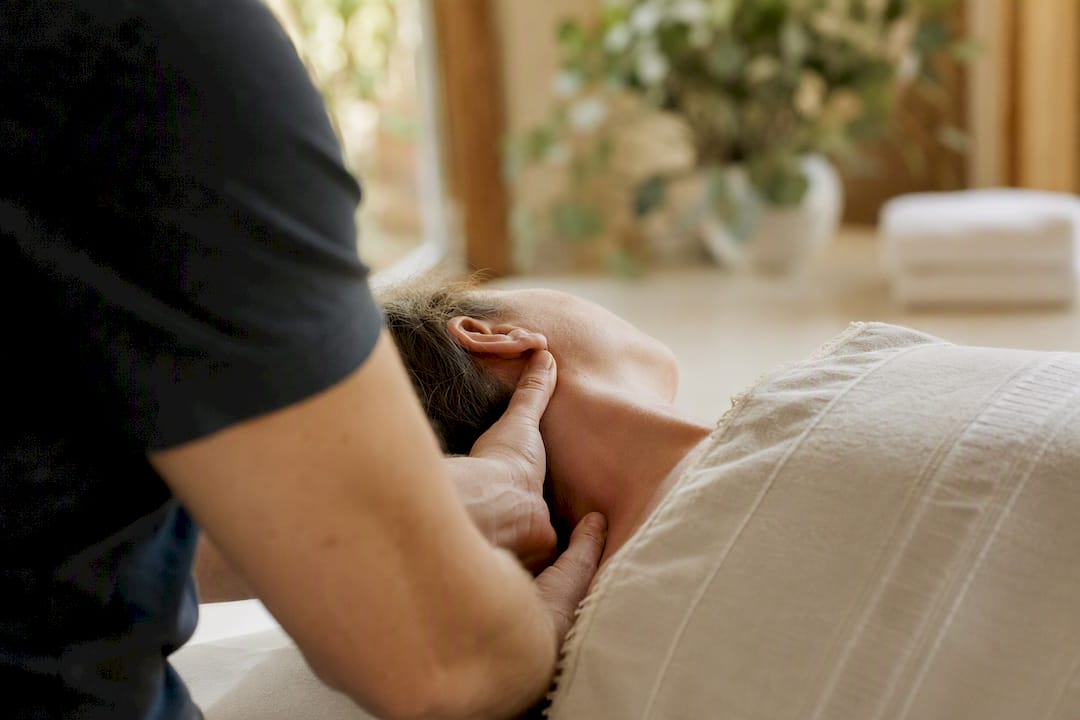
Massage works on whiplash through a few distinct mechanisms. It improves local circulation, helps clear inflammatory byproducts through the lymphatic system, and can quiet an overactive sympathetic nervous system, the “fight or flight” state that keeps muscles clenched long after the initial injury. It also softens myofascial adhesions that form as tissue heals, which is part of why cross-fiber friction becomes useful later in recovery.
In practical terms, most patients notice:
Here’s the honest caveat: research on massage for neck pain supports it as an effective intervention, but not as a definitive cure for whiplash-associated disorder on its own. The evidence is considerably stronger for multimodal approaches, massage combined with exercise, education, and professional reassessment, than for massage used in isolation. If a provider suggests massage alone will resolve your whiplash within a few visits, that’s not what the data shows. Massage buys you comfort and mobility that make the rest of your rehab work possible; it’s rarely the whole answer by itself.
Technique choice should shift as your tissue heals. A therapist doing the same deep work in week one that they’d do in week eight isn’t adapting to your recovery, and that’s a problem.
Acute stage (roughly days 1 to 14):
Early subacute stage (roughly weeks 2 to 6):
Chronic stage (beyond 3 months, if symptoms persist):
One detail many patients never hear about: the platysma and other anterior-neck tissues are frequently overlooked, yet addressing them carefully can resolve chronic tension patterns that persist even after the deeper neck muscles have released. This work should stay light and never involve direct carotid pressure, at any stage of recovery.
Pro Tip: If your neck keeps tightening back up within days of a session, that can mean muscles are compensating for ligament laxity rather than simply being tense. That’s a signal to shift toward stabilization exercise, not deeper massage.

Massage works best as one input in a plan that also includes supervised exercise and, often, chiropractic or physiotherapy care. Programs combining manual therapy with active rehabilitation consistently produce better functional outcomes than passive treatment alone, because passive care can ease symptoms without rebuilding the strength and control that prevent them from returning.
A workable sequence looks like this:
Chiropractic adjustment and massage aren’t competing options. When your cervical spine has stabilized, coordinated joint work alongside soft-tissue treatment often accelerates progress that either approach alone would take longer to achieve. If you want a deeper look at how soft-tissue mobilization complements this kind of plan, this recovery guide on soft tissue mobilization breaks down the underlying mechanics well.
Your first visit should include a real assessment: range of motion, palpation for guarding and trigger points, and a conversation about your symptom timeline before any hands-on work begins. Expect gentle techniques in that first session, not deep tissue work.
Between visits:
Mild soreness for a day after a session is normal. Sharp new pain, numbness, or symptoms that spread rather than settle mean it’s time for re-evaluation, not another appointment on the same plan.
The evidence base is encouraging but not absolute. Massage helps with short-term neck pain and mobility, and clinical trials support manual therapy as a legitimate component of whiplash care, not a fringe add-on.
Massage therapy is best understood as a genuinely effective tool for short-term symptom relief in whiplash-associated disorder, one that performs best inside a coordinated, multimodal plan rather than as a standalone treatment.
That said, limitations remain. Long-term outcome data is inconsistent across studies, and some trials in this space are lower quality than clinicians would like. The practical takeaway: ask your provider how massage fits into your specific plan and what timeline they expect, rather than assuming any single technique will carry your recovery on its own.
Patients often improve fastest when massage stays coordinated with a chiropractor or physiotherapist rather than running as a separate, disconnected treatment. The cases that stall tend to involve deeper work introduced too early, before ligamentous healing catches up. Staged progression, checking in at each step rather than assuming last week’s dosage still applies, is what separates steady recovery from repeated flare-ups.
A lot of massage clinics treat every neck injury the same way regardless of how many weeks out you are, which is exactly the approach this article has warned against. Shephardhealth builds whiplash care around your stage of recovery, coordinating clinical massage with Active Release Technique, laser therapy, and chiropractic adjustment under one roof instead of sending you between separate providers who never compare notes.

Your first visit includes a real assessment of your injury and a plan that adjusts as you heal, not a generic template. If you’re dealing with lingering stiffness, headaches, or pain that hasn’t resolved on its own, our treatments for soft tissue injuries page outlines what to expect, including insurance billing details, and you can book directly from there to get a plan started this week.
Same Day Appointments Available
We Direct Bill!