

Use ice for a fresh strain or visible swelling, especially within the early days after it starts. Use heat once that acute window passes, or if you’re dealing with the kind of chronic tightness and morning stiffness that shows up without a clear injury. Both are symptom relief, not a cure, so protect your skin, limit each session, and watch for red flags that mean it’s time to call a professional.
TL;DR:
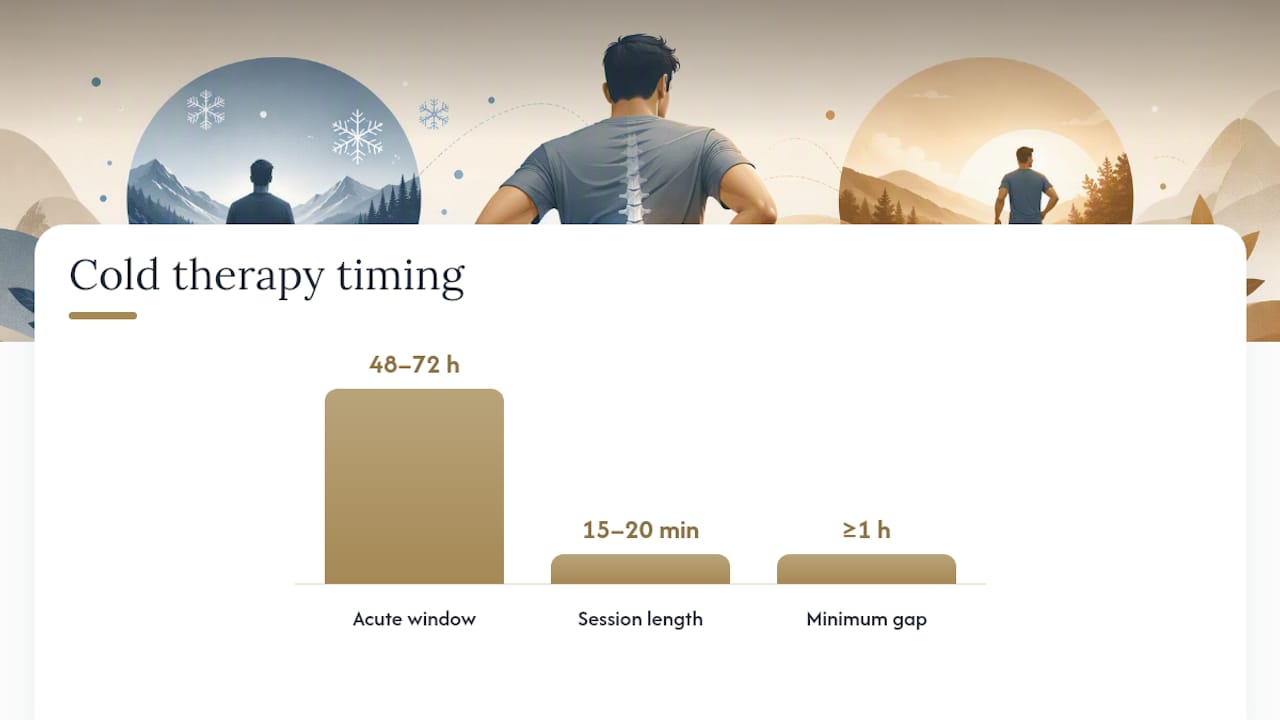
- Cold therapy is most effective within the first 48 to 72 hours after an acute strain to reduce swelling and nerve pain, but should never be applied directly to the skin.
- Heat therapy works best for ongoing stiffness and tension, typically from day four onward, when inflammation has decreased and relaxation is needed.
- Combining heat or cold with movement, such as gentle stretching or walking, produces better short-term pain relief than using either therapy alone.
- Use each temperature treatment for no more than 15 to 20 minutes per session and avoid sleeping with active packs to prevent skin burns or tissue damage.
- Seek professional evaluation if back pain worsens with trauma, causes unexplained weakness, numbness, bowel or bladder changes, or persists beyond a few weeks despite self-care.
Cold works by narrowing blood vessels near the skin, which slows local blood flow and blunts nerve signals that carry pain to your brain. That combination is exactly what a freshly strained muscle needs. Less swelling, less nerve chatter, more comfort in the first few days.
This is the window that matters most: the first 48 to 72 hours after an acute strain, a twisting injury, or a hard workout that leaves your low back inflamed and tender. Clinical guidance from Harvard Health supports using cold early to manage inflammation, then shifting to heat once that acute phase passes.
For application, a few rules keep you safe and get better results:
Pro Tip: Post-exertion soreness after a hard workout responds well to a quick 15-minute ice session too, even without a formal injury. It’s the same inflammation, just a smaller version.
If you have diabetes, peripheral neuropathy, Raynaud’s disease, or any condition that affects circulation or sensation in your legs and back, talk to a healthcare provider before using cold therapy regularly. Reduced feeling means you might not notice tissue damage until it’s already happened.
Heat does the opposite of cold. It widens blood vessels, pulling more circulation into the area, which relaxes tight muscle fibers and raises your local pain threshold. That’s why heat tends to outperform cold once the acute inflammation has settled and what’s left is stiffness, tension, and a back that feels locked up first thing in the morning.
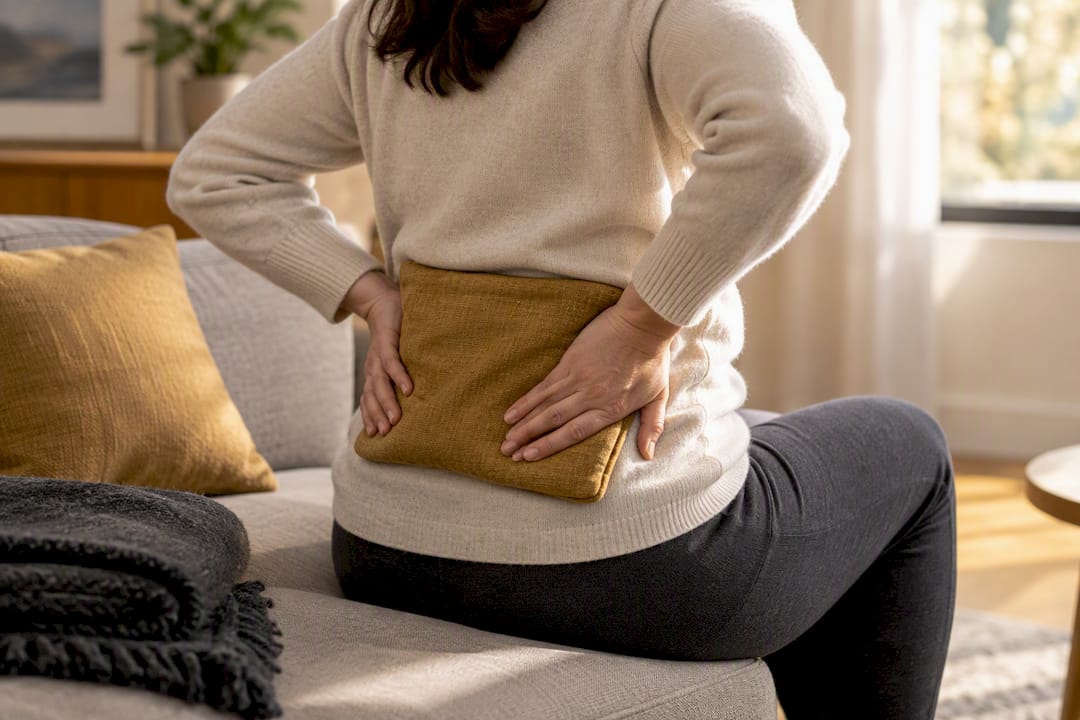
Heat therapy fits best with subacute pain (roughly day 4 through a few weeks out), chronic low back tightness, and that classic stiff-and-achy feeling before you’ve moved around. A review published on PMC found moderate evidence from small trials that continuous low-level heat wrap therapy gives a modest but real short-term reduction in pain and disability for acute and subacute low back pain. Notably, that benefit came from steady, hours-long heat exposure rather than a quick 15-minute hot pack.
A few practical points on getting heat right:
Pregnant patients, anyone with reduced skin sensation, and people with active skin conditions near the low back should check with a provider before regular heat use.
Temperature therapy on its own rarely fixes a back problem. Superficial heat and cold only penetrate a few millimeters into tissue, so most of what you feel is neurological pain relief rather than deep tissue healing, which is exactly why pairing either one with movement matters more than the ice pack or heating pad itself.
A practical sequence for a fresh strain looks like this:
If you’re not sure which temperature helps more for your specific pain, trial one for about 20 minutes and see how your body responds, then use whichever lets you move more comfortably afterward.
The evidence for combining approaches is stronger than for either one alone. Randomized trials found that heat wrap therapy paired with exercise produced better short-term pain relief and function than passive heat by itself. Manual therapy approaches, like the massage techniques covered in our guide to lower back pain, work on the same principle: warm, loosened tissue moves and heals better than tissue left stiff and guarded.
A handful of numbers govern safe use of both therapies, and they’re worth memorizing rather than guessing at.
People with diabetes, peripheral vascular disease, neuropathy, or cardiovascular conditions need extra caution with both temperature extremes, since impaired circulation or sensation raises the risk of unnoticed skin damage. Pregnant patients should also check with their provider before heat therapy, particularly over the abdomen or lower back for extended periods.
For reusable gel packs, follow the manufacturer’s microwave time exactly and knead the pack afterward to distribute heat evenly before it touches skin.
Self-care handles most ordinary strains, but some symptoms mean it’s time to stop experimenting with temperature and get evaluated instead.
A clinician assessing these symptoms typically starts with a physical and neurological exam rather than jumping straight to imaging, since most low back pain doesn’t require an MRI to diagnose or treat.
Ice and heat have a real, limited job: calming symptoms so you can move again. At Shephard Health, we use them as a bridge into active care, not a substitute for it, pairing thermal therapy with hands-on techniques like Active Release Technique to address the muscle and soft tissue restrictions that temperature alone won’t resolve.
If your pain persists past a few weeks, keeps you from normal activity, or comes with any of the red flags above, that’s your cue to book an assessment rather than keep rotating ice packs. A first visit typically includes a movement and biomechanical evaluation, so your plan targets the actual cause of your low back pain rather than just the symptom in front of you.
— Deane
The phrase generally refers to core stabilization exercises popularized in spine rehabilitation, often the curl-up, side plank, and bird dog, which build endurance in the muscles that support the spine without excessive bending or twisting. These are typically introduced after acute pain settles, alongside heat to warm tissue before movement.
Muscle-related pain tends to stay localized, feels worse with specific movements, and often improves with heat, rest, and gentle activity within days. Disc-related pain more often radiates down a leg, may come with numbness or tingling below the knee, and warrants a clinical evaluation rather than self-diagnosis.
Prolonged bed rest is widely considered one of the worst responses, since inactivity weakens supporting muscles and can slow recovery. Ignoring red flags like fever, progressive leg weakness, or loss of bladder control while continuing to self-treat with ice or heat is equally risky.
Key red flags include pain following significant trauma, progressive weakness or numbness in the legs, numbness around the groin, and new bowel or bladder changes. Fever combined with back pain is another warning sign, since it can point to infection rather than a simple strain.
Alternating can help if you’re unsure which brings more relief. Try one for about 15 to 20 minutes, see how your back responds, and lean into whichever lets you move more comfortably, since the goal is reducing pain enough to stay active.
Same Day Appointments Available
We Direct Bill!