

Yes, targeted exercises can reduce or correct many forms of scapular winging when guided and progressed correctly. For medial winging tied to serratus anterior weakness, exercise-first rehabilitation is the standard conservative approach. Start with supine serratus-control work, avoid painful overhead loading, and arrange a clinician evaluation promptly if your winging appeared suddenly after trauma or is getting worse.
TL;DR:
- Exercises targeting serratus anterior activation are most effective when performed consistently over 6 to 12 weeks, with gradual progression in resistance and complexity.
- Avoid heavy overhead presses, ballistic movements, and uncontrolled overhead work early in recovery to prevent aggravating scapular winging.
- Self-tests like wall-press and scapular assistance can help identify whether serratus anterior weakness or trapezius dysfunction causes winging.
- Full recovery often requires months of persistent, guided rehabilitation, with the focus on scapular control and muscle activation rather than flexibility gains.
- Professional assessment and individualized programs that include manual therapy and proprioceptive support improve outcomes and reduce delays in healing.
Injured or not recovering as expected? Start with a $67 new patient visit
A chiropractor assesses the injury, treats it on day one when it is safe, and builds a recovery plan with you. See sports injuries care in Calgary. Book online.
The muscle most often behind scapular winging is the serratus anterior, and the exercises below are chosen because electromyography studies confirm they activate it selectively, rather than letting the upper trapezius take over the work, according to kinesiologic research on scapulothoracic muscle activation. We walk patients through these same progressions in clinic, adjusting cues and load based on what their scapula is actually doing, not just what the textbook says it should do.
Pro Tip: Place your fingers lightly on your shoulder blade while you perform these movements. Feeling for a smooth glide instead of a jerky “popping” motion gives you real-time feedback on whether you are doing the exercise correctly.
A systematic review of exercise therapy for scapular dyskinesis found that effective programs commonly run 6 to 12 weeks with about three sessions per week, targeting stabilization, proprioception, and control through the kinetic chain. That timeline matches what we see in practice: meaningful change rarely happens in days, but most patients notice a difference within a few weeks of consistent work.
Add resistance or difficulty only when you can complete the current exercise through a full, symptom-free range with no visible winging or compensation. A 2024 meta-analysis on scapular stabilization exercises found consistent improvements in pain and function, though range-of-motion gains were less predictable, so measure your progress by control and comfort rather than expecting dramatic flexibility changes right away. If pain increases or winging becomes more visible as you add load, drop back a stage rather than pushing through.
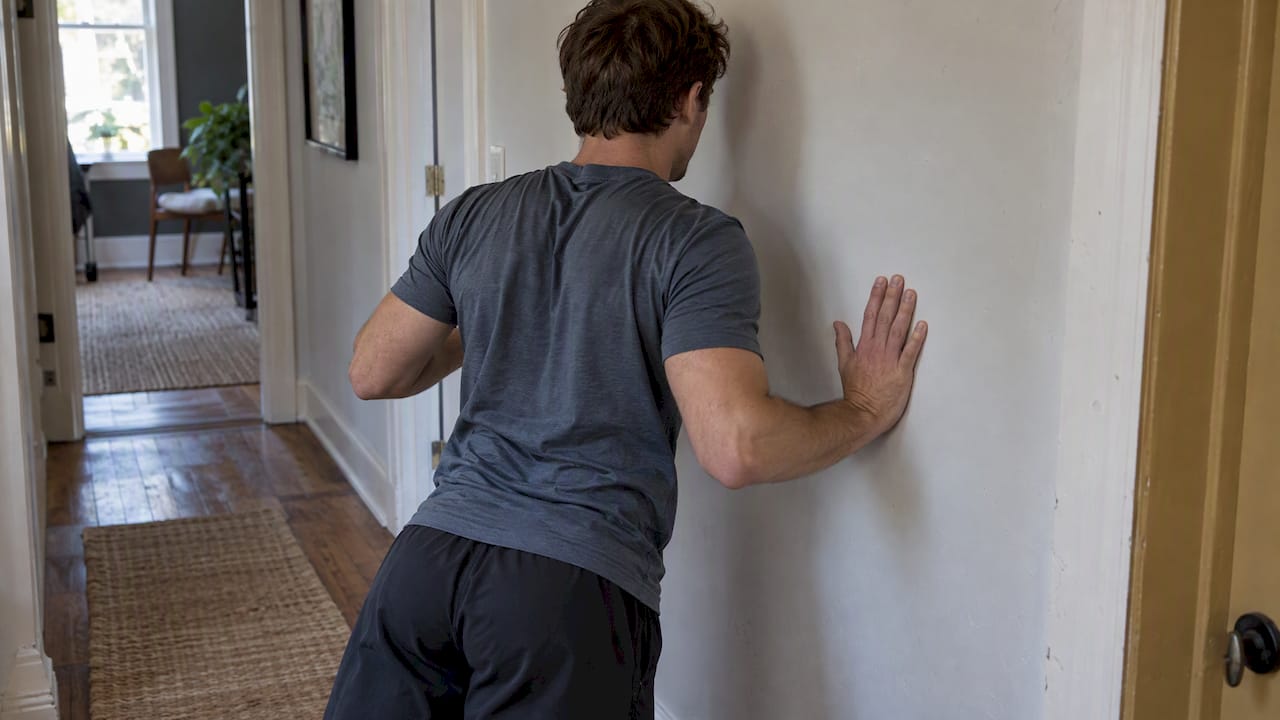
Two simple checks can help you understand what you are dealing with before you even see a clinician. In the wall-press test, push both hands into a wall at shoulder height; a shoulder blade that lifts or rotates away from your back points to serratus weakness. In the scapular assistance test, have someone gently stabilize your shoulder blade while you raise your arm; if that support reduces pain or improves your range, it supports a scapular-origin problem.
Winging generally falls into two categories, as outlined in a clinical review of scapular winging diagnosis and treatment:
Not every well-intentioned stretch or exercise helps a winging scapula, and some can actively slow recovery. A clinical review on nerve palsy management cautions against overstretching a denervated serratus anterior, since forceful stretching can irritate a muscle that is already struggling to fire properly, according to a 2025 clinical review on scapular winging management.
Pro Tip: If an exercise causes your shoulder blade to visibly “pop” outward, that is your body compensating, not strengthening. Regress to an easier variation rather than fighting through poor form.
We frame rehabilitation around an individualized assessment first, since the right exercise progression depends on whether winging stems from serratus weakness, trapezius involvement, or a postural pattern that developed over time. Starting patients in supine positions for early motor control lets us build a clean movement pattern before introducing gravity and resistance, which mirrors the staged approach described in clinical literature on compensatory muscle activity and scapular control, found in research on compensatory strategies for scapular stability.
Full functional recovery from scapular winging often takes months rather than weeks, and that is normal, not a sign that something has gone wrong. The biggest obstacle we see is not the exercises themselves but inconsistency: people do a burst of sessions, feel better, and stop before the pattern is truly retrained. Short daily sessions, clear cueing, and periodic check-ins with a clinician tend to keep people on track better than occasional long workouts.
— Deane
We offer a direct path if you want a clinician to confirm what is driving your winging and build a program around it rather than guessing from general exercise lists. A new patient visit with us typically includes a hands-on assessment, a personalized exercise program, and manual techniques such as Active Release Technique when soft tissue restriction is part of the picture.

If your shoulder blade still isn’t tracking the way it should, book an assessment through our services page and we will build a plan around your specific pattern.
This article is general information, not a substitute for advice from a qualified doctor. Consult a qualified healthcare professional about your own circumstances before acting on anything here.
Exercise can correct many cases of scapular winging, particularly when weakness in the serratus anterior is the underlying cause. Supine motor control work followed by progressive loading, as described in reviews of scapular stabilization programs, is the standard conservative approach, though severe nerve injuries may need longer observation or specialist referral.
Many conservative programs run 6 to 12 weeks for noticeable improvement in control, based on research on exercise therapy durations, but full recovery, especially after nerve involvement, can take several months. Consistency with your program matters more than the speed of any single week’s progress.
Medial winging is most often linked to weakness of the serratus anterior, sometimes from long thoracic nerve involvement, while lateral winging is typically tied to trapezius weakness from the spinal accessory nerve, according to clinical reviews of scapular winging. Identifying which pattern applies to you helps determine which exercises will actually help.
Avoid heavy overhead pressing, ballistic throwing motions, and repetitive overhead work until your scapular control improves, since these can reinforce compensation patterns or strain an already weakened serratus anterior. Clinical guidance also cautions against forcefully stretching a denervated serratus anterior, since that can slow rather than speed recovery.
Same Day Appointments Available
We Direct Bill!