

Meralgia paresthetica, the burning, tingling or numb patch on the outer thigh, is usually treated by taking pressure off the nerve that supplies that skin. That means looser waistbands, gentle movement, and sometimes weight management. Most people improve without anything invasive. A smaller group needs medication, an injection, or, rarely, surgery. This guide walks through the steps in the order clinicians generally use them. It also covers tailbone (coccyx) pain, which readers often search alongside it and which is a different problem with a different recovery path.
The lateral femoral cutaneous nerve carries sensation from the outer thigh. It passes close to the front of the pelvis, near the groin crease and hip bone. When it is squeezed or stretched there, you feel numbness, pins and needles, or burning on the outside of the thigh. It is a sensory nerve, so the problem is usually altered feeling rather than weakness. Weakness points to a different cause, such as a lower back nerve root, and deserves a proper assessment.
Common pressure points are the ones treatment targets. Tight clothing and constrictive belts around the waist can cause or intensify compression, according to the Mayo Clinic’s treatment guidance. Extra abdominal girth, long periods in a hip-flexed position, and some changes in posture or pelvic mechanics can also play a part. The cause is often a mix, which is why a one-size-fits-all fix rarely works.
A 2023 review describes initial management as conservative because most patients recover spontaneously. It lists avoiding garments that compress the waist, discussing weight loss when appropriate, and managing symptoms with analgesics or anti-inflammatories. Mayo Clinic adds that symptoms often ease within a few months.
In practice, the first two weeks look like this:
For very mild symptoms, the 2025 BJA Education review notes that reassurance alone may be enough. Getting a clear diagnosis can itself be a treatment step, because many people fear something more serious.
Exercise for meralgia paresthetica aims to take tension off the nerve’s path and improve how your hips and trunk share load. Medical News Today describes gentle abdominal stretches, hip flexor stretches and core strengthening, with the advice to stop if an exercise causes pain. Rankings also frequently feature pelvic tilts, glute bridges and side-lying leg raises, which fit that same pattern of hip and core work.
Physical therapists may also use desensitization methods, neural mobilization and progressive strengthening of the core and lower limbs, tailored to the individual. The same guide frames therapy as a collaborative process of finding and modifying outside factors, not a fixed protocol. That fits our experience of how good rehab works: the exercise list matters less than the reasoning behind it.
There is no agreed list of banned exercises, so use a simple rule: if a stretch or position reproduces the burning, tingling or numbness, ease off. Deep, sustained hip flexion, aggressive hip flexor stretching that pulls hard through the groin, and heavy abdominal compression (tight lifting belts, for example) are the usual suspects for irritating the nerve. Back off and reassess rather than pushing through.
Gentle nerve gliding is a technique some clinicians use to help a nerve slide more freely through surrounding tissue. If you are curious about the method, our guide explains how nerve flossing actually works and which conditions respond well to nerve gliding. It also covers when you should avoid nerve flossing. For a nerve that is already irritated, gentle and brief is the rule. A clinician should show you the right version for the outer thigh.
People often ask about devices such as pulsed electromagnetic field mats for nerve and soft tissue pain. If you want to read what the research says before spending money, see this overview of PEMF for pain research. Whatever you try, change one thing at a time so you know what is working.
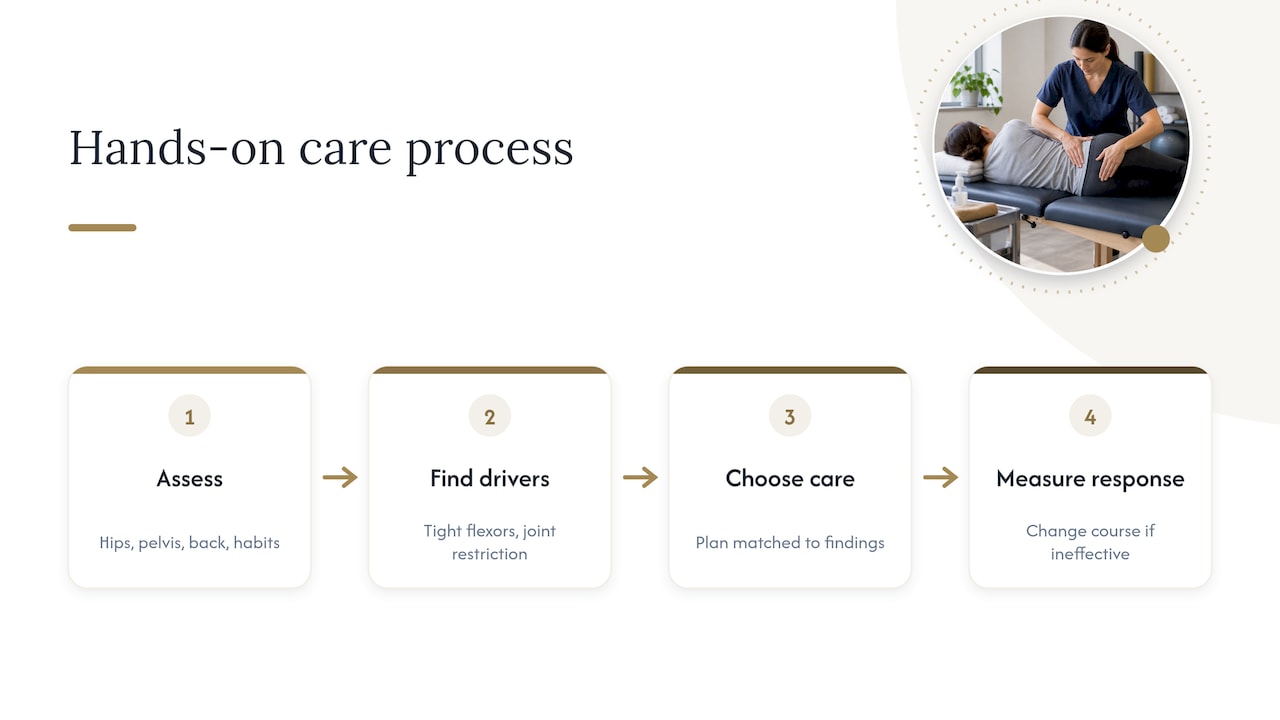
Hands-on care can support the conservative stage by addressing the tissues and joints around the nerve’s path. At Shephard Health in Calgary, a visit begins with a biomechanical assessment of your hips, pelvis, lower back and movement habits. The aim is to confirm that the outer-thigh symptoms fit a nerve compression pattern and to find what is feeding it, such as tight hip flexors, restricted pelvic or lumbar movement, or overloaded soft tissue.
Depending on what we find, the plan may include soft tissue work such as Active Release Technique or Graston Technique, a chiropractic adjustment for restricted joints, massage therapy, and a progressive exercise program. Not every option suits every person, and none is guaranteed to resolve meralgia paresthetica. We say so plainly: the evidence base for individual add-on therapies is limited. A 2024 narrative review notes limited evidence for alternatives such as botulinum toxin, acupuncture and kinesiology taping, and that no single intervention has been shown to be universally superior. Our job is to choose reasonable, low-risk steps, measure whether they help, and change course when they do not.
If you have not been to a chiropractor before, here is what to expect on your first visit.
The usual treatment ladder is conservative care first, then a steroid injection, then surgery only if those fail, as the 2024 narrative review describes. Mayo Clinic says medication or corticosteroid injections may be considered if symptoms last more than two months or do not improve, and that surgery is rarely considered, for very painful, long-lasting symptoms.
A 2023 academic review lists first-line medication as simple analgesics with anti-inflammatory action and nerve-pain medicines, with tricyclic antidepressants if indicated. Topical capsaicin and TENS have also been reported in the 2023 clinical review. Prescriptions come from your physician or pharmacist, who can check them against your other medications and health history.
When conservative treatment fails, the same review describes regional nerve blocks, commonly ultrasound-guided local anaesthetic plus corticosteroid. Reported multimodal approaches had 85 to 91% success, though injection frequency and dosing lack consensus. Because the nerve’s path varies from person to person, ultrasound guidance is recommended to improve accuracy. This is a physician’s procedure, so ask your family doctor for a referral.
Surgery to release or remove the nerve is reserved for severe, persistent cases. Chiropractors do not perform it. We can help you work out whether you have exhausted reasonable conservative options and refer you onward.
Book an assessment soon if the outer-thigh symptoms are new and you are unsure of the cause, if they are not shrinking after several weeks of loosening clothing and adjusting activity, or if the pain is disturbing your sleep. Same-day appointments are often available at our clinic, and we bill many insurers directly.
Seek urgent medical care if numbness or tingling comes with real leg weakness, loss of bladder or bowel control, numbness in the groin or saddle area, fever, or follows major trauma. Those are not features of simple meralgia paresthetica.
Meralgia paresthetica and coccyx pain (coccydynia) often get searched together, perhaps because both can make sitting uncomfortable. They are different. Meralgia paresthetica is a sensory nerve problem of the outer thigh. Coccydynia is pain at the base of the spine, typically worse when sitting, rising from a chair, or after a fall.
The contrast in recovery is worth knowing:
| Meralgia paresthetica | Coccydynia (tailbone pain) | |
|---|---|---|
| Where you feel it | Outer thigh: burning, tingling, numbness | Base of the spine, often with sitting |
| Main treatment idea | Take pressure off the nerve | Reduce pressure on the coccyx, guided exercise |
| Outlook | Often self-limiting, usually months | No reliable timeline in the evidence |
| Escalation | Medication, nerve block, rarely surgery | Reassessment if persistent |
The Canadian Chiropractic Guidelines recommend individualized exercise addressing spinal and hip movement, pelvic and trunk control, and lower-limb strength. They also mention a coccyx cut-out or wedge cushion and changes to sitting and activities to reduce pressure. A ring-shaped or cutout cushion avoids direct pressure on the coccyx when you sit. Practical steps include shifting your weight forward onto your thighs, breaking up long sitting periods, and avoiding hard surfaces for now.
The same guidance says recovery varies and the evidence does not support a reliable timeline, so be wary of anyone promising one. A systematic review found a lack of high-quality evidence to pinpoint the most effective conservative treatment. Persistent cases may need reassessment. The guidelines are clear that new incontinence, or severe or progressive neurological deficits, require emergency assessment, as do cauda equina symptoms and major trauma with possible spinal instability. For general soft tissue healing principles after an injury, see our soft tissue recovery timelines guide.
We see two common mistakes with nerve pain. The first is waiting months without changing anything that presses on the nerve. The second is chasing a long list of treatments without a clear diagnosis.
Our approach starts with a comprehensive biomechanical assessment, because outer-thigh symptoms, low back pain and tailbone pain can look similar to the patient and have different causes. We then pick the simplest steps likely to help, such as hands-on care, targeted rehab and practical changes to how you sit, train and dress, and we reassess at set points. If the picture does not fit our scope, or symptoms are not moving, we say so and point you to your physician rather than extending care that is not helping.
We also treat athletes and active people, who often develop these symptoms from heavy belts, tight gear or long hours in flexed positions. Those details shape the plan as much as the diagnosis does.
— Deane
If you have outer-thigh burning or numbness, or tailbone pain that is not settling, we can assess the cause and build a plan around your goals. Our team combines chiropractic care, physical rehabilitation and soft tissue techniques in one clinic, with same-day appointments often available and direct billing where your coverage allows. Explore our chiropractic care in Calgary or see all services.

Bring a note of which clothing, activities and positions bring symptoms on. It speeds up the assessment.
Many cases ease within a few months, according to Mayo Clinic. Recovery varies, and symptoms that last beyond about two months or are not improving are worth discussing with a physician about medication or an injection.
It can contribute indirectly, for example through tight waist gear, a hip-flexed posture, or hip and core mechanics that overload the groin region. We could not find strong evidence that running itself is a direct cause, so a movement assessment is the practical way to identify your trigger.
Gentle abdominal and hip flexor stretches and core strengthening are commonly described, and you should stop if they cause pain. A clinician can adapt them to your hips and show you safe nerve glides.
Unlikely. Surgery is rarely considered and is reserved for very painful, long-lasting symptoms that have not responded to conservative care or injections.
A cut-out, ring-shaped or wedge cushion, changes to how you sit, and individualized exercise are the main measures in the Canadian Chiropractic Guidelines. If pain persists, get it reassessed.
Same Day Appointments Available
We Direct Bill!