

Orthotics can help supination when they are built for a high, rigid arch: they cushion the foot, spread pressure across the whole sole and add lateral (outside) support so the foot stops rolling outward. A generic insole sold for flat feet does the opposite. At Shephard Health in Calgary, we assess how your foot and leg move first, then decide whether a custom orthotic is the right tool for you.
Supination, also called underpronation, means your foot rolls outward as you walk or run. The foot often has a high arch with little flexibility when you stand. The heel tends to lean outward, weight shifts to the outer edge, and calluses commonly build up under the base of the little toe, according to a Canadian foot-care overview. That same overview lists conditions linked to this pattern: heel pain or plantar fasciitis, Achilles tendon problems, metatarsalgia, iliotibial band syndrome, lateral ankle sprains and stress fractures in the foot and lower leg.
That list explains why a foot problem can show up far from the foot. A stiff, high-arched foot absorbs shock poorly, so the shin, knee and hip often take the extra load. If you have outer-foot pain, repeated ankle rolls or worn-out outer shoe edges, supination is a reasonable suspect.
They can, when the device matches the foot. Foot orthoses are custom-made medical devices designed to improve biomechanics and to adjust and control foot function and alignment. Island Health’s foot orthoses guidelines add that they should be used with appropriate footwear and are not a cure for an underlying ailment. Read that as a sensible expectation: orthotics change how forces move through your foot, and the rest of the plan (strength, mobility, shoes, training load) does the remaining work.
The flip side matters too. Orthotics are tools for specific injuries or conditions, and an incorrect orthotic can cause or worsen an injury. That is the main argument for having the device prescribed after an assessment rather than picking one by its label.
Supinated feet need a different goal from flat feet. A flat foot needs support and control. A high-arched foot needs three things.
This is also why many over-the-counter insoles disappoint supinators. Most are shaped around the more common problem of low arches. For a high-arched foot, the shape under the arch, the material firmness and the posting all matter, and those are things a prescription device lets you set for your own foot.
A lateral heel wedge is a small raised edge on the outer side of the heel of the orthotic. Its job is to tilt the heel slightly so the foot does not fall outward at contact. Clinicians call this valgus posting. When the problem is a heel that tips outward, the wedge goes on the lateral side.
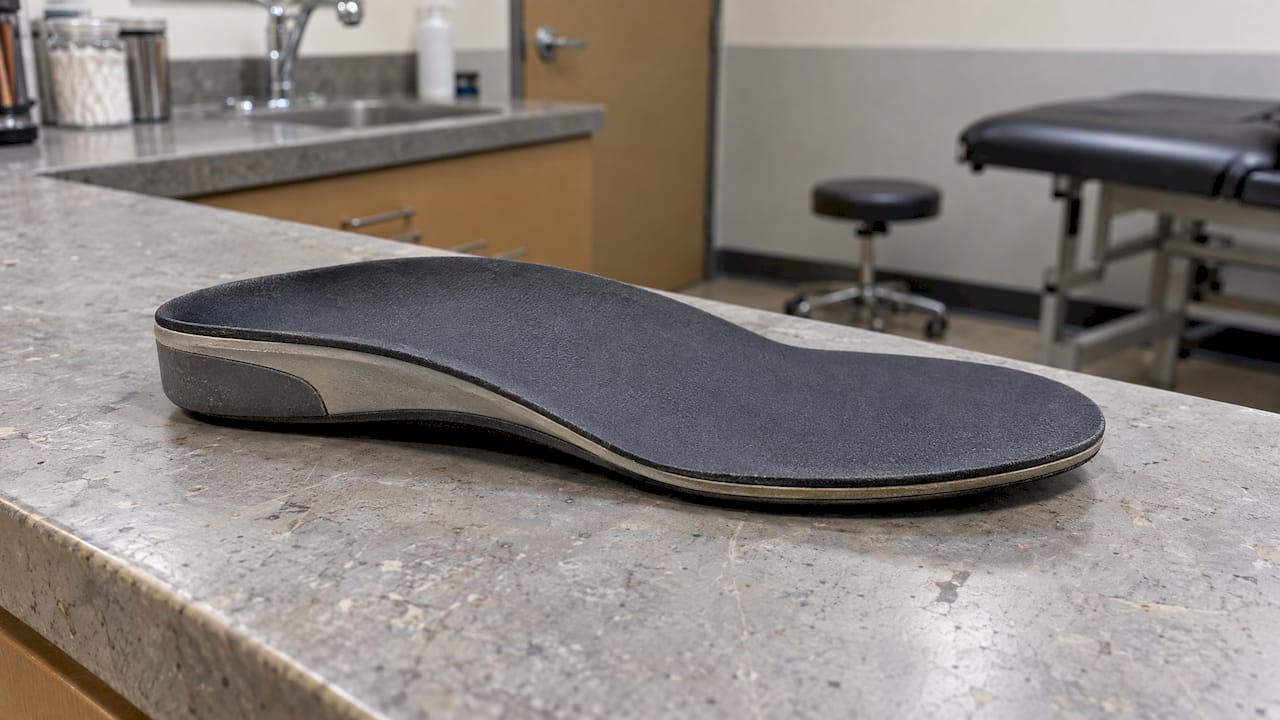
How far the wedge extends depends on how long the rolling persists. A heel-only post addresses the start of the step. A longer post that continues toward the forefoot is used when the outward motion carries on through the middle and push-off phases of the step. In practice this is a prescription decision, because the amount of correction that helps one person can be too much for another with a stiffer foot. A rigid foot is usually accommodated rather than forced into a new position.
This is also the reason that a three-layer wedge insole bought online is a gamble. It adds lateral lift, but it cannot account for whether your heel is flexible or fixed, how your forefoot sits, or what your ankle does after the heel lands.
Canadian regulators describe the standard clearly. In British Columbia, a functional custom orthosis is prescribed to control or improve foot function to a specific degree, as determined by a thorough biomechanical evaluation, to relieve foot and lower-limb musculoskeletal symptoms. The same guideline describes an accommodative orthosis for cases where a functional device is not appropriate, with goals such as cushioning, pressure relief and preventing worsening deformity. Nova Scotia’s podiatry standard calls for stance and gait analysis and casts or 3D images, plus a fitting that explains tolerance, expected timeframes, footwear and documented follow-up.
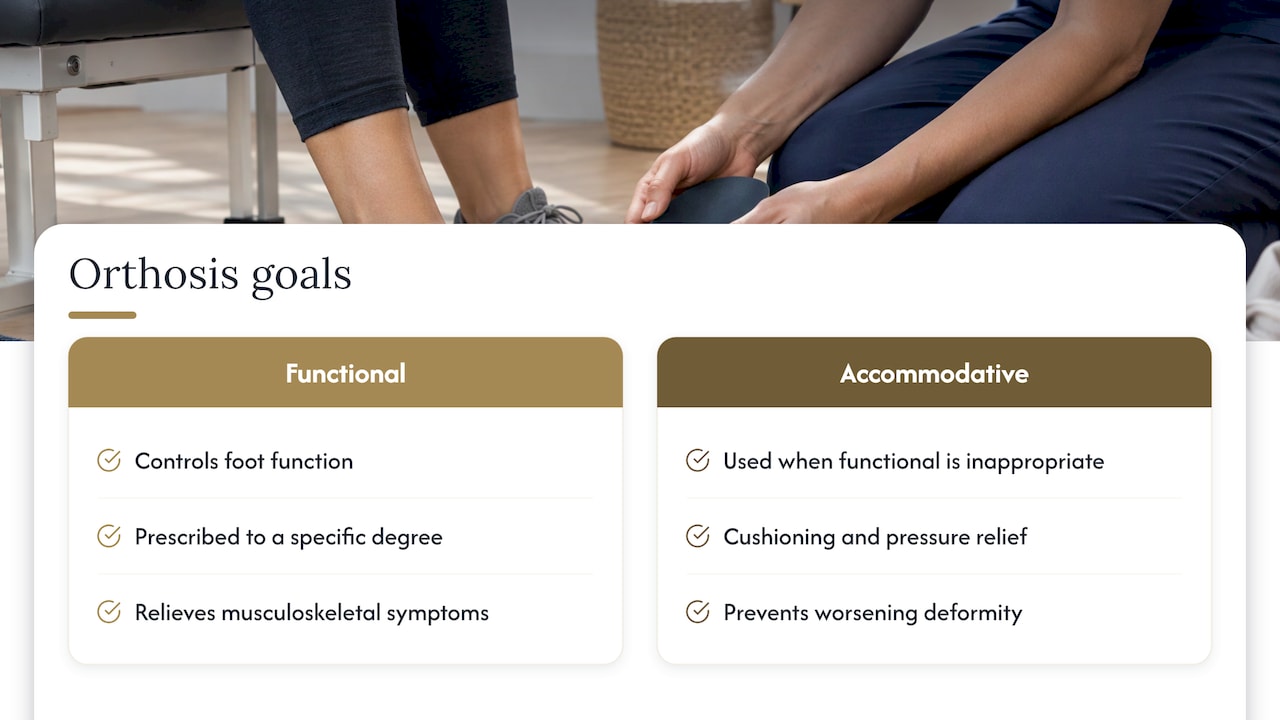
Those are provincial standards for other professions in other provinces, but they describe what a good process looks like anywhere. Our approach follows the same logic: an individualized plan built on a comprehensive biomechanical assessment, not a one-size-fits-all product. When you come in, expect us to look at how you stand, how you walk or run, how your ankle, knee and hip move, and what your symptoms and activity load are. Supinators often have more than one thing going on in the foot, so the plan may combine orthotics with hands-on care for tight or irritated tissue.
You can read more about how our devices are made and what the visit involves on our custom foot orthotics page, and about what the benefits look like in our guide to the benefits of custom foot orthotics.
Orthotics are designed to fit inside the shoes you wear most, and they only help a specific condition when the shoes suit them. For supinators, Island Health’s guidance on footwear pairing is the starting point: choose shoes that the orthotic transfers into readily between similar styles.
A few practical habits help:
Runners should read our guide to orthotics for running, since running shoe choice and orthotic posting interact more than most people expect.
New orthotics change the way your foot meets the ground, and your body needs time to adapt. A common schedule from Island Health is one hour on day 1, then adding an hour each day from day 2 through day 21. If something hurts rather than just feels different, take them out and tell your clinician, because adjustments are routine.
Follow-up is part of the process, not an optional extra. The BC Podiatric Medical Association advises returning for follow-up evaluation so that feet and orthotics function properly together. At Shephard Health, we want to hear how the first weeks went, because small changes to posting or top covers can make the difference between a device you wear daily and one that stays in a drawer.
How long they last depends on the shell and the top cover. Our breakdown is in how long orthotics last, and the cost question is covered in what custom orthotics cost in Calgary.
A brace is a different tool from an orthotic. It is relevant mainly when supination has already led to ankle sprains. A systematic review of acute ankle ligament injuries supports a short initial immobilization (up to 10 days) for grade III lateral sprains, followed by a semi-rigid ankle brace, and reports that braces reduce ankle sprains in athletes in risk sports.
If you keep rolling your ankle, the useful question is why. A high-arched, outward-leaning foot is a common reason, and addressing it with an assessment, rehabilitation and the right orthotic is how you work on the cause instead of only protecting the joint afterward. Our physical rehabilitation and chiropractic team works on exactly that kind of injury.
Do not wait for a perfect diagnosis. Book an assessment when any of these apply:
Tingling, burning or sudden swelling with severe pain should be seen by a doctor promptly. For heel pain in particular, see our pages on plantar fasciitis treatment in Calgary and foot and ankle pain. Metatarsalgia, pain under the ball of the foot that supinators often report, has its own guide: orthotics for metatarsalgia.
Shephard Health offers same-day appointments and direct insurance billing where applicable, so the practical steps are short. You come in, we assess how your feet and body move, and we explain what we find and which options fit your goals. If custom orthotics are right, we build the plan around them. If tissue in the foot, calf or lower leg is also irritated, our team can combine orthotics with techniques such as Active Release Technique, shockwave therapy or massage therapy. Those are separate treatments chosen on your assessment, not a package.
Supinated feet are some of the most misunderstood feet we see in the conversation about orthotics. The internet advice is almost always about arch support, which is the wrong frame for a foot that already has too much arch. Our view is that the goal is to cushion, spread pressure and steady the outside of the foot, and that is a decision made on an assessment of your foot, your shoes and the way you move.
We prefer to build a plan around your goals, whether that is finishing a race without outer-ankle pain or simply walking the dog without heel pain. Orthotics are one part. Hands-on care, rehabilitation and footwear guidance work with them, and we would rather you leave with a clear plan than a device and no explanation.
Deane
If you suspect supination, the most useful next step is to have someone look at your feet while you stand, walk and move. Shephard Health in Calgary offers same-day appointments and direct billing to insurance where applicable. You can see how orthotics fit into our care on the custom foot orthotics page or reach the clinic through our main site.
Supination is managed rather than switched off. The usual approach combines cushioned footwear, an orthotic that accommodates the high arch and adds lateral support, and exercises or hands-on care for tight or irritated tissue. An assessment tells you which of these matter most for your foot.
It tilts the heel slightly so the foot is less likely to roll outward as it lands. A longer lateral post continues the control further along the foot. The right amount depends on how flexible your heel is, so it is set during prescription rather than guessed.
They can, especially when pain, calluses on the outer foot or repeated ankle sprains show that the outer edge of the foot is taking too much load. Orthotics work best with suitable shoes and are not a cure for an underlying condition, so they are used as one part of a plan.
No brace corrects supination itself. Semi-rigid ankle braces are used after more serious lateral ankle sprains and to reduce sprains in athletes in risk sports. If sprains keep recurring, an assessment of the foot and ankle addresses the cause.
Same Day Appointments Available
We Direct Bill!