

Kinesio taping can ease low back and pelvic pain during pregnancy, and the research on it is encouraging, especially in the second and third trimesters. It works best as a short-term support alongside movement and hands-on care, and the first application is best done by a trained clinician, because anchor points and tension decide whether the tape helps or just irritates your skin.
This guide covers what the tape can and cannot do, what the studies found, how belly and back taping work, what to check before you start, and when to get assessed first.
Kinesio tape is a thin, stretchy cotton tape with an adhesive backing. Applied with light tension, it gives the skin and underlying muscles gentle feedback and a little support, without restricting movement the way a rigid brace does.
In pregnancy, the usual targets are the low back, the pelvis and the front of the abdomen. Pelvic girdle pain, meaning pain around the sacroiliac joints at the back of the pelvis or the pubic bone at the front, affects roughly 45% of pregnant and 25% of postpartum women. Pregnancy hormones such as relaxin loosen ligaments, and a growing belly shifts your center of gravity, so muscles work harder to keep you stable. Tape is one way to share some of that load for a few days at a time.
The best evidence is for low back pain.
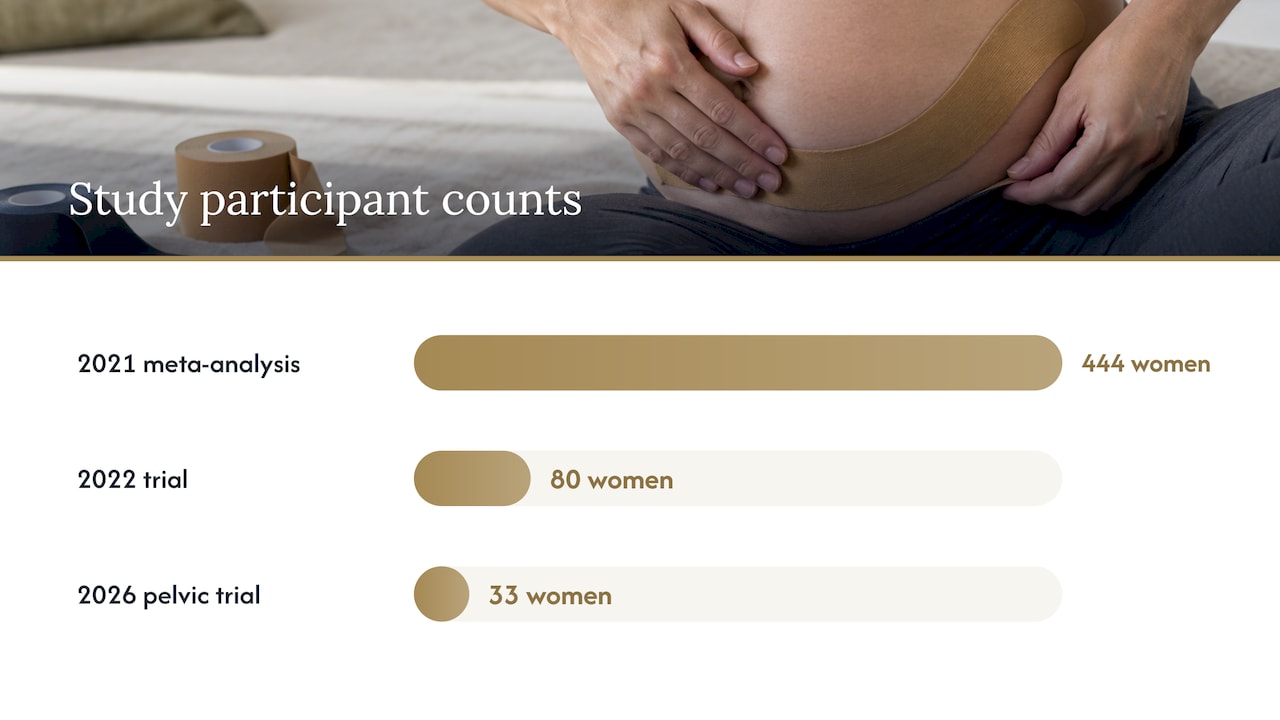
Low back pain. A 2021 meta-analysis of seven randomized trials covering 444 pregnant women found significant improvements in pain and in day-to-day function compared with controls. The pain benefit was significant in the second and third trimesters. A 2022 trial of 80 women found that kinesio tape reduced back-pain disability, with an effect that lasted after the tape came off.
Pelvic girdle pain. A 2026 trial in 33 postpartum women used four taping sessions over two weeks along the pelvic girdle and the muscles of the buttock and back. Pain and disability dropped more than in the control group.
How long to wear it. A December 2024 analysis in Physiotherapy estimated that about 5 to 10 days of use gives a pain improvement large enough to matter to patients. The authors rated the certainty of the evidence as low, so treat this as a guide, not a prescription.
A 2026 review of non-drug treatments for pregnancy back and pelvic pain found that conservative care as a group reduced pain and disability meaningfully. That supports combining tape with other active approaches.
An Austrian expert consensus on pain management in pregnancy describes kinesio tape applied beside the lumbar spine, over the sacroiliac joint or as belly support as showing good evidence, especially in the third trimester, and as risk-free for mother and child.
Safe use mostly comes down to skin and fit. Check these each time you tape:
Those same guidelines say taping, bracing and support garments should not replace active care and self-management. Think of tape as a bridge that makes movement easier, not the whole plan.
The patterns below describe what the research and clinical practice use. Because tension and anchor placement are technique-sensitive, the first application is best done by a trained clinician who can match the pattern to your pain.
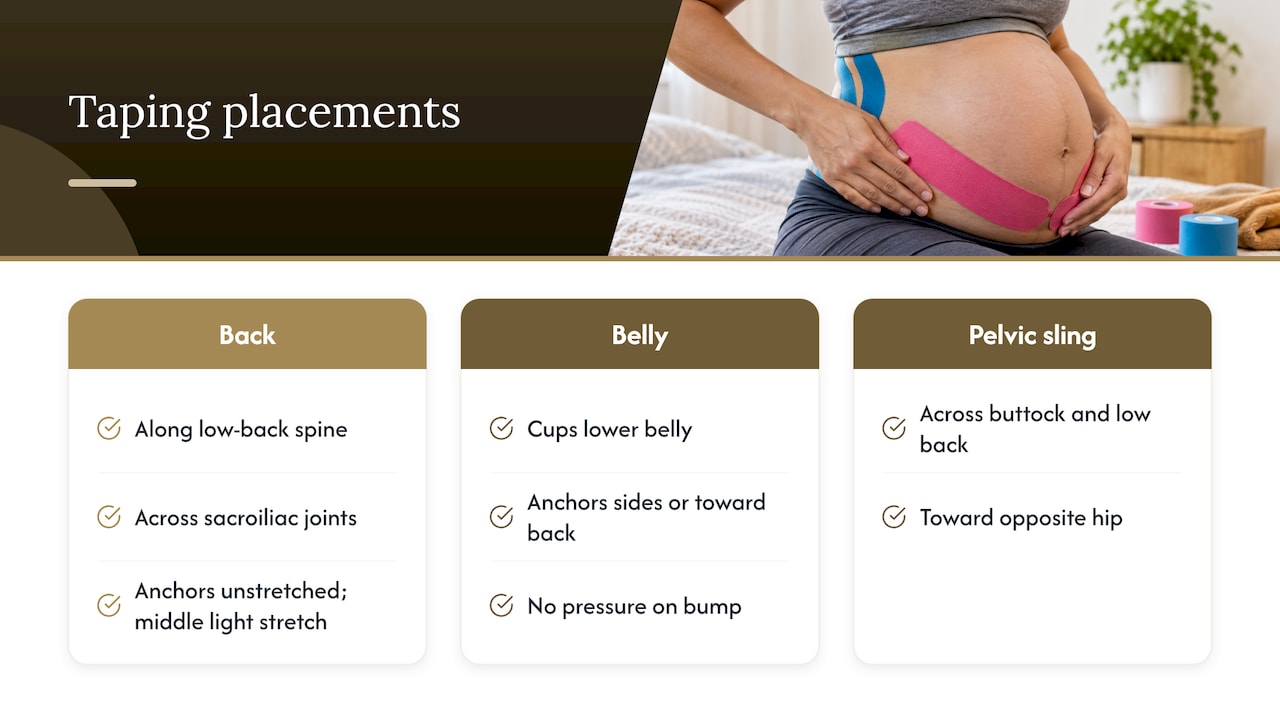
Back taping. Strips run alongside the spine in the low back, or across the sacroiliac joints at the base of the spine, which is the approach the expert consensus describes. Anchors are placed without stretch, and the middle of the strip gets light stretch only.
Belly support. One or more strips cup the lower belly and anchor on the sides or up toward the back, lifting gently to reduce the heavy, pulling feeling in the third trimester. The tape sits on the skin without pressing the bump.
Pelvic and posterior sling taping. Strips cross the buttock and low back toward the opposite hip, following the pattern used in the 2026 pelvic girdle pain trial.
The right pattern differs for round ligament pain, pubic symphysis pain and rib discomfort, which is why a one-size video does not always fit your body. Our team assesses your movement first, then chooses the pattern. You can book kinesio taping and chiropractic care at our Calgary clinic.
Tape lowers the pain enough to let you move, and movement is what keeps you strong. Short-term supports fit inside a plan, not in place of one. A guide on short-term supports in pain care makes the same point about using supports alongside active treatment.
For pregnancy back pain, that plan often includes gentle strengthening, position changes, pacing activity and hands-on care. Our guide to pregnancy back pain relief walks through quick tactics and clinic care, and our overview of what the evidence shows for kinesio tape and back pain covers the wider research.
The Canadian guidelines say that serious, hip, neurological and obstetric causes should be considered before back or pelvic pain is treated as a mechanical problem. In practical terms:
Contact your doctor, midwife or obstetrician right away for severe or worsening pain, vaginal bleeding, fluid leakage, fever, reduced baby movement, or any symptom outside normal pregnancy discomfort. Tape is not a replacement for medical care.
Book an assessment with us if pain limits walking, stairs, turning in bed or standing on one leg, which are the activities that typically define pelvic girdle pain. If you are not sure what a first visit involves, read what to expect on your first chiropractic visit.
Pregnancy pain is common, but it is not something you have to simply endure. When someone comes to us with low back or pelvic pain, we start with a biomechanical assessment: how you stand, walk, rotate and load each leg. The tape pattern, if tape suits you, follows from that.
We like tape because it is non-invasive and it lets you keep moving. We pair it with chiropractic care and physical rehabilitation so the relief becomes strength and better movement, not just a few comfortable days. Our plans are individualized and evidence-based, and we can bill many insurers directly.
If your pain is new, changing, or limiting what you do, the best time to be assessed is early.
Deane
We offer kinesio taping as part of chiropractic care and physical rehabilitation at our Calgary clinic, with same-day appointments and direct insurance billing where applicable. Tell us you are pregnant when you book so your assessment and taping are planned around it.

See our services page or learn about chiropractic care in Calgary.
Yes, belly support taping is one of the approaches an expert consensus rates as having good evidence, especially in the third trimester. Keep tension light, avoid pressing on the bump, and remove the tape if you feel tingling, itching or pain. Have the first application done by a trained clinician.
Research suggests that 5 to 10 days of use gives a meaningful pain improvement, though the certainty of that estimate is low. Check your skin daily and take the tape off sooner if it irritates you.
Studies suggest it can. A 2021 meta-analysis found meaningful reductions in low back pain and disability, particularly in the second and third trimesters. Tape works best alongside active care.
Call your doctor, midwife or obstetrician for severe or worsening pain, vaginal bleeding, or any symptom that seems outside normal pregnancy discomfort. Also stop using the tape if you get a rash, swelling or numbness.
Same Day Appointments Available
We Direct Bill!