

Non surgical back pain treatments are defined as evidence-based interventions that relieve pain and restore function without requiring an operation. The North American Spine Society classifies conservative care as the first-line approach for most non-emergent back pain cases, reserving surgery for when structured treatment fails or red flags appear. For Albertans dealing with chronic or acute back pain, that means a wide spectrum of therapies, from structured exercise programs to spinal decompression and Active Release Technique, are available and clinically supported before any surgical conversation begins. The research is clear: most patients recover fully without going under the knife.
Back pain that is not settling? Start with a $67 new patient visit
A chiropractor assesses your spine and movement, treats on day one when it is safe, and gives you exercises matched to what we find. See low back pain care in Calgary. Book online.
Structured physical therapy is the cornerstone of back pain management without surgery. A 2026 systematic review found that exercise performed 15–20 minutes, 6–7 times per week over at least 16 weeks, achieved a SUCRA score of 97.9, the highest efficacy ranking for pain reduction across all tested modalities. That means consistency and duration matter far more than intensity. Patients who commit to a structured program see the greatest long-term results.
Core-focused modalities produce measurable results. Pilates and sling exercise therapy both show strong pain reduction in meta-analyses, with standardized mean differences of approximately -1.4 to -1.5 for pain scores and comparable gains in function. These are not gentle stretching routines. They are targeted programs that rebuild the muscular support structure around the spine, reducing load on damaged discs and joints.

Combining extracorporeal shock wave therapy (ESWT) with conventional physical therapy outperforms either treatment alone. A 2026 network meta-analysis ranked this combination at 96.0% for pain relief and 99.3% for functional improvement among all assessed treatment approaches. ESWT uses acoustic pressure waves to stimulate tissue repair and reduce inflammation at the source. You can learn more about how shockwave therapy works in practice.
Pro Tip: If you are starting a home exercise program for back pain, prioritize frequency over duration. Six short sessions per week outperform two long ones, based on the dosing evidence from 2026 clinical research.
| Treatment | Evidence strength | Typical duration | Expected outcome |
|---|---|---|---|
| Structured exercise therapy | Very strong | 16+ weeks | Significant pain reduction, improved function |
| Pilates / sling exercise therapy | Strong | 8–16 weeks | Core stability, reduced pain intensity |
| ESWT + physical therapy | Very strong | 6–12 weeks | Superior pain relief and functional gains |
| Spinal decompression | Moderate | 4–8 weeks | Disc pressure relief, nerve symptom reduction |
| Acupuncture | Moderate | 6–10 weeks | Short to medium-term pain relief |
Back pain is a symptom, not a diagnosis. Treating the symptom without identifying the structural cause produces inconsistent results. Annular tears, disc herniation, facet joint degeneration, and sacroiliac dysfunction each respond to different interventions. A diagnosis-driven approach to treatment selection consistently outperforms symptom-only management.
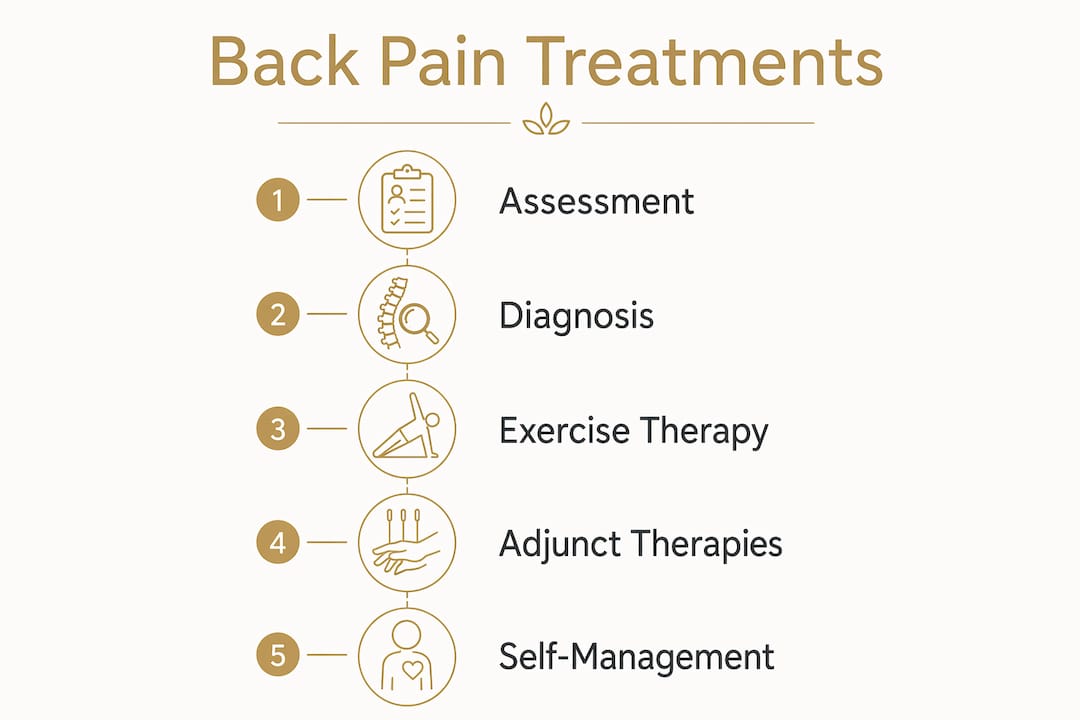
Biologic disc repair targets annular tears directly and ranks among the most durable non-surgical options available. Nerve blocks address facet joint pain with precision, providing relief while the underlying condition is managed. Spinal decompression therapy reduces antiradical pressure, which benefits patients with disc herniation and associated nerve compression. Shephardhealth offers spinal decompression as part of a personalized, non-invasive care plan.
Diagnostic imaging and guided injections play a key role in confirming the structural source of pain before committing to a treatment path. This evaluation step prevents mismatched therapy, which is one of the most common reasons patients plateau or regress. Non surgical treatments do not always repair structural damage, but they consistently manage symptoms and support the body’s natural healing process when matched correctly to the diagnosis.
Regenerative medicine, including platelet-rich plasma (PRP) therapy, represents a newer category of non-invasive options. PRP uses your own blood components to stimulate tissue repair at the injury site. The evidence base is still developing, but early results for disc and soft tissue conditions are encouraging.
Psychological factors are not secondary concerns in back pain recovery. They are primary drivers of outcomes. Fear of movement, known clinically as kinesiophobia, creates a cycle where patients avoid activity, lose strength, and experience worsening pain. A large 2026 clinical trial found that psychological improvements explained 76% of the treatment effect in a supported self-management program. That figure reframes the entire conversation about what “treating back pain” actually means.
A personalized self-management program combines pain education, graded exercise, and psychological strategies into one coordinated plan. This approach reduces chronic pain escalation more effectively than spinal manipulation alone. Patients who understand why their pain behaves the way it does are far more likely to stay engaged with their therapy and less likely to catastrophize setbacks.
Pro Tip: Ask your clinician to address your fear of movement directly, not just your physical symptoms. Patients who receive explicit education about pain neuroscience alongside physical treatment recover faster and with fewer relapses.
Addressing patient mindset is not optional. It is a clinical requirement for durable relief. Programs that skip the psychological component tend to produce short-term gains that fade within months. The most effective non-surgical care plans treat the whole person, not just the spine.
Adjunct therapies support the primary treatment plan. They manage symptoms, reduce inflammation, and keep patients functional while the core therapeutic work takes effect. Transcutaneous electrical nerve stimulation (TENS) is one of the most accessible options. It delivers mild electrical current to interrupt pain signals and provides short-term symptom relief during use. TENS does not address structural issues, but it helps patients stay active and engaged with their rehabilitation.
Epidural steroid injections offer targeted anti-inflammatory relief for nerve-related pain. The evidence supports their use for weeks to months of relief, making them a useful bridge while exercise therapy takes hold. They are not a long-term solution on their own. Chiropractic care and spinal manipulation are effective for acute back pain in patients without significant fear-avoidance behaviors. Research confirms that spinal manipulation performs equally to standard medical care for acute presentations, though patients with high psychological risk need a broader, more integrated approach.
Active Release Technique (ART) is a manual therapy that targets specific soft tissue restrictions. It is particularly effective for patients whose back pain involves muscular adhesions or nerve entrapment alongside structural issues. You can read about the benefits of ART and how it fits into a broader rehabilitation plan. Electrotherapy options beyond TENS, including more advanced modalities, also play a supporting role in managing pain and promoting tissue recovery. Shephardhealth’s electrotherapy approaches cover a range of conditions where electrical stimulation accelerates recovery.
Modern interventional procedures, such as image-guided nerve blocks and minimally invasive disc procedures, serve as bridges for patients who need more than conservative care but are not yet candidates for surgery. These options expand the non-surgical toolkit significantly and have reduced the rate of unnecessary operations in spine care over the past decade.
Non surgical back pain treatments work best when they match the structural diagnosis, address psychological barriers, and follow a consistent, evidence-based exercise protocol over at least 16 weeks.
| Point | Details |
|---|---|
| Exercise frequency beats intensity | Performing exercise 6–7 times per week for 16+ weeks produces the strongest pain reduction outcomes. |
| Combined therapies outperform single ones | ESWT paired with physical therapy ranks highest for both pain relief and functional improvement. |
| Diagnosis drives treatment selection | Matching therapy to the structural cause (disc, facet, nerve) produces more durable results than symptom-only care. |
| Psychology is a clinical priority | Addressing fear of movement explains 76% of self-management treatment effects in clinical trials. |
| Adjunct therapies support, not replace | TENS, injections, and manual therapy manage symptoms while core exercise and education drive lasting recovery. |
After years of working in musculoskeletal rehabilitation, the pattern I see most often is not patients rushing to surgery. It is patients cycling through passive treatments, getting temporary relief, and never addressing the root cause or the psychological component that keeps them stuck.
The research from 2026 is unambiguous: patient education and fear-avoidance work are not soft add-ons. They are the mechanism behind why self-management programs outperform manipulation alone. Yet most patients I speak with have never had a clinician explain pain neuroscience to them. They have been handed a sheet of stretches and sent home.
The other underused tool is dose. Patients often do their exercises twice a week because that is what feels manageable. The evidence says 6–7 times per week is where the real gains happen. That gap between what feels reasonable and what the data supports is where most recovery stalls.
My honest view is that surgery avoidance is achievable for the vast majority of back pain patients, but only if the non-surgical plan is actually comprehensive. That means the right diagnosis, the right exercise dose, the right psychological support, and the right adjunct therapies working together. A plan that checks only one or two of those boxes will underdeliver every time.
— Deane
Shephardhealth provides evidence-based, non-surgical care for back pain patients across Alberta, combining chiropractic assessment, spinal decompression, shockwave therapy, and Active Release Technique into personalized treatment plans.

Every plan starts with a thorough evaluation to identify the structural source of your pain, not just the symptoms. From there, your clinician builds a program that matches your diagnosis, your goals, and your schedule. Shephardhealth offers same-day appointments and direct insurance billing, so getting started is straightforward. Learn about the unexpected benefits of chiropractic care and how it fits into a full non-surgical recovery plan. If you are ready to take the first step, find out what to expect at your first visit.
Structured exercise therapy performed 6–7 times per week over at least 16 weeks ranks highest for pain reduction, with ESWT combined with physical therapy showing the strongest results for both pain relief and functional improvement in 2026 meta-analyses.
Most evidence-based programs require a minimum of 8–16 weeks to produce meaningful, lasting results. Short-term relief from adjunct therapies like TENS or injections can appear within days, but durable recovery requires consistent exercise and rehabilitation.
Yes. Clinical guidelines from the North American Spine Society confirm that conservative care resolves most non-emergent back pain cases. Surgery is reserved for patients who fail structured non-surgical treatment or present with specific red flags.
Psychological factors explain 76% of the treatment effect in supported self-management programs. Fear of movement is one of the strongest predictors of poor recovery, making pain education and behavioral strategies a clinical priority alongside physical treatment.
Primary treatments, such as exercise therapy and core training, drive structural and neurological recovery. Adjunct therapies, including TENS, epidural injections, and manual therapy, manage symptoms and support patient function while the primary program takes effect.
Same Day Appointments Available
We Direct Bill!