

The best initial treatment for rotator cuff tendinopathy is an active, progressive exercise program targeting the shoulder and scapular muscles. That is not our opinion. It is the core recommendation of the 2025 international clinical practice guideline on rotator cuff tendinopathy, which reviewed the strongest available evidence and concluded that motor control and resistance training should come first, ahead of injections, passive machines, or rest alone.
While you arrange proper rehab, you can take a few reasonable steps on your own:
See a clinician promptly, and consider imaging, if you have significant weakness rather than just pain, a shoulder that gave out suddenly during a fall or heavy lift, or no meaningful improvement after several weeks of appropriate self-directed loading.
Active, progressive exercise targeting the shoulder and scapular muscles is the primary, evidence-based treatment for rotator cuff tendinopathy, with medications and passive modalities serving only a supporting role.
| Point | Details |
|---|---|
| Exercise comes first | Motor control and resistance training are the guideline’s recommended initial treatment, not an afterthought. |
| Medications and injections are short-term tools | Use acetaminophen, NSAIDs, or corticosteroid injections to enable rehab participation, not as a standalone fix. |
| Skip low-value modalities | Therapeutic ultrasound isn’t recommended, and shockwave therapy is reserved for calcific tendinopathy only. |
| Expect months, not weeks | Meaningful strength recovery typically takes 3 months of consistent progressive loading. |
| Get a professional assessment | Shephardhealth’s shoulder program pairs a full clinical exam with an individualized, progressively loaded exercise plan. |
Tendinopathy is a broad term for a painful, underperforming tendon. It differs from a tendon tear, where fibers are actually disrupted, and from bursitis, which involves inflammation of the fluid-filled sac that cushions the tendon rather than the tendon tissue itself. Rotator cuff tendinopathy treatment specifically addresses the supraspinatus, infraspinatus, subscapularis, or teres minor tendons when they’ve lost the capacity to handle normal loads without pain.
Clinicians think of tendinopathy as a spectrum rather than a single fixed state:
Pro Tip: Ask your clinician specifically whether your imaging or exam findings point to calcific tendinopathy. That single detail changes which treatments are worth pursuing and which ones you can skip.
Most cases build up gradually rather than striking out of nowhere. The tendon simply gets asked to do more than it can currently tolerate, repeatedly, without enough recovery time between loads.
Common contributors include repetitive overhead work or sport, a sudden increase in training volume, age-related changes in tendon quality (blood supply to these tendons decreases over time, a pattern explained in more detail by this overview of rotator cuff injuries after 40), and mechanical issues like poor scapular positioning that force the rotator cuff to work at a disadvantage.
Certain occupations and sports carry disproportionate risk:
Several risk factors are modifiable, which matters because they give you actual leverage over your recovery. Strength deficits in the rotator cuff and scapular stabilizers, poor sleep quality, smoking, and metabolic conditions like diabetes all impair tendon healing capacity.
Pro Tip: If you smoke, quitting (or even cutting back significantly) measurably improves soft tissue healing. It’s one of the few risk factors you can change starting today, and it matters more for tendon recovery than most people assume.
You will typically notice activity-related pain, often worse with overhead reaching, reaching behind your back, or sleeping on the affected side. Night pain is common and frequently the symptom that finally pushes people to seek care, since it disrupts sleep in a way daytime pain often doesn’t.
During a clinical exam, a physical therapist or chiropractor will usually run through a cluster of tests rather than relying on any single one:
Imaging is not the automatic next step, and the current guideline is explicit about this: diagnostic imaging should not be routine in initial management. If imaging becomes necessary, diagnostic ultrasound is the recommended first choice over MRI in most cases, since it offers comparable diagnostic value for many rotator cuff conditions at a fraction of the cost. Imaging becomes appropriate when there’s been no meaningful improvement after roughly 12 weeks of appropriate nonsurgical care, or when the exam suggests a full-thickness tear, significant weakness, or another red flag like unexplained fever or night sweats that could point to something beyond a mechanical shoulder problem.
Not every treatment option carries equal evidence behind it, and the 2025 guideline draws a clear hierarchy. Here is how the major nonsurgical rotator cuff care options stack up.
Primary recommendation: Active rehabilitation exercise, including motor control training and resistance training, is the first-line treatment. This isn’t a supporting player alongside other therapies; it is the treatment the strongest evidence points to.
A network meta-analysis covering 89 randomized controlled trials and 5,532 participants found that exercises targeting the shoulder muscles reduce pain and improve function compared with no treatment. Notably, the same analysis found that most additional interventions layered on top of exercise didn’t outperform exercise alone, though the researchers flagged that certainty around many of those comparisons remains low.
Beyond exercise, other nonsurgical rotator cuff care falls into two categories:
The guideline treats calcific and noncalcific tendinopathy differently here. Shockwave therapy has a legitimate role for calcific deposits but is not recommended for standard noncalcific tendinopathy, while therapeutic ultrasound is not recommended for either presentation.
Progressive loading works because tendons adapt to mechanical stress in a fairly predictable way, gradually increasing their collagen density and load tolerance when you apply controlled, incrementally increasing demand. Doing the same gentle band exercises for three months straight won’t accomplish this. If the load never increases, the tendon has no reason to remodel, which is one of the most common reasons people plateau and assume “exercise didn’t work for me.”
A typical rotator cuff rehab timeline runs 8 to 12 weeks for meaningful gains, structured in four overlapping phases:
| Variable | Early phase | Strength phase | Return-to-activity phase |
|---|---|---|---|
| Frequency | Daily, low load | 3 to 4 times weekly | 3 times weekly |
| Intensity | Pain-free to mild discomfort | Moderate to challenging | Sport or job-specific loads |
| Time | 5 to 10 minutes per session | 20 minutes per session | 30 minutes per session |
| Type | Isometrics, scapular control | Resistance bands, light weights | Functional and overhead patterns |
A workable rule for pain monitoring: mild discomfort during exercise, up to about 3 or 4 out of 10, that settles within a couple of hours is acceptable and often expected as loading increases. Sharp pain, pain that lingers into the next day, or new weakness means you’ve pushed too far too fast. Overhead athletes working through return-to-sport progressions may find structured neuromuscular retraining approaches useful for rebuilding the reactive control that overhead sports demand.
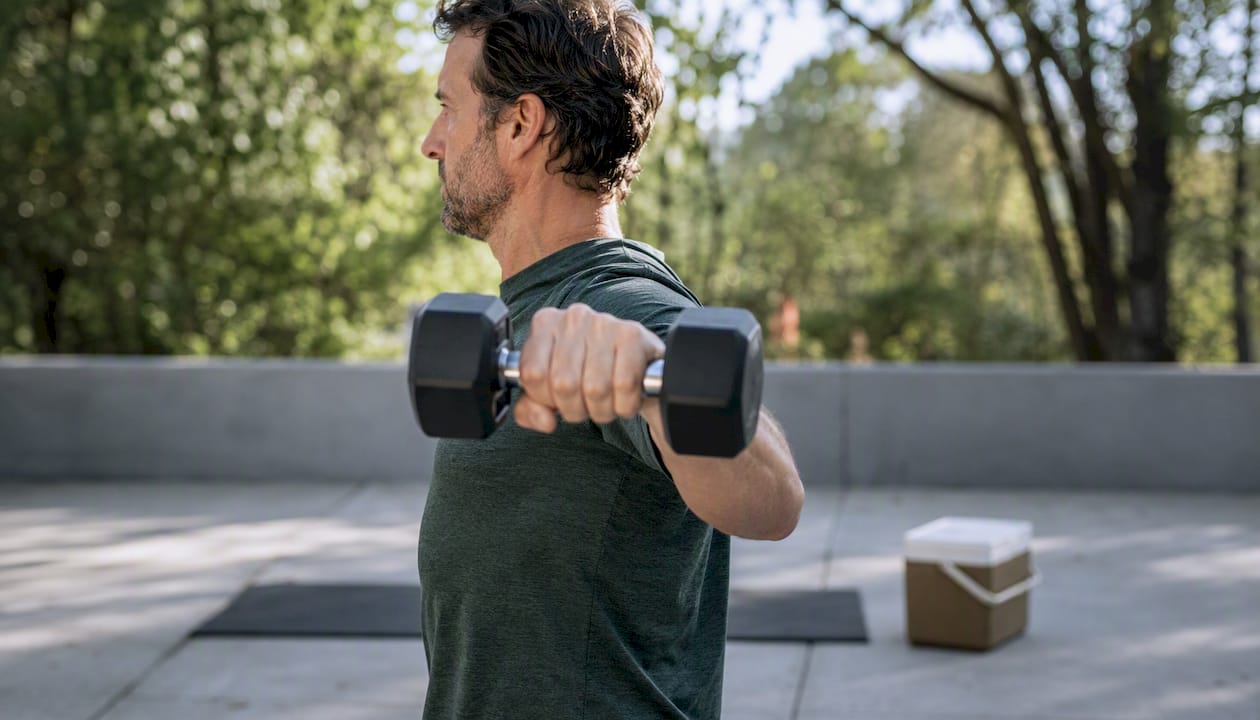
Pro Tip: Track your working weight or resistance band level weekly, not just how your shoulder feels. Tendons respond to measurable load progression, and “I did some exercises” is much harder to progress than “I moved from a red band to a blue band.” The most common pitfall isn’t overtraining. It’s staying too conservative for too long out of fear, which stalls the tendon at exactly the load level it has already adapted to.
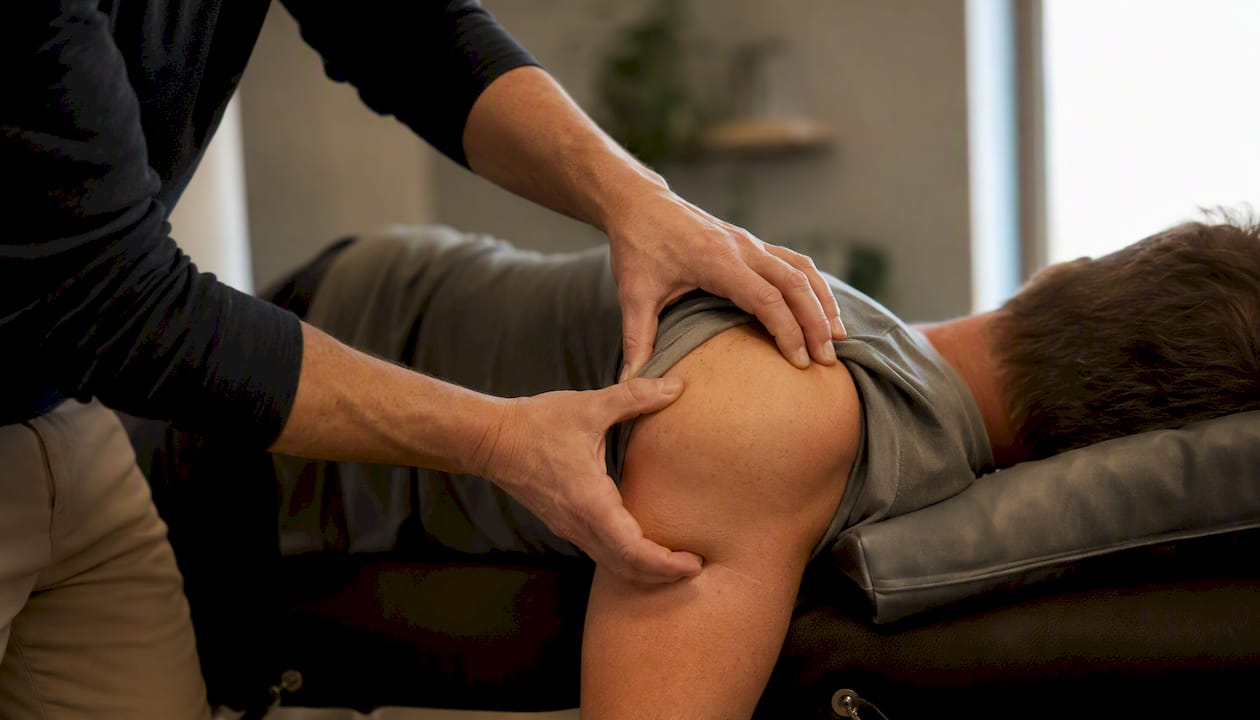
Hands-on treatments like joint mobilization, soft tissue work, and Active Release Technique can meaningfully reduce short-term pain and improve range of motion, which is genuinely useful when pain is limiting your ability to perform your exercises properly. The evidence, though, is consistent on one point: manual therapy works best as a bridge to exercise, not as a replacement for it.
Clinic techniques you’re likely to encounter include:
The practical rule of thumb: use adjuncts to make your exercise session possible, not to replace it. If a session of manual therapy makes your shoulder feel loose enough to complete your strength work with better form, it did its job.
| Adjunct | Best used for | Not a substitute for |
|---|---|---|
| Manual therapy | Short-term pain relief before exercise | Progressive strength training |
| Kinesio taping | Sensory feedback during activity | Motor control retraining |
| Active Release Technique | Reducing tissue restriction limiting range | Resistance-based loading |
Medications and injections have a real, evidence-backed role in rotator cuff tendinopathy treatment. That role is narrower than many patients expect: symptom control that enables you to participate in rehab, not a standalone fix.
Acetaminophen and oral NSAIDs are reasonable first options for short-term pain relief, particularly during flare-ups or the early, more irritable phase of a rehab program. They don’t address the underlying tendon capacity issue, so relying on them alone while skipping exercise tends to leave you exactly where you started once you stop taking them.
Corticosteroid injections can reduce pain in the short term, and the guideline recommends ultrasound guidance when available to improve accuracy of placement. These injections are not intended as a long-term recovery strategy, and repeated use raises legitimate concerns about tendon weakening over time. Mayo Clinic’s guidance echoes this caution directly, noting that injections can help when pain interferes with sleep or rehab participation, but may weaken the tendon if overused.
Other injectables like platelet-rich plasma or hyaluronic acid may come up in conversation with your clinician, but they aren’t first-line treatments given the current evidence base. Opioids are reserved strictly for severe, refractory pain that hasn’t responded to other measures, with careful monitoring given the well-documented risks involved.
Plenty of treatments marketed for shoulder pain simply don’t clear the evidence bar the 2025 guideline sets, and knowing which ones to skip saves you time, money, and sometimes false hope.
The distinction that matters most here isn’t “does this modality do anything at all.” It’s whether a treatment builds tendon load capacity or simply masks discomfort for an hour. Passive modalities can buy you comfort. Only progressive loading buys you capacity.
Use adjunct modalities the way you’d use a warm-up, as a way to get your shoulder ready for the exercise that actually drives change, not as the main event.
Most people notice initial improvement in pain within several weeks of consistent, appropriately loaded exercise. Meaningful strength recovery, the kind that lets you return to overhead sport or heavy lifting without hesitation, generally takes several months of sustained progressive loading. Shoulder injury recovery of this type is rarely linear. Expect good weeks and frustrating plateaus along the way.
Surgery becomes a reasonable conversation under a few specific circumstances:
Timing matters more than many patients realize. Research on surgical decision-making notes that delaying surgery too long can allow a tear to enlarge and may reduce the muscle quality available to work with during repair, which affects surgical outcomes. This is exactly why an adequate trial of conservative care means giving exercise a genuine, well-structured chance, not indefinitely delaying a needed surgical evaluation out of general reluctance.
You don’t need a referral to begin supporting your recovery. A few changes made immediately can reduce pain and set up better progress once formal rehab begins.
Start with activity modification:
A few simple home interventions support this early phase:
The pain-monitoring rule from the exercise section above applies here too: mild, settling discomfort is fine; sharp or lingering pain is your signal to scale back.
Knowing what a well-run clinic visit should include helps you evaluate whether the care you’re getting matches what the evidence actually supports.
A thorough initial assessment typically covers your history (how the pain started, aggravating activities, prior injuries), a red-flag screen to rule out anything beyond a mechanical shoulder issue, and an objective exam measuring range of motion, strength, and scapular control. From there, treatment should flow logically: education about what’s actually happening in your tendon, a tailored exercise prescription rather than a generic handout, manual adjuncts used strategically to enable that exercise, and regular reassessment to confirm you’re progressing rather than plateauing.
Here’s a rough guide to what quality visits look like over time:
Practices that follow this framework consistently outperform those relying on a rotating series of passive treatments with no clear progression plan. A visit to Shephardhealth’s shoulder and rotator cuff program follows this exact structure, starting with a full assessment before any treatment decisions get made.
Pro Tip: If you’ve had six or more sessions of hands-on treatment with no exercise prescription and no measurable progress tracked, ask your provider directly what the plan is for progressive loading. It’s a fair question, and a good clinician will have a clear answer.
The guideline data is clear that exercise beats passive care for rotator cuff tendinopathy. What it doesn’t fully capture is how much psychological factors shape whether that exercise program actually gets followed through to completion. Fear of movement, frustration with a slow shoulder injury recovery timeline, and simple inconsistency derail more rehab programs than any exercise selection error does.
Sleep and general health matter more here than most patients expect walking in. Poor sleep impairs tissue repair directly, and it’s a two-way street: shoulder pain disrupts sleep, and poor sleep slows healing, which worsens pain. Addressing sleep position and quality isn’t a footnote; it’s part of the treatment.
We’d also push back gently on how some clinics present adjunct treatments. Marketing a laser or shockwave session as “the treatment” rather than a tool that enables better exercise participation sets patients up to expect a passive fix for what is fundamentally an active problem. The tendon adapts to load, not to any device applied to it from outside. Realistic expectations matter too: this is usually a matter of months, not weeks, and patients who understand that upfront tend to stick with their program through the inevitable plateaus rather than abandoning it at week three when things haven’t fully resolved yet.
Shared decision-making should guide how aggressively you progress and which adjuncts, if any, you use alongside exercise. A competitive overhead athlete and a retiree with modest functional goals need very different rehab intensities, even with the same diagnosis.
Shephardhealth gives you what a home exercise printout alone can’t: a hands-on assessment that identifies exactly which movement patterns and tendon deficits are driving your pain, paired with progressive loading that adjusts as you improve, rather than a static plan you outgrow in two weeks.
Your first visit includes a full shoulder and scapular assessment, a clear explanation of what’s happening in your tendon, and an individualized exercise prescription you leave with the same day. When appropriate, adjuncts like Active Release Technique or laser therapy are used to reduce pain enough for you to progress your loading program comfortably, and shockwave therapy is available for the subset of patients whose imaging shows calcific tendinopathy specifically. Everything is built around the same principle this article has walked through: exercise drives the recovery, adjuncts support it.
If shoulder pain has been limiting your work, your sport, or your sleep, book an assessment with Shephardhealth and find out exactly where your tendon capacity stands and what a realistic recovery timeline looks like for you.
If you want to go deeper than this article, these are the sources that carry the most weight on rotator cuff tendinopathy treatment right now.
Same Day Appointments Available
We Direct Bill!