

Stubborn tendon pain? Start with a $67 new patient visit
A chiropractor assesses the problem and tells you whether shockwave therapy fits your plan. See shockwave therapy in Calgary. Book online.

Shockwave therapy delivers real, lasting relief for musculoskeletal pain by triggering your body’s own repair processes rather than simply masking symptoms. It works through acoustic energy stimulating mechanotransduction, a process where sound waves convert into biological signals that promote tissue regeneration, new blood vessel formation, and collagen synthesis. The result is structural healing, not just temporary pain reduction.
The core advantages of shockwave therapy include:
For active Calgarians managing chronic tendon pain or recovering from sports injuries, these advantages make shockwave therapy a compelling first-line option before considering more invasive procedures.
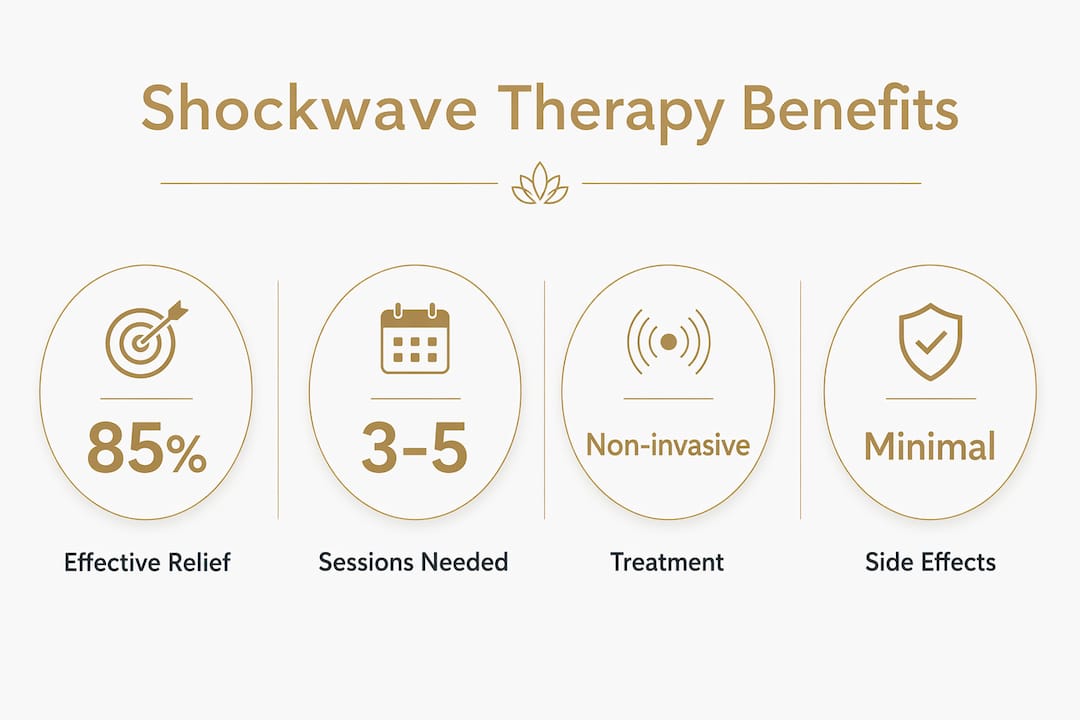
Shockwave therapy’s tissue remodeling effects make it particularly effective for chronic tendon and fascia conditions that resist standard conservative care. The treatment stimulates collagen synthesis, promotes new capillary growth, and breaks down calcifications, all of which address the root structural problems in these injuries rather than just their symptoms.
Conditions with strong clinical evidence for shockwave therapy include:
Pairing shockwave therapy with rehabilitative exercises, particularly eccentric strengthening, consistently produces better tendon remodeling than shockwave alone. Your provider should be building this into your plan from the start.
A typical shockwave therapy session lasts under 30 minutes, and you can usually return to normal activities the same day. Your therapist applies a gel to the treatment area, then uses a handheld device to deliver acoustic pulses directly to the injured tissue. No anesthesia is required.
What patients commonly experience:
Most treatment protocols involve 3–5 sessions spaced one week apart. The structural tissue remodeling that produces lasting results takes time; full clinical improvement is typically assessed at 3–12 weeks after completing treatment. Expecting immediate, permanent relief after one session sets an unrealistic benchmark.
Pro Tip: Avoid anti-inflammatory medications like ibuprofen in the days immediately following treatment. The controlled inflammation shockwave triggers is part of the healing mechanism, and suppressing it can reduce your results.
Shockwave therapy has a well-established safety record as a non-invasive treatment. The most common side effects are transient and include temporary soreness, redness of the skin, mild swelling, and minor bruising at the treatment site. These reactions stem from the controlled inflammatory response the therapy intentionally triggers and typically resolve within hours to a few days.
Rare reactions include transient numbness or tingling, and in isolated cases, headache. Serious complications are uncommon when treatment protocols are followed correctly.
Shockwave therapy is contraindicated in specific situations. Your provider should screen for:
Disclosing your full medical history before your first session protects both your safety and your outcomes.
The quality of your results depends heavily on who delivers the treatment and how it fits into your overall care plan. Shockwave therapy outcomes are dose-dependent, meaning the energy settings, pulse count, and application technique all affect efficacy. Practitioner training and equipment quality are not interchangeable.
When evaluating Calgary providers, assess these criteria:
Pro Tip: Ask your prospective clinic whether they reassess your condition after each session and adjust energy settings accordingly. Providers who use a fixed protocol for every patient regardless of response are not optimizing your care.
The scientific evidence supporting shockwave therapy for musculoskeletal conditions is substantial and continues to grow. A narrative review published in PMC examined systematic reviews and meta-analyses across PubMed, the Cochrane Database, EMBASE, CINAHL, and PEDro, finding solid evidence for pain improvement across tendinopathies, plantar fasciitis, myofascial pain, osteoarthritis, and bone lesions. Five clinical indications carry a level of evidence of 1+, the highest tier.
One study cited in that review compared shockwave therapy, corticosteroid injection, and autologous blood injection for lateral epicondylitis. At four weeks, corticosteroid injection led outcomes. At 52 weeks, shockwave therapy produced the greatest effect compared to autologous blood and corticosteroid injection, showing superior long-term outcomes. That long-term durability is one of shockwave therapy’s most clinically meaningful advantages.
The International Society for Medical Shockwave Treatment (ISMST) guidelines confirm the therapy is safe with minimal adverse effects and can be used alone or alongside physical therapies such as eccentric strengthening exercises to enhance its effect.
Shockwave therapy pricing in Calgary is not publicly listed by most clinics, and costs vary based on session length, equipment used, and whether the treatment is bundled with chiropractic or physiotherapy. Most extended health benefit plans in Alberta cover shockwave therapy when delivered by a licensed chiropractor or physiotherapist, though coverage limits and direct billing availability differ by clinic and insurer.
Shephardhealth provides direct billing to major insurers, which can significantly reduce your upfront cost. Before booking anywhere, confirm whether your plan covers the specific provider type delivering the treatment, as chiropractor-delivered and physiotherapist-delivered sessions may fall under different benefit categories.
If your extended health coverage is limited, asking about package pricing for a full treatment course (typically 3–5 sessions) can reduce the per-session cost compared to booking individually.
If you want shockwave therapy delivered as part of a complete, personalized treatment plan rather than as a standalone session, Shephardhealth is worth a direct conversation.

Shephardhealth combines shockwave therapy with Active Release Technique, laser therapy, spinal decompression, and custom rehabilitation under one roof. Same-day appointments are available, and direct insurance billing is standard. The clinic’s approach is built around your specific condition and goals, not a generic protocol. Whether you are managing a chronic tendon injury, recovering from a sports setback, or exploring chiropractic care benefits for the first time, Shephardhealth’s team will assess your needs and build a plan that fits. Contact Shephardhealth to book your initial assessment and find out whether shockwave therapy is the right next step for your recovery.
Shockwave therapy produces lasting musculoskeletal recovery by triggering tissue regeneration, neovascularization, and collagen synthesis rather than simply reducing pain temporarily.
| Point | Details |
|---|---|
| Mechanism of action | Acoustic energy drives mechanotransduction, stimulating cellular repair and new blood vessel formation in injured tissue. |
| Clinical improvement timeline | Full tissue remodeling benefits typically emerge within 3–12 weeks after completing a treatment course. |
| Safety profile | Side effects are transient and mild; contraindications include malignant tumors, pacemakers, and blood clotting disorders near the treatment area. |
| Choosing a provider | Prioritize therapists with ESWT-specific training, clinics offering both focused and radial devices, and plans that integrate rehabilitation exercises. |
| Shephardhealth | Combines shockwave therapy with ART, laser therapy, and spinal decompression, with same-day appointments and direct insurance billing in Calgary. |
Same Day Appointments Available
We Direct Bill!