

Yes, many shoulder aches trace back to myofascial trigger points, and trigger point therapy shoulder relief usually starts with a short, sustained-pressure release paired with slow breathing and gentle mobility work. Try this consistently for a few weeks. If you see little or no improvement, notice numbness or tingling, or feel no change at all, stop self-treatment and get a clinical assessment instead of pushing harder on your own.
TL;DR:
- Self-treatment with sustained pressure and gentle movement can reduce trigger points in shoulder muscles if practiced consistently for a few weeks.
- Releasing muscles like the infraspinatus, pectoralis minor, and upper trapezius requires specific ball placements and slow breathing, with caution to avoid sharp pain or numbness.
- Professional therapies such as manual compression, dry needling, or shockwave therapy provide additional benefits when self-care results plateau, often after 12 weeks of structured exercise.
- Persistent symptoms like numbness, severe night pain, or rapid knot recurrence within days indicate the need for urgent clinical assessment.
- Combining trigger point release with progressive strengthening and proper movement patterns offers the best chances for lasting relief and preventing future knots.
A trigger point is a small, hyperirritable knot in a taut band of muscle fiber, and the shoulder happens to be one of the most trigger-point-dense regions in the body. Several muscles account for the vast majority of shoulder knot cases, and each one refers pain to a fairly predictable location. Learning these maps is the fastest way to figure out where your own pain is actually coming from, since shoulder pain rarely originates exactly where it’s felt.
Palpation is still the main way to identify a trigger point: pressing along a taut band until you find a tender nodule that reproduces the referred pain, sometimes with a brief local twitch. This is different from joint pain, which usually worsens with specific movements or positions rather than direct pressure, and from nerve-related pain, which tends to bring numbness, tingling, or a burning quality that muscle knots don’t produce.
Self trigger point therapy shoulder work follows a few consistent principles: moderate sustained pressure, not aggressive digging; slow nasal breathing while you hold; short sessions repeated daily rather than one brutal weekly attempt. Short, consistent pressure sessions of three to five minutes tend to work better and cause fewer problems than infrequent, aggressive rolling.
Wrap the ball in a sock or thin pillowcase if direct contact feels too intense, and consider a vibration-based massager over a high-velocity percussive gun for deep shoulder work. Vibration tends to produce fewer adverse reports near the shoulder’s delicate structures. Follow release work with light heat to ease tension, or ice if the area feels inflamed rather than tight.
Pro Tip: Move gently through your available range of motion while holding pressure on a trigger point, rather than staying completely still. This active-release approach can calm the nervous-system guarding that keeps a knot locked in place.
Stop immediately if you feel sharp, shooting, or electric pain, or any numbness. Avoid pressing directly over your collarbone, ribs, or the front of your throat.
When self-care plateaus, a range of clinician-guided techniques exists beyond what you can do with a ball against a wall. Manual ischemic compression works similarly to self-release but with a trained clinician’s precision on hard-to-reach muscles like subscapularis. Active Release Technique (ART) combines compression with guided patient movement to address the same nervous-system guarding a home routine only partially reaches. Dry needling offers a micro-invasive option for stubborn anterior shoulder trigger points, and shockwave or laser therapy are sometimes added as adjuncts rather than standalone fixes.
The evidence behind this combined approach is solid for a musculoskeletal intervention. A randomized controlled trial on shoulder disorders found that physical therapy targeting myofascial trigger points reduced pain and improved function, using weekly sessions for up to 12 weeks combined with stretching and activity changes.
Trials pairing myofascial trigger point therapy with structured stretching and manual compression, run weekly for up to 12 weeks, consistently show measurable gains in shoulder pain and range of motion.
Most patients feel measurable relief within two to three sessions, but lasting change, the kind that prevents the knot from reforming, tends to take the full multi-week course paired with an exercise program.
Some symptoms mean self-release isn’t the right tool. Numbness, tingling, or weakness down the arm, severe pain that wakes you at night, or any fever or unexplained weight loss alongside shoulder pain all warrant prompt assessment rather than another week of ball work.
Release work alone rarely holds if the underlying muscle imbalance stays unaddressed, so pairing it with progressive strengthening matters more than most people expect.
Space heat before mobility work and ice after harder strengthening sessions. Expect some maintenance work indefinitely; shoulders that sit at a desk all day tend to redevelop tension without it.
Pro Tip: Progress load only when you can complete a full set without your shoulder mechanics breaking down, not just when the pain has faded.
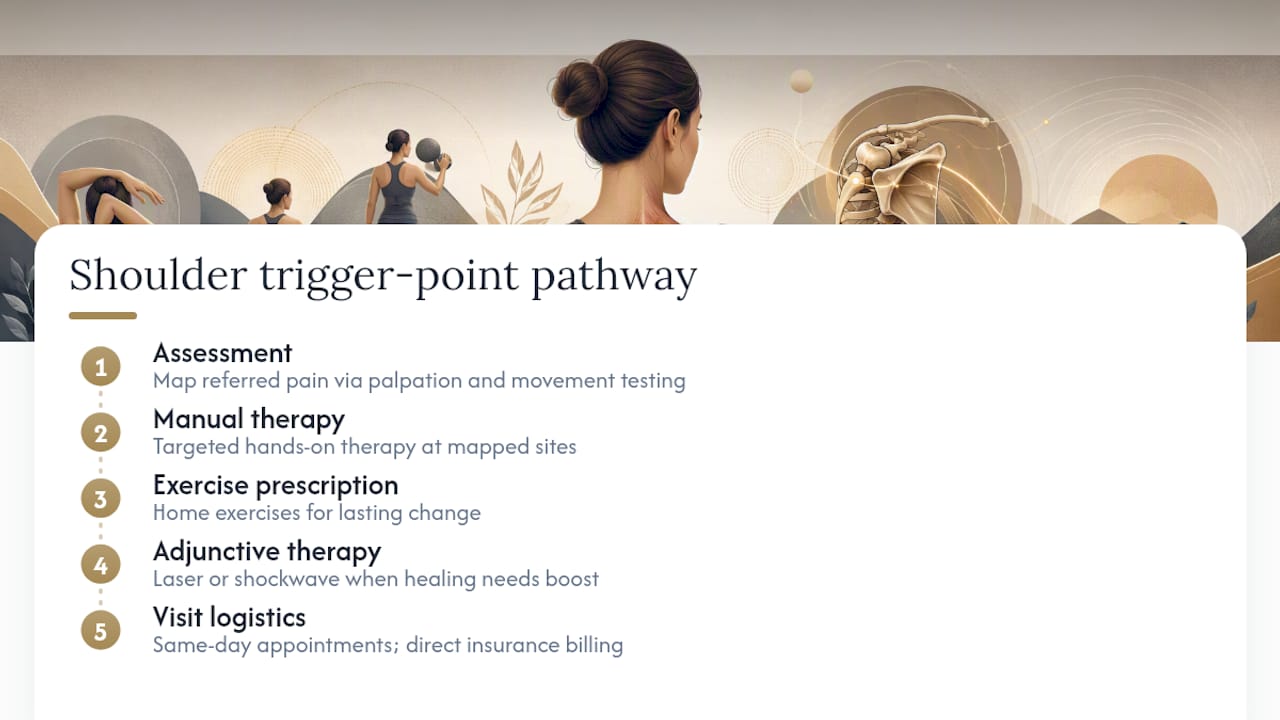
A clinical visit typically starts with palpation and functional movement testing to map exactly where your referred pain originates. From there, a combined plan often layers targeted manual therapy, an exercise prescription for lasting change, and adjunctive laser or shockwave therapy when tissue healing needs a boost. Same-day appointments and direct insurance billing keep that first visit simple to arrange.
If you’ve worked through wall-ball releases and stretching for a few weeks and the same knot keeps returning, that pattern usually means something deeper needs attention, not just more pressure. Shephard Health treats stubborn shoulder trigger points with a combination most home routines can’t replicate: hands-on Active Release Technique, manual compression from a trained clinician, and adjunctive laser or shockwave therapy when tissue healing is the bottleneck.

Every plan is built around evidence-informed care rather than guesswork, and sessions are billed directly to insurance where applicable. Bring notes on where your pain refers to and what self-care you’ve already tried; it speeds up the first assessment considerably. You can read what to expect on your first visit or head straight to the shoulder and rotator cuff treatment page to book an assessment.
Most articles on shoulder trigger points treat the ball or the massage gun as the whole solution, and that’s where a lot of self-treatment quietly fails. The muscle knot isn’t a stubborn stain you can scrub out with enough pressure; it’s a symptom of a movement pattern or muscle imbalance that will keep manufacturing new knots until that pattern changes. This is exactly what the comparative trial on shoulder tendinopathies gets right that most consumer guides skip: therapeutic exercise held its own against manual trigger point therapy, which tells you the muscle retraining matters as much as the release itself.
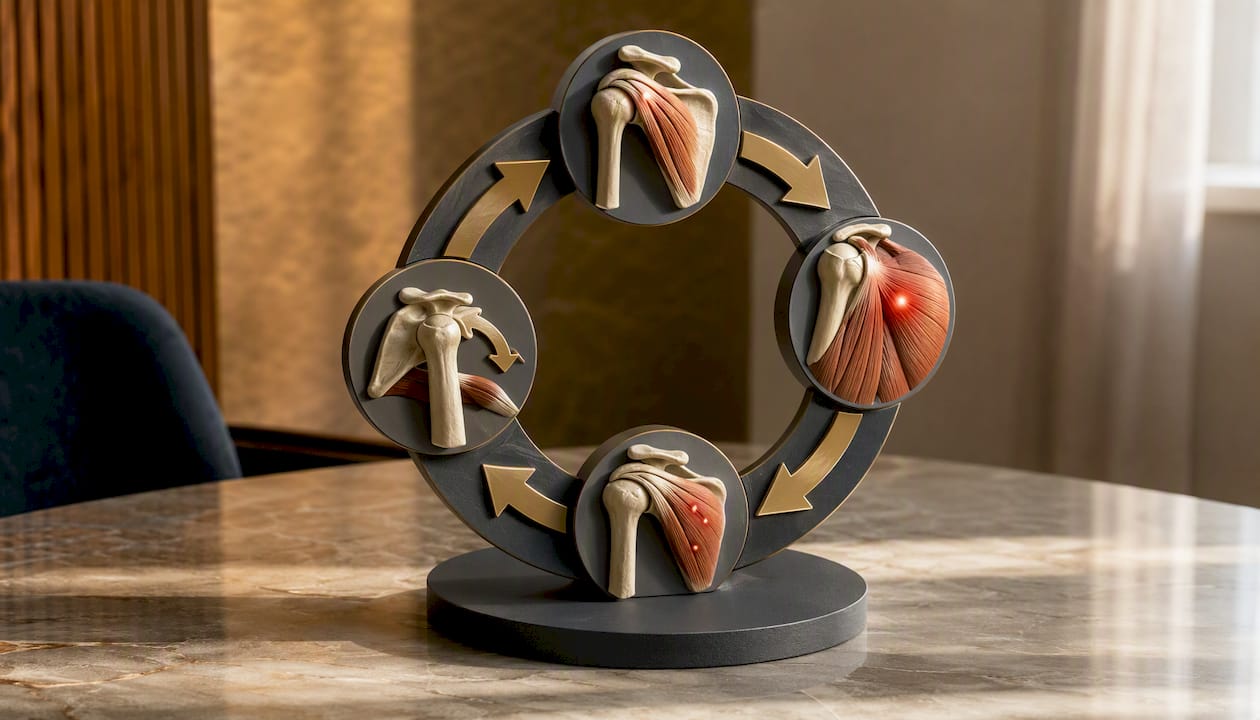
The other underrated piece is nervous-system guarding. A lot of people press on the same spot for weeks and wonder why it never lets go. Adding gentle movement while applying pressure, rather than holding rigidly still, often gets through where static pressure alone doesn’t. It’s a small technique shift, but it explains why some self-treatment routines plateau while others keep progressing.
None of this means a foam roller or lacrosse ball is a waste of time. It means treating the tool as step one of a two-step process, not the whole program. Pair the release with real strengthening work, similar to what you’d find in a rotator cuff exercise program or a balance and mobility routine built around gradual load progression, and give it the full four weeks before deciding whether it’s working.
— Deane
This article is general information, not a substitute for advice from a qualified doctor. Consult a qualified healthcare professional about your own circumstances before acting on anything here.
Same Day Appointments Available
We Direct Bill!