

Nerve flossing exercises can ease sciatica, carpal tunnel symptoms, and ulnar nerve irritation for many people when the movement is gentle and controlled. Three glides to try right now: the seated sciatic floss (straighten one knee while tipping your chin down, then bend the knee while lifting your chin), the median nerve glide (extend your wrist and elbow while tilting your head away, then release), and the ulnar nerve glide (bring your hand toward your ear while your elbow bends, then extend it out). Do them slowly, for a few reps, and stop immediately if you feel sharp pain, shooting electric sensations, or increasing numbness.
Quick check: if your symptoms ease within a few repetitions rather than intensify, the glide is probably appropriate for you. If sharp or worsening symptoms show up instead, stop and get assessed before continuing.
Tight, sore or stuck? Start with a $67 new patient visit
A chiropractor assesses the soft tissue and nerve involved and treats it the same day when it is safe. See Active Release Technique in Calgary. Book online.
Nerve flossing exercises work by restoring smooth nerve glide through surrounding tissue, easing mechanosensitivity when practiced gently, frequently, and progressed from sliders to tensioners over weeks.
| Point | Details |
|---|---|
| Start with sliders | Low-strain glides for median, ulnar, radial, or sciatic nerves are the safe entry point for most people. |
| Dose it short and often | 5 to 10 reps, 1 to 3 sets, several times daily beats one long session. |
| Watch the response, not just the motion | Symptoms should ease after a set, not intensify or linger, before continuing. |
| Know the red flags | Progressive weakness, saddle numbness, or bowel/bladder changes mean seek assessment now. |
| Pair glides with clinical care | Shephard Health integrates nerve flossing with spinal decompression and Active Release Technique for interface issues home exercises can’t reach. |
Nerve flossing, also called nerve gliding, moves a nerve through the tissue that surrounds it, rather than lengthening a muscle and holding it there. A static hamstring stretch keeps tension constant. A sciatic nerve floss alternates between putting the nerve on stretch at one joint and slackening it at another, so the nerve slides rather than stays pinned. That distinction is why clinicians describe it as a neurodynamic technique rather than a stretching drill.
The exercises typically target one of four nerves:
Nerves need to slide smoothly through surrounding muscle, fascia, and joints as you move. When that gliding gets restricted, from scar tissue, prolonged compression, or a disc pressing on a nerve root, the nerve becomes more sensitive to movement and reports pain or tingling that seems disproportionate to the trigger. Neurodynamic mobilization is used clinically to restore that glide and reduce this heightened sensitivity.
Two categories of movement exist. Sliders move the nerve back and forth without putting real tension on it, by lengthening it at one joint while shortening it at another simultaneously. They’re the lower-strain option and the right starting point for almost everyone. Tensioners load the nerve at multiple joints at once, creating more stretch, and belong later in a program, once symptoms are calm.
Relief from a single session is often temporary. Meaningful, lasting change in mobility and symptom frequency tends to build over a structured program, with some clinical reports noting early easing within 1 to 3 sessions and fuller improvement across 4 to 10 weeks for persistent cases.
Pro Tip: Judge a glide by what happens after, not during. A little discomfort during the movement is normal; what matters is whether your symptoms are calmer an hour later, not worse.
Nerve flossing tends to help conditions where a nerve is mechanically irritated rather than structurally damaged. Common candidates include:
The symptoms most likely to respond are movement or position-dependent: tingling that shows up when you hold your phone a certain way, numbness that comes and goes with posture, or pain that shifts location as you move your neck or leg. That pattern points to a nerve that’s mechanically sensitive rather than one that’s been structurally injured, and it’s the pattern Harvard Health associates with movement-provoked nerve irritation. Nerve flossing rarely works alone. It usually needs to pair with posture correction, load management at your desk or in sport, and strengthening around the affected joint.
Stop and seek assessment if any of these apply:
Any of these warrants a same-week evaluation rather than continued home exercise, since they can point to nerve root compression or a problem beyond what gliding addresses.
Upper-extremity glides work well at a desk, which matters since many median and ulnar nerve problems start there.
To reduce intensity on any of these, shrink the range of motion or remove the head movement entirely and glide the arm alone first. Desk workers can fold a version of the median glide into a stretch break every hour, which addresses posture-related carpal tunnel irritation before it builds up.
Pro Tip: If a glide reproduces your usual tingling but it fades within seconds of returning to neutral, that’s a normal response. If the tingling lingers or spreads, dial the range back by half.
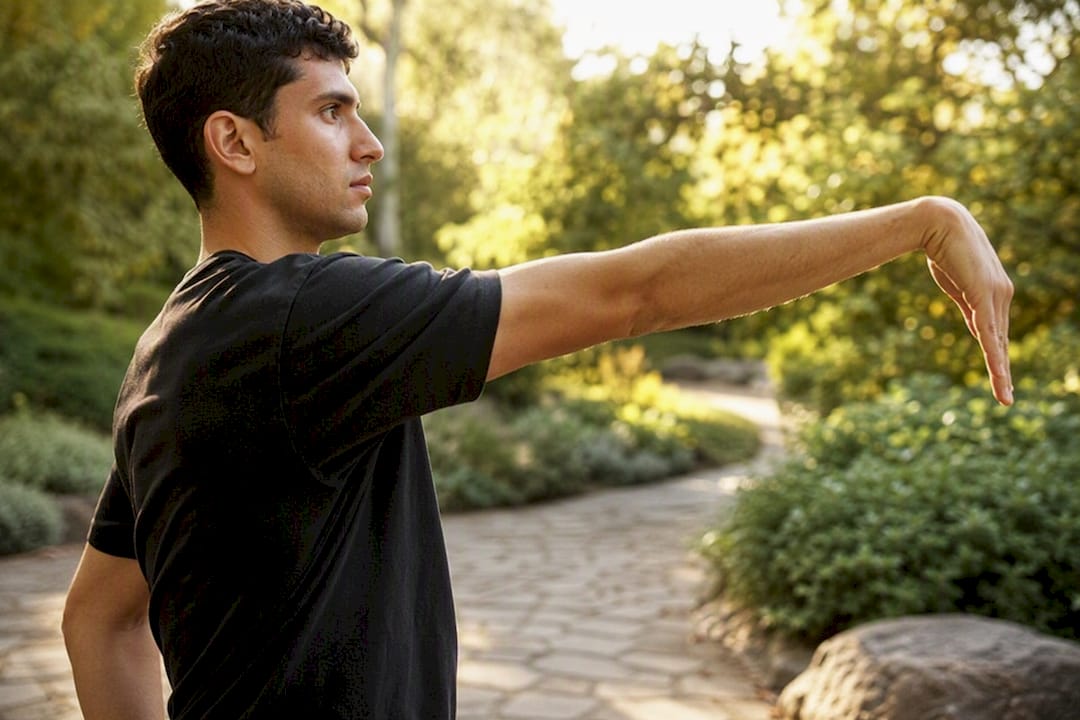
Sciatic and piriformis-related nerve irritation responds to a smaller set of reliable glides.
The prone press up, a classic extension exercise for the low back, helps some disc-related sciatica but can aggravate others, particularly when leg symptoms worsen with back extension. Try it cautiously, and skip it if it increases leg symptoms rather than centralizing them toward the spine. Persistent sciatic symptoms that don’t respond to a few weeks of home gliding are a reasonable trigger to seek sciatica treatment from a clinician.
A practical starting plan looks like this: 5 to 10 reps, 1 to 3 sets, performed several times throughout the day rather than in one long session. Short, frequent bouts tend to outperform occasional long ones for people with sensitive nerves, likely because it keeps the nerve moving without accumulating irritation.
Expect early, sometimes short-lived easing within the first 1 to 3 sessions. For symptoms that have been building for months, a graded program stretched across 4 to 10 weeks is a more realistic timeline than a quick fix.
Clinicians rely on neurodynamic testing, movements that deliberately reproduce your symptoms in a controlled way, to figure out which nerve is involved and how irritable it currently is. That assessment matters because the wrong glide, or the right glide done too aggressively, can flare symptoms rather than calm them. A physiotherapy guide to neurodynamic mobilization points out that testing also uncovers interface problems, tight hip rotators compressing the sciatic nerve, or poor desk posture loading the median nerve, that need addressing alongside the glides themselves.
Neural mobilization tends to work best as one piece of a broader plan, not a stand-alone fix. Addressing the surrounding joint mechanics and posture typically determines whether the relief from gliding actually holds.
At Shephard Health, guided nerve-flossing sessions are often paired with posture correction and progressive loading work, so home glides have something to build on rather than working in isolation.
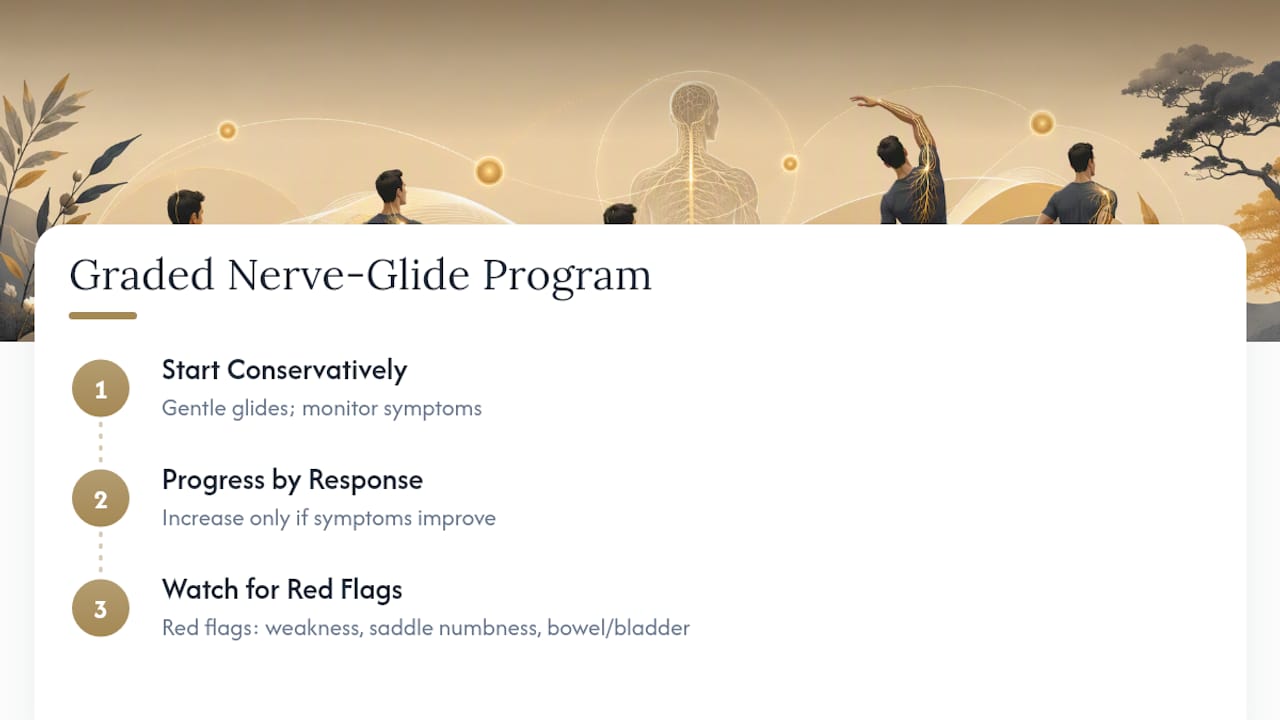
Graded nerve-glide programs consistently show a pattern: patients who start conservatively and progress based on symptom response tend to do better than those who push hard early. If red flags appear, weakness, saddle numbness, bowel or bladder changes, get assessed before continuing home exercises.
Home glides handle a lot, but some nerve irritation needs hands-on assessment to sort out what’s actually happening at the interface, whether that’s a compressed disc, a tight scalene muscle, or a cubital tunnel narrowed by years of desk work. Shephard Health builds on the exercises in this guide with guided nerve-flossing sessions, spinal decompression for disc-related sciatica, Active Release Technique for entrapped nerves at the elbow or wrist, and laser therapy to support tissue recovery around irritated nerve pathways.

None of these replace the exercises above; they address what home gliding alone often can’t reach, like a stiff joint segment or scarred soft tissue holding a nerve captive. If you’ve been trying glides for a few weeks without lasting change, or you’re not sure which nerve is actually involved, a first visit assessment can identify the interface problem and build a plan around it. Book an evaluation and bring your specific symptoms and triggers so the plan can start where you actually are.
Is nerve flossing safe to do every day?
Sliders are generally safe for daily use since they create minimal strain on the nerve. Tensioners need more caution and should wait until your symptoms are stable.
How long before nerve flossing exercises show results?
Some people notice easing within 1 to 3 sessions, though this can be temporary. Persistent cases typically need a graded program over 4 to 10 weeks to see lasting change.
Can nerve flossing make symptoms worse?
Yes, if the glide is too aggressive or targets the wrong nerve for your presentation. Sharp pain, spreading numbness, or symptoms that linger after the exercise mean you should stop and get assessed.
Do I need equipment for nerve gliding exercises?
No. Every exercise in this guide uses only body weight and a chair, making them practical for home or office use.
What’s the difference between nerve flossing and regular stretching?
Stretching lengthens muscle tissue and holds it there. Nerve flossing moves the nerve through surrounding tissue by alternating tension between two joints, which is why the motion is dynamic rather than a held position.
This article is general information, not a substitute for advice from a qualified doctor. Consult a qualified healthcare professional about your own circumstances before acting on anything here.
Same Day Appointments Available
We Direct Bill!