

Active Release Technique often relieves sciatica when the cause is soft-tissue or peripheral nerve entrapment, not a herniated disc pressing on the spinal cord. It rarely replaces surgical care when imaging confirms severe structural compression. Most patients who respond well notice change within several sessions, but a proper diagnosis has to come first.
TL;DR:
- ART is most effective when sciatic nerve entrapment occurs in soft tissues like the piriformis, hamstring, or gluteal fascia, rather than severe spinal compression.
- Treatment often yields noticeable improvements within several sessions, especially when combined with nerve flossing, stretching, and posture adjustments.
- Symptoms such as leg weakness, numbness in the groin, or bowel and bladder issues require immediate medical evaluation before manual therapy.
- Effectiveness is supported mainly by small studies and clinical experience, with about 90% of cases improving through conservative measures including ART.
- ART is part of a broader recovery plan and should be paired with self-care activities to maintain nerve mobility and prevent re-entrapment.
Tight, sore or stuck? Start with a $67 new patient visit
A chiropractor assesses the soft tissue and nerve involved and treats it the same day when it is safe. See Active Release Technique in Calgary. Book online.
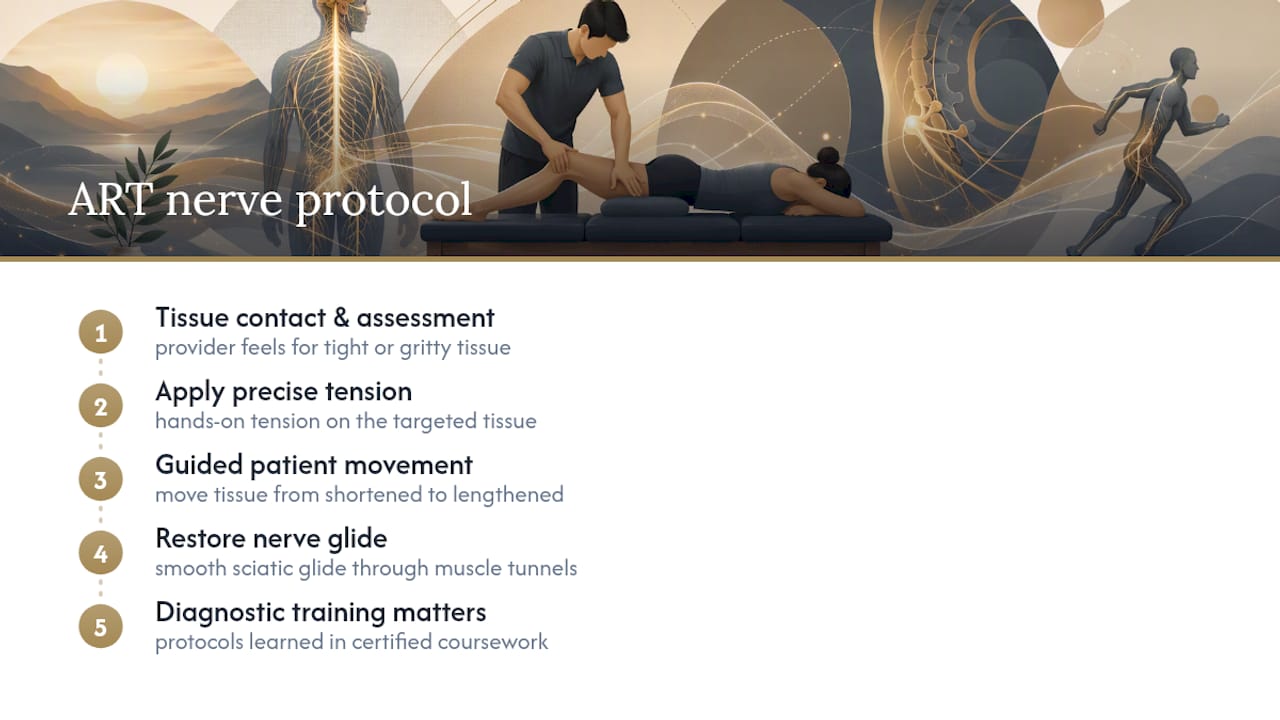
Active Release Technique (ART) is a hands-on method that finds and releases adhesions in muscle, fascia, and nerve tissue that have become stuck to surrounding structures. A trained provider uses their hands to feel for tight, fibrous, or “gritty” tissue, then applies precise tension while guiding the patient through a specific movement, usually taking the tissue from a shortened position to a lengthened one under contact.
For sciatica, the practitioner shifts to nerve-specific protocols rather than treating the area like an ordinary tight muscle. The goal is nerve glide: restoring the sciatic nerve’s ability to slide smoothly through the tunnels of muscle and connective tissue it passes on its way down the leg. ART’s nerve protocols rely on a diagnostic sequence practitioners learn in certified coursework, which is part of why provider training matters so much for this particular application.
Sciatica does not always start at the spine. Peripheral nerve entrapment happens when the sciatic nerve gets compressed or irritated somewhere along its path through the hip, buttock, or thigh, producing the same burning, shooting pain people associate with disc problems. Neurodynamics is the study of how nerves move and stretch as joints change position, and it explains why a nerve pinched near the hip can create pain that radiates all the way to the foot.
The most common entrapment sites practitioners check include:
ART protocols work by breaking up adhesions at these sites and then re-testing nerve glide immediately, often in the same visit. Practitioners commonly use tests like the straight-leg raise or the FAIR test (flexion, adduction, internal rotation of the hip) to see whether symptoms reproduce or ease as tissue tension changes. Restoring healthy nerve glide across the entire path the nerve travels, rather than just the spot where pain is worst, tends to produce more durable results than treating one isolated tender point.
A typical visit starts with an assessment: range of motion, palpation, and often a neurodynamic test to locate where the nerve is catching. The active treatment itself moves fast. A single ART pass usually takes a short session of manual therapy, and a provider may work through several related structures in that window rather than just one muscle.
Sensation during treatment ranges from mild discomfort to a distinct “hot” or tingling feeling along the nerve’s path, particularly when the practitioner is directly addressing an entrapped segment. That feeling usually fades within a few minutes after the pass ends. Some patients feel mild soreness for a day or two afterward, similar to how a deep massage feels the following morning.
Scheduling varies by how long symptoms have been present and how much scar tissue has built up, but many providers report noticeable improvement by several treatments for cases driven by soft-tissue entrapment. Clinicians typically pair ART sessions with a home exercise program and periodic reassessment, since manual work alone rarely holds without reinforcing the gains between visits.
The research picture on ART is encouraging but thin. A small pilot study on carpal tunnel syndrome, a different nerve entrapment condition, found meaningful symptom improvement after ART, though the sample size was small enough that it cannot be treated as definitive proof for sciatica specifically. Larger, higher-quality trials on ART for sciatica itself are still limited.
About 90% of sciatica cases improve without surgery through conservative measures like guided movement, self-care, and physiotherapy, and ART fits squarely within that conservative-care category rather than replacing it.
Certain symptoms mean ART or any manual therapy should wait until a physician has ruled out serious pathology. Seek prompt medical evaluation for progressive leg weakness, numbness in the groin or inner thigh, loss of bladder or bowel control, or pain following a significant trauma. Any of these can signal cauda equina syndrome or severe structural compression that needs imaging, not manual therapy, as the first step.
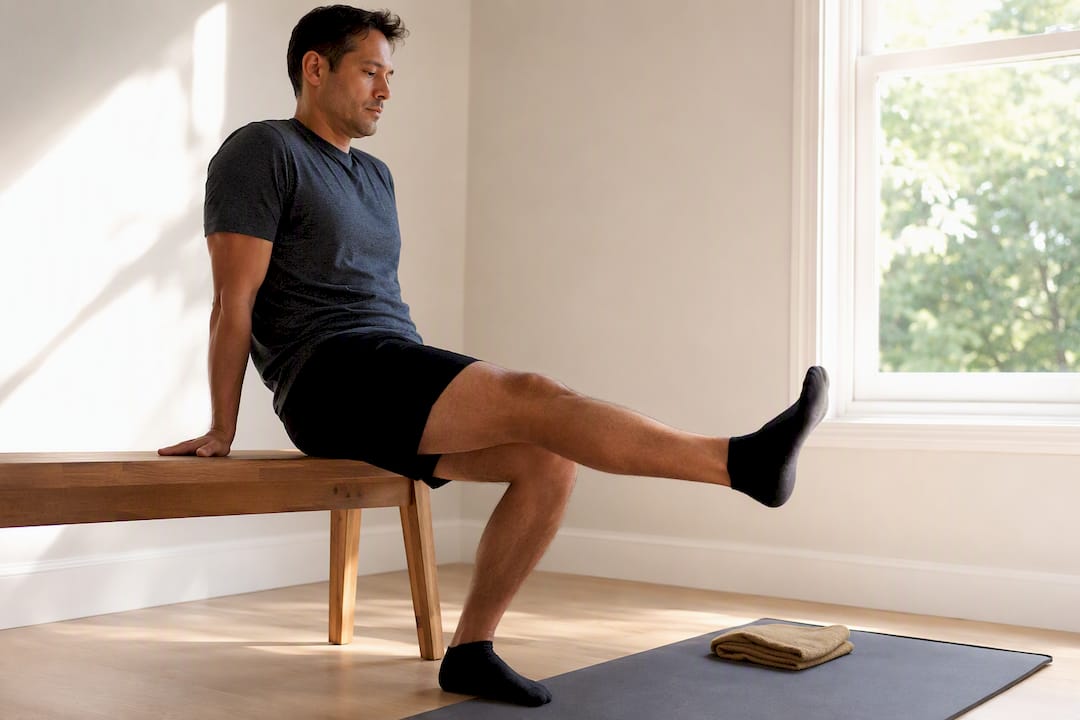
ART works best as one piece of a broader recovery plan rather than a stand-alone fix. Nerve flossing, sometimes done at the same clinic through a dedicated nerve mobility program, gently glides the sciatic nerve through its full range without stretching it aggressively, which helps maintain the mobility ART restores between sessions.
A practical weekly routine looks like this:
Clinicians sometimes add laser therapy or shockwave therapy alongside ART when tissue healing is slow or inflammation is persistent, but that decision depends on individual assessment rather than a fixed protocol.
Pro Tip: Do nerve flossing before, not instead of, static stretching. Flossing the nerve first often makes the follow-up stretch feel less irritating, since you’re not pulling on a nerve that’s still stuck at one end.
Some clinicians combine ART with chiropractic adjustments to address any joint restriction contributing to the entrapment, and outside research on combining manual therapy with neurodynamic techniques supports pairing these approaches for faster, more complete recovery.
Sciatica cases that walk through the door rarely look textbook. One patient’s pain traces back to a piriformis that never released after an old fall; another’s comes from hamstring scar tissue that built up over years of running. What both need is a provider who tests before treating, rather than assuming every case of radiating leg pain responds to the same protocol.
At Shephard Health, ART sessions sit inside a broader assessment process that checks nerve glide, joint mechanics, and movement patterns together, not in isolation. Some clinics offer same-day appointments and direct insurance billing to reduce wait times for patients to find out whether manual therapy suits their case.
— Deane
Some clinics offer the option for nerve entrapment diagnosis and treatment in the same visit, instead of weeks of waiting between assessment and actual care. Booking often starts with a call or online request, and some clinics offer same-day appointments to avoid delays while symptoms worsen.

Bring any prior imaging reports, a short written timeline of when your symptoms started, and a list of movements or positions that make the pain worse or better. Your first visit includes a hands-on assessment: hip and spine range of motion, palpation along the sciatic nerve’s path, and neurodynamic testing to confirm whether entrapment is actually driving your symptoms before any ART protocol begins. Direct billing to insurance providers may be available to help patients focus on the assessment rather than paperwork.
If ART is the right fit, your provider will lay out a realistic treatment timeline based on what they find, not a generic script. Start by reviewing the ART treatment page or book your first assessment directly to find out whether your sciatica pattern matches the soft-tissue entrapment cases ART treats best.
This article is general information, not a substitute for advice from a qualified doctor. Consult a qualified healthcare professional about your own circumstances before acting on anything here.
Same Day Appointments Available
We Direct Bill!