

Sesamoiditis, pain under the ball of the big toe from irritated sesamoid bones, is usually treated without surgery. The core of treatment is offloading the area, changing footwear, and then fixing the reason the bones were overloaded in the first place. Most people need weeks to months, not days, and the people who recover best are the ones who stay patient and consistent with the plan.
This guide walks you through each stage: what you can safely do at home, what a clinician adds, how orthotics and rehabilitation fit in, and when surgery enters the conversation. If you are in Calgary and would rather have the pain assessed in person, you will also see how we approach it at Shephard Health.
Two small bones, the sesamoids, sit within the tendon beneath the joint at the base of your big toe. They act like pulleys and absorb a large share of your body weight every time you push off. When they are irritated, the surrounding tendon and tissue become inflamed, and the result is a deep, localized ache under the ball of the foot that gets worse with walking, running, jumping or wearing a thin-soled shoe.
Because you load these bones with every step, they rarely get a true rest. That is the main reason sesamoiditis has a reputation for being slow. A clinician-focused paper on how podiatrists approach the problem, a Delphi consensus study, reflects the same theme: the aim is to find and address what is overloading the area, not only to calm the pain.
Sesamoiditis is common in runners, dancers, court-sport athletes and anyone who spends long hours on hard floors or in high heels. It also shows up in people who recently increased training volume or switched to a flatter, more minimalist shoe.
Pain in this area can come from several sources. A stress fracture of a sesamoid, arthritis of the big toe joint, a tendon problem, nerve irritation and metatarsalgia can all feel similar. OrthoInfo from the American Academy of Orthopaedic Surgeons describes sesamoiditis and sesamoid fracture together because they are hard to tell apart by symptoms alone, and imaging is sometimes needed.
A sudden, sharp onset after a jump or a fall points more toward a fracture. A gradual build-up over weeks points more toward irritation. Either way, an assessment is worth it, because the treatment for a fracture is stricter than for simple inflammation.
The first stage is about reducing the force going through the ball of your big toe. The provincial health information service MyHealth Alberta describes treatment as proper shoes or shoe inserts, with some people needing the toe joint taped or a walking cast for a few weeks to keep the joint from moving while it heals. It also recommends a cold pack on the toe for 10 to 20 minutes at a time.
In practice, that looks like this:
Activity modification. Stop or reduce the activities that reproduce the pain. For a runner, that might mean swapping road runs for cycling or pool work for a few weeks. For someone on their feet all day, it may mean more sitting breaks and softer flooring. This is the part patients find hardest, and it is the part that matters most. A guiding rule: pain during an activity that settles within an hour is one thing, pain that lingers into the evening or next morning means you did too much.
Ice. Ten to twenty minutes at a time, with a cloth between the ice and your skin, can ease soreness after a long day. Ice relieves symptoms. It does not fix overload.
Anti-inflammatory medication. Over-the-counter options are often mentioned in guidance, including by OrthoInfo. Whether they are safe for you depends on your health history, other medications and stomach, kidney or heart conditions, so check with your pharmacist or physician before using them.
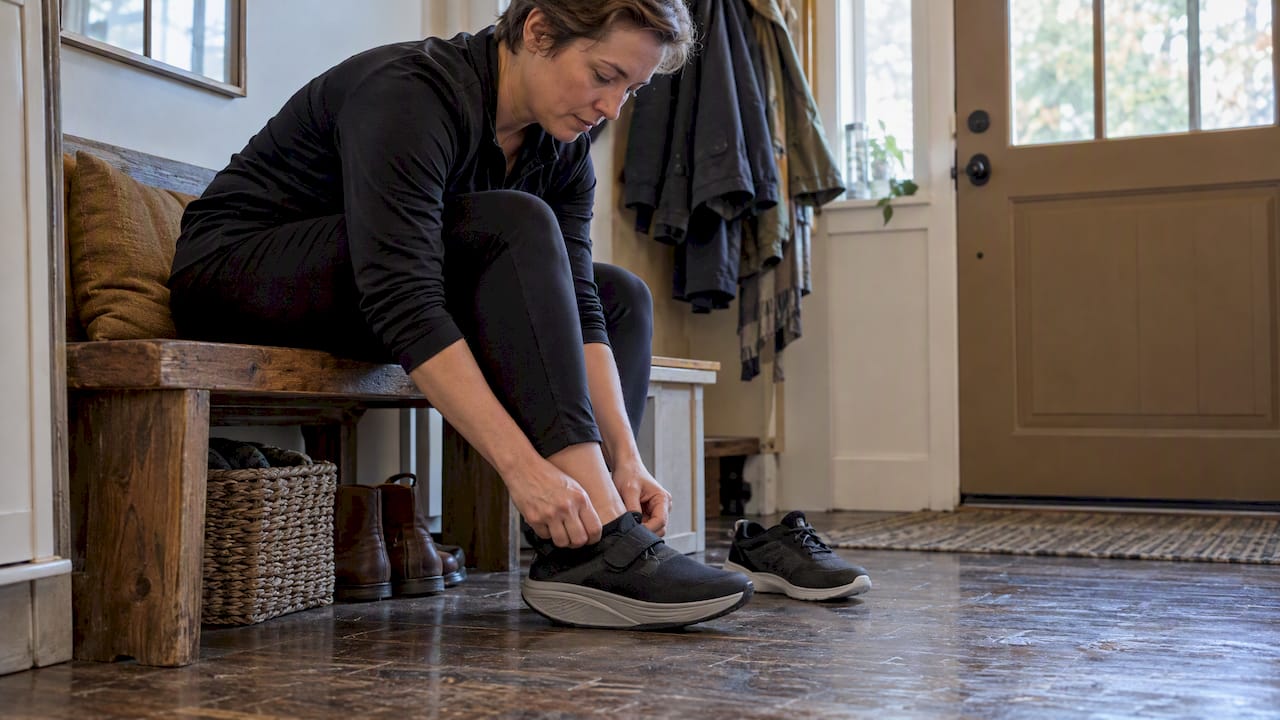
Stiff-soled or rocker-bottom shoes. A shoe that does not bend easily under the ball of the foot reduces how much the big toe joint has to flex and push. For many people this single change makes the biggest difference at the start.
Taping. Strapping the big toe so it sits in slight flexion limits motion and takes load off the sesamoids. Kinesio and rigid taping both have a place, and we use taping as a short-term support while the tissue settles.
Once the acute pain is settling, the question becomes how to keep pressure off the sesamoids when you return to normal life. The Merck Manual professional edition lists new shoes, orthotics or both as an early treatment, noting that if symptoms persist, offloading pads and thick-soled shoes are the next step.
There are three layers to think about:
Padding alone can become a band-aid. Practitioners writing in the podiatry literature stress that success tends to depend on finding why the sesamoids are being overloaded: training errors, shoes, or gait asymmetries, and then addressing all of them.
We cover how a custom device is made and what it changes in The Benefits of Custom Foot Orthotics. If your pain extends across the whole ball of the foot rather than one spot, our guide on orthotics for metatarsalgia is a useful companion read.
Support and pressure management come up in other areas of health too. If you are curious how compression is used in medical settings more broadly, this overview of compression therapy and its evidence-backed uses is a readable starting point, though it is not a replacement for offloading the toe itself.
Relief without a plan is where many people get stuck. They rest for three weeks, feel better, return to full activity, and the pain comes back. Rehabilitation is what turns a temporary improvement into a durable one.
A sound rehab plan for sesamoiditis usually looks at:
Calf and Achilles flexibility. Tight calves increase forefoot loading during push-off. Our article on Achilles tendinopathy exercises shows the type of progressive loading we use for the lower leg.
Foot and ankle strength. Strengthening the muscles that control the big toe and arch helps share the load that the sesamoids would otherwise carry alone.
Big toe mobility. A stiff first joint forces the sesamoids to take more pressure. Gentle, pain-free range work helps once the acute phase has passed.
Hip and gait mechanics. If you roll toward the inside of the foot, land hard on the forefoot, or have a side-to-side asymmetry, those habits can keep the problem alive.
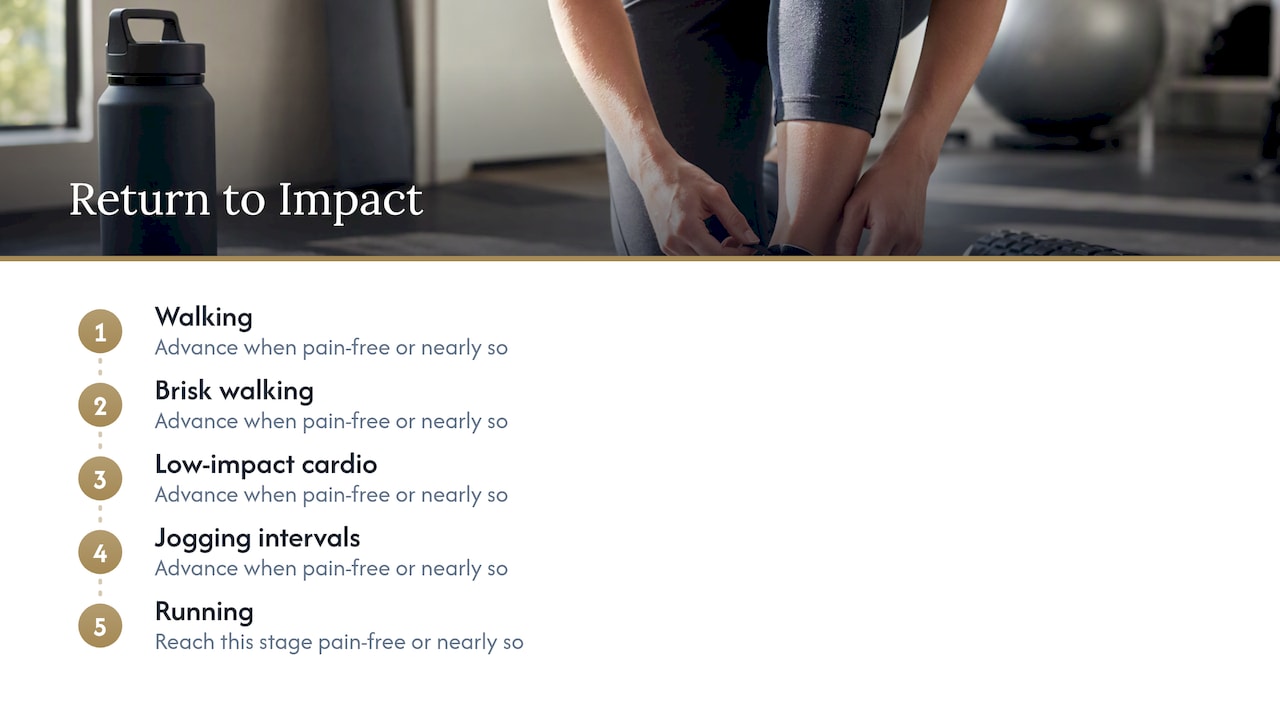
Graded return to impact. Walking, then brisk walking, then low-impact cardio, then jogging intervals, then running. Each step should be pain-free or close to it before you move on. Our soft tissue damage recovery timelines explain the staged thinking behind this kind of progression.
Manual and technology-based therapies can support rehab by easing tight surrounding tissue. At our Calgary clinic, depending on what your assessment shows, a plan may include Active Release Technique or Graston Technique for restricted calf, plantar or toe flexor tissue, laser therapy, or shockwave therapy. We want to be straightforward: the strongest research on sesamoiditis centres on offloading, footwear, orthotics and exercise. These other therapies are tools we use to help you tolerate and progress rehab, not stand-alone cures, and we will tell you when we think they are not worth your time for your situation.
This is the question everyone asks, and the honest answer is that it varies. A 2025 systematic review of conservative treatment found that conservative management succeeds in roughly two-thirds of cases. A separate 2024 study of sports-related sesamoid pain, a prospective MRI-based series, found that conservative protocols reduced pain in 48.1% of patients. Those numbers show two things: most people improve without surgery, and a meaningful minority do not improve enough.
Surgeons and sports clinicians commonly describe a conservative trial of about three to six months before surgery is seriously considered, as OrthoVellum’s sesamoid disorders summary notes. That does not mean you will be in pain for six months. Many people feel much better well before that. It means you should not call treatment a failure after three weeks because the toe still twinges.
| Stage | Typical focus | What tells you to move on |
|---|---|---|
| Acute (first weeks) | Offloading, ice, taping, firm shoes | Pain at rest and with normal walking is settling |
| Rebuilding | Orthotic or pad, calf and foot strengthening, mobility | Daily activity is comfortable, single-leg loading is tolerable |
| Return to activity | Graded walking, then running or sport | You can complete a session with little or no next-day pain |
| Maintenance | Footwear habits, training load, periodic check-ins | Symptoms stay quiet through your usual routine |
These stages are a framework, not a calendar. Your own timeline depends on how long you have had symptoms, whether there is a fracture, your body weight, your sport and how closely you can follow the offloading plan.
If pain is stubborn, your physician or a foot specialist may order imaging such as X-ray, ultrasound or MRI to check for a fracture or other causes. Some clinicians also use a corticosteroid injection, which OrthoVellum describes as both diagnostic and therapeutic, guided by ultrasound or fluoroscopy, and limited to one or two at most because of the risk of fat-pad thinning. Injections are a medical decision made with a physician, and they sit outside what we provide, but we are glad to coordinate with your doctor.
Sesamoid surgery, called sesamoidectomy, removes part or all of the affected bone. It is a last resort, and for a good reason: removing a sesamoid can change how the big toe works. OrthoInfo notes that surgery is considered only when conservative treatment does not relieve symptoms, and clinicians warn about reduced push-off strength and bunion (hallux valgus) development after removal.
For people who do need it, the outlook for athletes is encouraging but not risk-free. A 2026 systematic review of return to sport after sesamoidectomy found a weighted mean return-to-sport rate of 91.9%, with a weighted mean time to return of 12.2 weeks, and a weighted mean complication rate of 12.5%. That is a reason not to fear surgery if you truly need it, and also a reason to give conservative care a serious, disciplined trial first.
When someone comes to us with pain under the big toe, we do not start with a technique. We start with questions: when did it begin, what changed in your training or footwear, what do you stand or run on, and what does a normal week look like. Then we assess how your foot, ankle, hip and gait share the load.
We have found, in the way we are set up to work, that the foot is rarely the whole story. A comprehensive biomechanical assessment lets us build a plan around your goals, whether that is running pain-free, getting through a shift on your feet, or playing with your kids without thinking about your toe. Our team brings chiropractic and rehabilitation skills together, so the same visit can address joint motion, soft tissue restriction, strength and footwear advice.
We also believe in setting expectations early. Sesamoiditis rewards patience. The athletes who struggle most are often the ones who feel better at week two and go back to full training at week three. We would rather help you plan a realistic return than promise a quick fix, and we will tell you plainly if your symptoms suggest you should see your physician or a specialist for imaging or a second opinion.
— Deane
If your toe pain has lasted more than a couple of weeks, keeps coming back, or limits your training, a hands-on assessment can save you months of guessing. At Shephard Health we offer same-day appointments, direct insurance billing where applicable, and a plan tailored to your foot and your activity. Learn more about our chiropractic care in Calgary, or see everything we provide on our services page. You can also start from our home page to book.
See a physician or clinician promptly if you notice any of the following:
Those situations call for a medical assessment and possibly imaging before you try anything else.
Mild cases can settle with rest, icing and avoiding what aggravates the pain. If you keep loading the toe the same way, it often returns. A review of footwear, activity and foot mechanics gives you the best chance of it staying away.
Reduce impact, ice for 10 to 20 minutes at a time, and switch to a stiff-soled or rocker-bottom shoe. A felt or foam offloading pad can help while you arrange an assessment. Ask a pharmacist or doctor before taking anti-inflammatory medication.
Most people do not. Surgery is generally considered only after a long and well-followed trial of conservative care has failed to relieve symptoms. Your physician or a foot and ankle specialist will make that decision with you.
Sometimes, but usually at a reduced level and with pain guiding you. Cross-training with cycling or swimming keeps fitness up while the toe recovers. If pain lingers after a session or the next morning, you are doing too much and should scale back.
For many people, yes. Orthotics and offloading pads are among the standard first-line treatments, and a custom device can be shaped to your foot and activity. They work best alongside footwear changes and rehab, not instead of them.
Same Day Appointments Available
We Direct Bill!