

Myofascial release is a hands-on technique that applies sustained, gentle pressure and stretch to the fascia and the muscles around it. Studies have linked it to less pain, better function and more movement in the neck, low back and shoulders, and to fewer headaches. The results are strongest for neck pain and chronic low back pain. They are more modest for quality of life and some other outcomes. Below we explain what the trials found, how neck trigger points fit in, and how to approach treatment safely.
Fascia is the connective tissue that wraps muscles, joints and nerves. When a muscle becomes tight or irritated, the tissue around it can feel stiff, tender or restricted. Myofascial release uses slow, sustained pressure to address those areas. Practitioners work on broad restrictions and on small, tender spots called trigger points.
It differs from a general relaxation massage in intent. The aim is to change how a specific area moves and feels, not only to relax you. A clinician will usually assess your posture, your range of motion and the exact spots that reproduce your symptoms before choosing where to work.
The research does not support every claim you may see online, but several benefits have been tested in controlled trials. Here they are, grouped by condition.
A 2021 systematic review and meta-analysis of 8 randomized trials with 375 participants found that myofascial release significantly improved pain and physical function in chronic low back pain. The same review found no significant effect on quality of life, balance, pressure pain threshold, trunk mobility or mental health. So the benefit is real but specific.
A 2023 Canadian experimental study of 49 adults with chronic non-specific low back pain reported that a standardized myofascial technique reduced pain intensity compared with a simulated technique. It also reduced erector spinae stiffness and thoracolumbar fascia thickness on one side.
The US Agency for Healthcare Research and Quality, in its evidence summary on noninvasive treatments for chronic pain, noted a small improvement in intermediate-term function and a small improvement in long-term pain compared with sham in one trial. If your back pain is tied to tight, guarded muscles, you can also read about massage techniques for lower back pain.
A 2021 systematic review of 6 studies with 279 participants found a large effect on pain right after treatment in fibromyalgia syndrome. At 6 months the effect was moderate. That durability is encouraging for people whose symptoms last.
A 2024 systematic review and meta-analysis found that myofascial release significantly reduced pain intensity in tension-type headache, cervicogenic headache and migraine. It also improved disability in tension-type and cervicogenic headache, but not in migraine. Cervicogenic headaches start in the neck, so it makes sense that hands-on work there can help. For a practical look at technique, see our guide to massage for tension headaches.
A 2024 randomized crossover trial from Canada found that 4 minutes of myofascial release to the chest (pectoral) fascia reduced forward shoulder posture, from 128 mm to 123 mm, more than a soft-touch control did. The change is small and measured right after treatment, so think of it as a sign of what is possible, not a permanent fix.
For athletes, a 2026 randomized trial in collegiate basketball players with subacromial impingement found that myofascial release combined with isokinetic training gave greater gains in pain, shoulder abduction range and shoulder function at 6 months than the control. If you are working through a shoulder problem, our rotator cuff rehab exercises show how soft tissue work fits alongside strengthening.
Neck pain is the reason most people search for this topic, so it deserves a closer look.
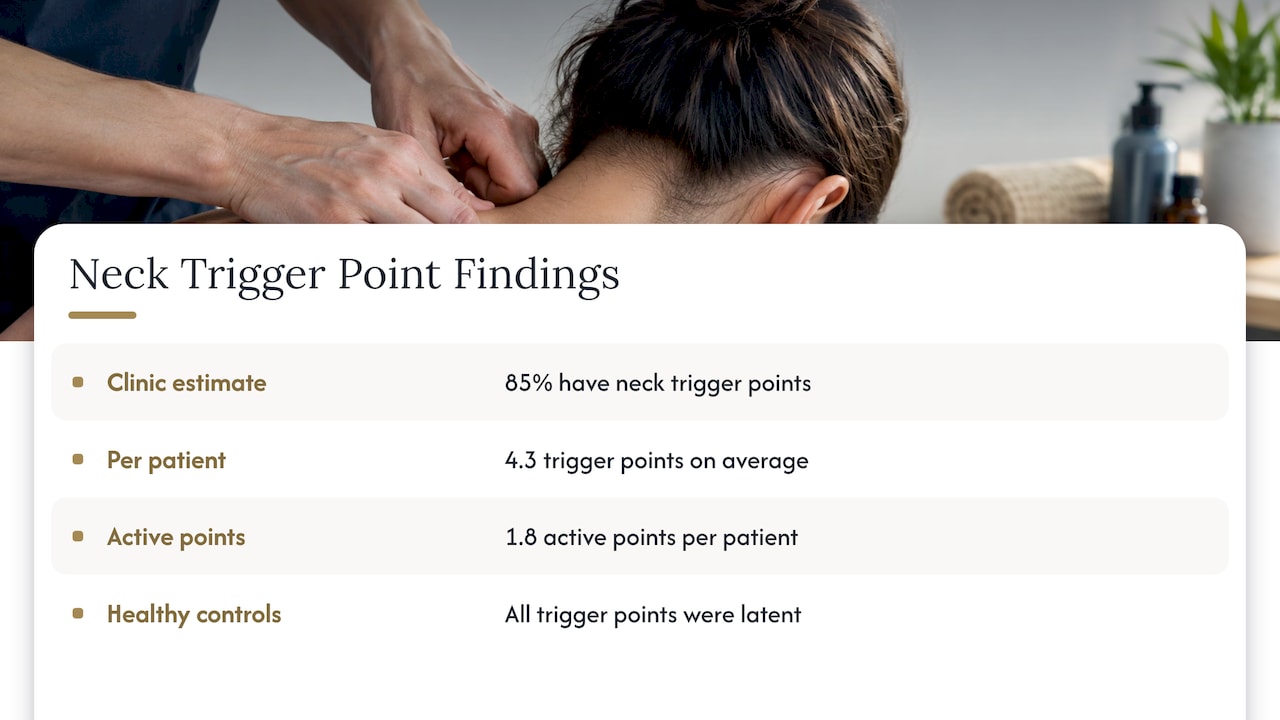
Myofascial trigger points are tender, palpable nodules within taut bands of muscle. They commonly appear in the neck and shoulder muscles, and the upper trapezius is the one most often involved. One paper describing neck trigger points estimates that 85% of people attending pain clinics have them in the neck, and that they occur more often in women than in men.
Clinicians classify them as active or latent. Active trigger points hurt at rest and can refer pain to other areas. Latent ones hurt mainly when pressed and can restrict movement. A controlled study of people with neck pain found an average of 4.3 trigger points per patient, 1.8 of them active. Healthy control subjects also had trigger points, but all were latent. So finding a tender spot does not by itself explain your pain. A good assessment ties it to your symptoms and movement.
A 2018 systematic review found that both active and latent trigger points can contribute to muscle imbalance, weakness and altered muscle recruitment. The same review also notes that the trigger point theory is still debated. In practice, that is why we treat the whole picture, including posture, joint motion and how the muscles share load, not one spot in isolation.
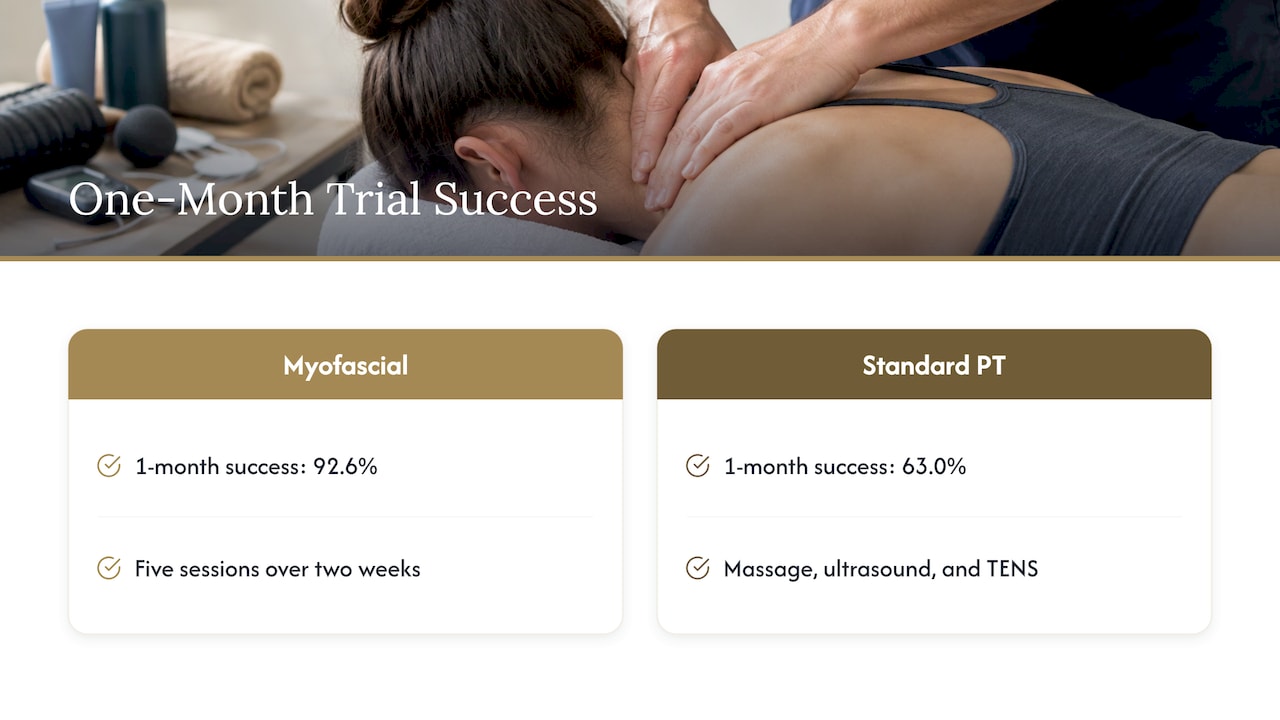
In a 2020 randomized trial of 54 people with mechanical neck pain, five myofascial sessions over two weeks gave a 92.6% success rate at one month. A standard physical therapy program of massage, ultrasound and TENS gave 63.0%. The difference in the pain scale itself was smaller than the minimum change considered meaningful, so the result is promising but not a guarantee.
A 2025 trial of 60 patients with cervical myofascial pain syndrome found that adding myofascial release to standard physical therapy improved pain, trigger point counts, pressure pain thresholds, neck range of motion, disability scores and quality of life more than standard therapy alone. The authors describe the approach as non-invasive, easy to apply and low in side effects. Follow-up lasted only 15 days, so longer-term results remain to be shown.
The RECOVER Injury Research Centre at the University of Queensland says there is currently no scientific evidence that myofascial release works for whiplash. It also advises that the practitioner assess thoroughly, check how you feel throughout, and adjust the intensity of treatment. If your neck pain began with a collision, start with our guides to whiplash treatment options and the whiplash recovery timeline. See a clinician before any neck technique, and seek urgent care for severe pain, numbness, weakness or headaches that follow a crash.
People often ask whether this is just massage by another name. The two overlap, and both are hands-on soft tissue care. Evidence on massage alone for neck pain is mixed. A 2024 Cochrane-style review from Canadian researchers found low-certainty evidence of little difference from placebo for subacute and chronic neck pain. It also found a clinically important difference favouring a high dose, which it defined as eight or more sessions over four weeks of at least 30 minutes each.
Two practical points follow. First, the dose and the technique matter, so a plan should be specific, not a one-off. Second, soft tissue work usually does best alongside other care. Our clinicians combine hands-on techniques with movement work, adjustments and rehabilitation as your assessment indicates. For a wider look at how different non-drug therapies for rehab are weighed against each other, PEMF compared with EMS for rehab is a useful comparison of two other modalities.
If you want to read about our own approach to neck care, see how massage therapy can relieve neck pain. For a related technique focused on lengthening tissue, see fascial stretch therapy.
A first visit starts with questions about where it hurts, what makes it worse and what you want to get back to doing. Your clinician then examines posture and movement and palpates the tight areas. Pressure is applied slowly and held. You should be able to tell us when it is too much, and treatment should be adjusted accordingly.
You may feel some tenderness in treated areas afterward, similar to the day after a hard workout. Mention anything that is sharp, spreading, or not settling to your clinician at your next visit. Pain that is severe, new numbness or weakness, or symptoms after trauma need prompt medical assessment.
How many sessions you need depends on the cause and how long you have had the problem. In the neck trial above, five sessions over two weeks were used, while the massage review suggests higher doses over about a month. Your plan should state the goal, the number of visits you can expect and how progress will be measured. To learn how a first visit works in our clinic, read what to expect on your first chiropractic visit.
A few habits help you get results and stay comfortable.
First, be specific about your symptoms. Tell your clinician if pain travels into the arm, if you get tingling, or if you have had a recent accident, surgery or fracture. These details shape what is safe.
Second, keep the pressure in a range you can breathe through. Myofascial work is generally slow and sustained. Pushing through sharp pain is not needed.
Third, pair treatment with movement. The trials that showed the longest effects, such as the basketball study, combined hands-on work with exercise. Ask for a few targeted stretches or strengthening drills to do between visits.
Fourth, give it time to work. Chronic problems take longer than recent ones. Our guide to soft tissue damage recovery timelines lays out what is typical.
At Shephard Health, we see soft tissue restriction as one piece of a larger picture. A tight upper trapezius or a sore band beside the spine is often a sign of how your joints, posture, training load and daily habits work together.
That is why we begin with a biomechanical assessment, then choose from the tools we offer: massage therapy, Active Release Technique, Graston Technique, chiropractic care and rehabilitation exercise. Each addresses soft tissue in its own way, and the right mix depends on you.
The research on myofascial approaches is encouraging for neck pain, low back pain and headaches. We take it as a reason to treat hands-on work seriously and to pair it with active rehabilitation, so the relief you feel in the clinic carries into your week.
Deane
If neck tension, back pain or shoulder tightness is holding you back, we can assess what is driving it and recommend a plan. Our clinic offers same-day appointments and direct insurance billing where applicable. Our team works with athletes, active adults and families.

You can explore our chiropractic care in Calgary or see all of our treatment services. Not sure where to start? Tell us about your symptoms and we will point you to the right first step.
For several conditions, controlled studies say yes, to a degree. Pooled trials show improvements in pain and function in chronic low back pain, and large reductions in pain in fibromyalgia. Not every outcome improved, and individual responses differ, so goals and measurement should be agreed with your clinician.
Trials in mechanical neck pain and cervical myofascial pain syndrome reported better pain, range of motion and function than comparison groups. Whiplash is a separate case. Researchers say evidence is lacking there, so you should be assessed carefully first.
Massage often aims at general relaxation or broad muscle work. Myofascial release applies slow, sustained pressure to specific restrictions in the fascia and muscle, guided by an assessment. Both can be part of a treatment plan.
Some changes, such as movement or posture, can be noticed right after a session. Lasting change in pain usually takes several visits. The neck trial measured results after five sessions over two weeks, and the massage review points to higher doses over a month.
Same Day Appointments Available
We Direct Bill!