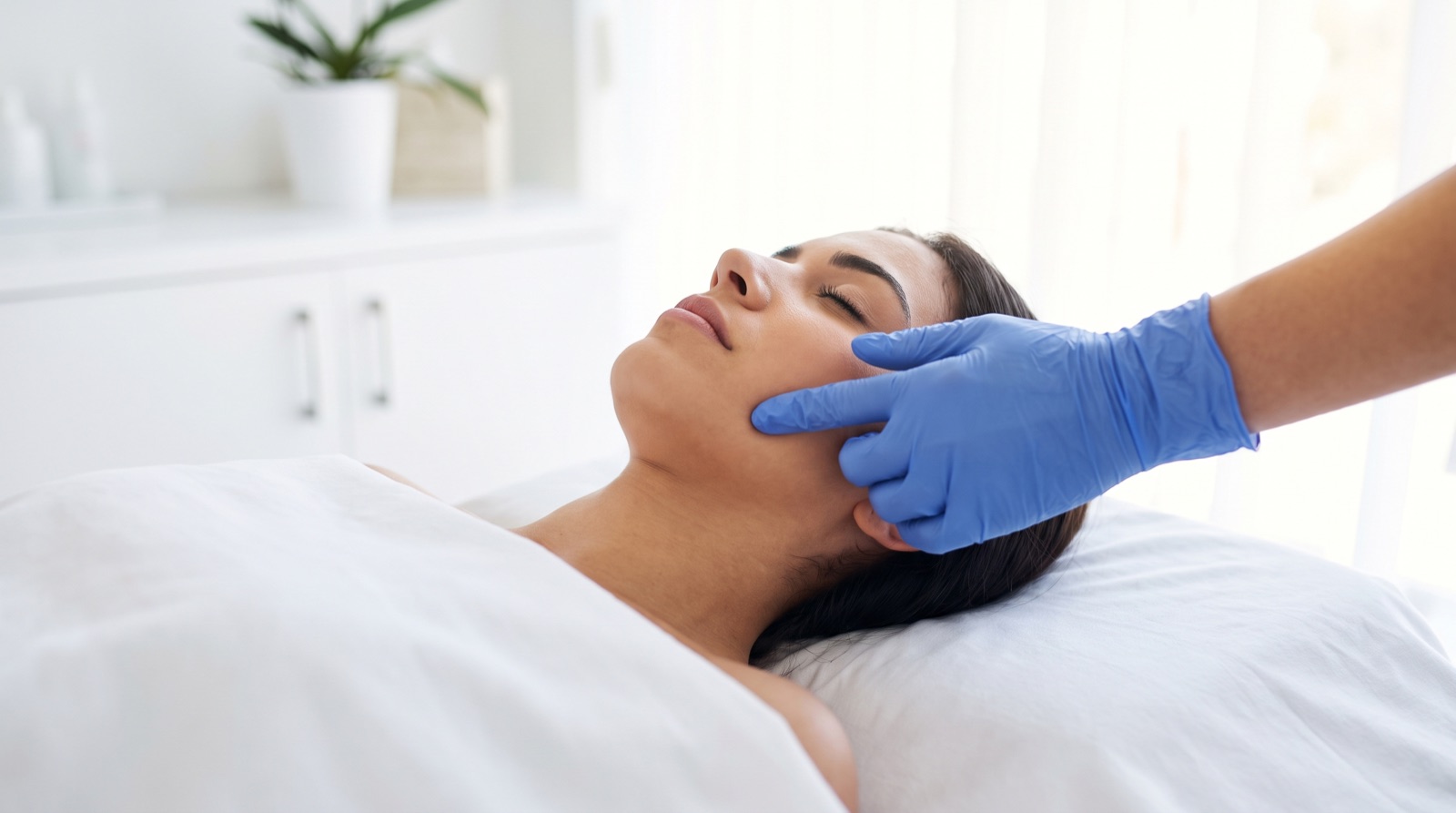
Active Release Technique (ART) for TMJ is hands-on treatment for the chewing muscles. Your chiropractor presses on a tight muscle while you slowly open, close or move your jaw, which helps the muscle release and move more freely. It is done from outside the mouth and, with your consent, inside it with gloves, to reach muscles that are hard to get at from outside. At Shephard Health in Kensington, Calgary, TMJ care starts with our $67 new patient exam and treatment, and we direct bill most major insurance providers.
Tight, sore jaw muscles? Start with a $67 new patient visit
A jaw and neck assessment, hands-on treatment on day one when it is safe, and exercises to keep your jaw moving well. Same-day appointments are often available, and we direct bill your benefits. Book online.
ART is a hands-on soft tissue method. The practitioner holds tension on a tight or tender part of a muscle while you move it through its range. The combination of pressure and movement is what sets it apart from ordinary massage. We use it all over the body, from shoulders to feet. See Active Release Technique in Calgary and the art of Active Release Technique.
If you would rather not have work inside your mouth, we can do a lot from outside, and we will tell you what we can and cannot reach that way.
There is little research on ART by name for TMJ. The evidence is for the techniques it uses. A 2023 clinical practice guideline in The BMJ gave strong recommendations to manual trigger point therapy and therapist-assisted jaw mobilization for chronic TMD pain, and to supervised jaw exercise and stretching. ART is hands-on muscle work with movement, and we pair it with jaw exercises, so it sits squarely in that evidence.
It depends on how long you have had the pain and what is driving it. Many people feel looser, less painful jaw muscles within the first few visits. We recheck your mouth opening and pain at each visit and adjust the plan, and we refer you if you are not improving.
ART works best as part of a plan: neck and upper back care, jaw mobilization, home exercises, and changes to clenching and chewing habits. Some patients also get cold laser therapy as an add-on. More on how we put it together as a TMJ chiropractor in Calgary.
They have the same goal of releasing tight jaw muscles. ART adds movement: you open, close or shift your jaw while the pressure holds.
It feels tender on tight spots, like a firm massage on a sore muscle, and we adjust the pressure as we go. It should not be sharp.
You can gently massage your masseter from the outside with your fingertips, in small circles, for a minute or two. Leave work inside the mouth to a trained practitioner.
ART is part of chiropractic care, which most extended health plans cover, and we direct bill most major insurance providers. See Active Release Technique cost in Calgary.
The new patient exam and treatment is $67, and we direct bill most major insurance providers.
Same Day Appointments Available
We Direct Bill!