

Calf strain rehab is the structured process of progressively restoring calf muscle strength, flexibility, and function after a tear in the gastrocnemius or soleus muscle. A calf strain is classified by grade: Grade 1 involves minor fiber damage, Grade 2 is a partial tear, and Grade 3 is a complete rupture. Recovery timelines differ sharply by grade. Grade 1 heals in 1–3 weeks, Grade 2 takes 4–8 weeks, and Grade 3 can require 3–6 months. Skipping structured rehab at any grade significantly raises your risk of re-injury. For active people in Calgary, where outdoor running, hockey, and recreational sports are year-round pursuits, getting this right matters.
Foot, ankle or calf pain? Start with a $67 new patient visit
A chiropractor assesses the foot, ankle and lower leg, treats on day one when it is safe, and builds a recovery plan. See foot and ankle care in Calgary. Book online.
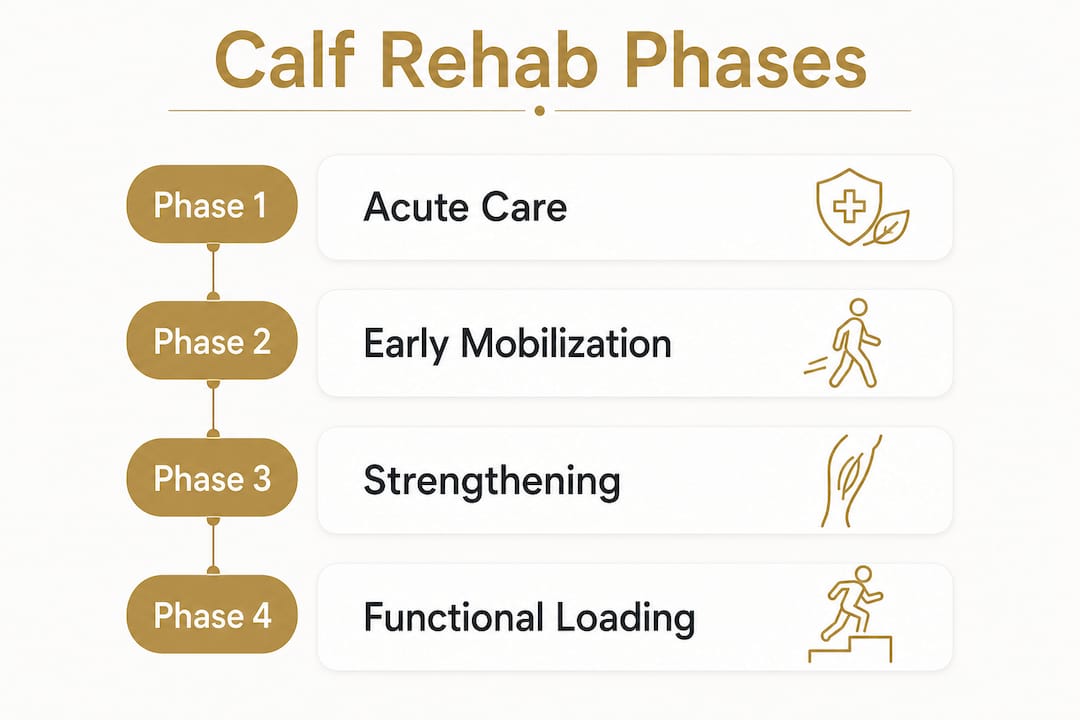
Calf strain rehab follows four distinct phases. Moving through them in order, and only when you meet the criteria for each, is what separates a full recovery from a recurring problem.
Phase 1: Acute care (days 1–3)
The PRICE protocol governs the first 48–72 hours: Protection, Rest, Ice, Compression, and Elevation. Apply ice for 15–20 minutes every 2–3 hours. Avoid any weight-bearing activity that causes pain. This phase limits inflammation and creates the conditions your body needs to start healing. Kinesio taping can also support the calf during this window. Learn how taping supports soft tissue injuries to reduce swelling and protect the area.
Phase 2: Early mobilization (days 3–10)
Once acute pain settles, gentle movement begins. Ankle pumps, ankle circles, and light range-of-motion work restore circulation and prevent stiffness. You are not stretching the calf aggressively here. The goal is controlled movement without provoking pain. Pain-free walking on flat ground is the benchmark that signals readiness to progress.
Phase 3: Strengthening (weeks 2–6)
This is the most critical phase for preventing re-injury. Progressive calf strengthening through double-leg heel raises, single-leg raises, and eccentric heel drops rebuilds load tolerance in the muscle. Start with both legs, then shift to single-leg work as strength returns. Eccentric loading, where you lower your heel slowly below a step, is particularly effective at rebuilding the tendon-muscle interface. Resistance bands add variety and allow load progression without full body weight.
Phase 4: Functional loading (weeks 4–8+)
Brisk walking, then easy jogging, then progressive running form the final phase. Sport-specific drills like lateral shuffles or acceleration work come last. The objective benchmark for entering this phase is completing 25 single-leg calf raises pain-free. That standard matters more than any calendar date.
Pro Tip: Write down your single-leg calf raise count every few days. Watching the number climb from 5 to 25 gives you a concrete, motivating measure of real progress.
The right exercises at the right time accelerate calf muscle recovery. The wrong exercises at the wrong time set you back weeks.
Stretching guidelines
Early aggressive stretching delays healing. Hold off on calf stretches until the acute phase passes, typically after day 3–5 for Grade 1 strains. When you do start, use a gentle standing calf stretch against a wall with a slight knee bend to target the soleus. Hold for 20–30 seconds. Never stretch into pain.
Strengthening exercises to include
Supporting muscle groups
Ankle and hip strengthening supports calf function during recovery. Weak hip abductors and ankle stabilizers increase load on the calf during running. Include clamshells, side-lying leg raises, and single-leg balance work alongside your calf-specific exercises. For a broader look at sports injury rehab principles, including how supporting muscles affect recovery, the guidance from sports medicine specialists reinforces this approach.
Pro Tip: If an exercise causes pain above a 3 out of 10, stop and regress to the previous level. Pain is feedback, not a target.
Returning to running too soon is the single most common cause of re-injury. Pain relief during walking is misleading. The muscle may lack the explosive load capacity needed for running, even when walking feels fine. A sprint or sudden push-off can re-tear a calf that feels healed but is not yet strong enough.
Use these steps to progress safely:
“The most reliable sign that you are ready to run is not how your calf feels on the couch. It is how it performs under load. Complete your 25 single-leg calf raises, walk pain-free for 30 minutes, and then earn your first jog.”
Minimum rehab timelines provide useful guardrails. Grade 1 strains require at least 10–14 days of progressive rehab before jogging. Grade 2 strains need 4–6 weeks before easy jogging and 6–8 weeks before running at pace. Monitor for pain, limping, or post-session stiffness at every step. Any of those signs means you progressed too fast.
Stopping all physical activity during calf muscle recovery is not necessary and not helpful. Cardiovascular fitness declines quickly with complete rest, and that makes your eventual return to sport harder.
Low-impact cardio options like cycling, swimming, and deep water running maintain aerobic fitness without loading the injured calf. Stationary cycling with low resistance is particularly accessible and can begin as early as the first week for Grade 1 strains. Pool running with a flotation belt mimics the running motion with zero impact. Swimming laps with a pull buoy eliminates leg kick entirely if needed.
Avoid any weight-bearing activity that provokes calf pain. This includes hiking, court sports, and gym exercises like leg press if they cause discomfort. The goal is to keep your heart and lungs working while your calf heals. Patients who maintain cardiovascular conditioning during rehab report a smoother, faster return to their sport.
Upper body strength training is also fully available during this period. Bench press, rows, shoulder work, and core exercises keep you active and maintain overall conditioning. Staying physically engaged also supports your mental state during what can feel like a frustrating recovery period.
Effective calf strain rehab requires progressing through four structured phases, using functional strength benchmarks rather than calendar days to guide each transition.
| Point | Details |
|---|---|
| Grade determines timeline | Grade 1 heals in 1–3 weeks; Grade 2 takes 4–8 weeks; Grade 3 requires 3–6 months. |
| PRICE protocol first | Apply ice 15–20 minutes every 2–3 hours in the first 48–72 hours to control inflammation. |
| Strength benchmark for running | Complete 25 single-leg calf raises pain-free before attempting any jogging. |
| Eccentric loading is key | Eccentric heel drops rebuild the muscle-tendon unit and reduce re-injury risk more than concentric work alone. |
| Maintain fitness safely | Cycling, swimming, and pool running preserve cardiovascular fitness without loading the calf. |
The pattern I see most often is this: a patient feels no pain while walking, decides they are ready to run, and re-tears the calf within the first week back. Early return to sport causes more rehab setbacks than the original injury severity. That finding should change how you think about your recovery.
The calendar is not your guide. Your calf muscle is. A Grade 2 strain that feels fine at week three is not a Grade 2 strain that is ready for a tempo run. The muscle fibers have healed enough to handle daily life, but not enough to absorb the force of a push-off at pace. That gap between “feels okay” and “is actually ready” is where most re-injuries happen.
What I advocate for is shifting your focus entirely to objective functional assessments. Can you do 25 single-leg calf raises without pain? Can you hop on one leg without hesitation? Can you walk briskly for 30 minutes and feel nothing afterward? Those tests tell you far more than the date on a calendar.
Patient education matters here too. When you understand why the benchmarks exist, you stop resenting them. The eccentric heel drop is not arbitrary. It specifically loads the muscle-tendon junction under the kind of stress running creates. Completing it pain-free is meaningful data. Skipping it because you feel fine is how a 4-week recovery becomes a 12-week one.
Be patient with the process. Consistent, controlled loading over time is what rebuilds a calf that can handle sport. There are no shortcuts worth taking.
— Deane
Recovering from a calf strain is straightforward when you have the right support. At Shephardhealth, our practitioners assess your injury grade, design a personalized rehab plan, and use evidence-based therapies to accelerate your recovery at every phase.

Treatments like Active Release Technique and the Graston Technique target scar tissue and restore normal muscle function during the strengthening phase. Cold laser therapy supports tissue repair in the acute and early recovery stages. Our team also provides soft tissue injury treatment tailored to your specific injury grade and activity goals. Same-day appointments and direct insurance billing make it easy to get started. Book your evaluation at Shephardhealth and get a clear plan for returning to the activities you value.
Calf strain recovery time depends on injury grade: Grade 1 takes 1–3 weeks, Grade 2 takes 4–8 weeks, and Grade 3 can require 3–6 months with structured rehab.
Stretching should begin only after the acute phase passes, around day 3–5 for minor strains. A gentle standing wall stretch with a slight knee bend targets the soleus and is the safest starting point.
You are ready to begin easy jogging when you can complete 25 single-leg calf raises pain-free and walk briskly for 30 minutes without symptoms. Grade 1 strains require at least 10–14 days of rehab before jogging.
Avoid any exercise that causes calf pain above a 3 out of 10. High-impact activities like jumping, sprinting, and uphill running should be the last movements reintroduced, well after flat running is comfortable.
Yes. Low-impact activities like cycling, swimming, and pool running maintain cardiovascular fitness without loading the injured calf. Upper body and core training are also safe throughout most of the recovery period.
Same Day Appointments Available
We Direct Bill!