

Targeted exercise can meaningfully reduce a rounded upper back, ease discomfort, and improve how you move and stand, though it rarely reverses a fixed structural curve on its own. You can start today with three moves: a thoracic extension drill over a foam roller, a resistance-band row for the shoulder blades, and a doorway pectoral stretch. Before progressing, check with your doctor if you have osteoporosis or any new nerve symptoms.
TL;DR:
- Combining stretching of the chest muscles with strengthening of the back muscles produces the greatest improvement in kyphosis.
- Performing targeted exercises like banded rows and thoracic extensions twice a week can gradually reduce postural curvature.
- Individuals with osteoporosis or recent nerve symptoms should consult a healthcare professional before starting exercise routines.
- Progress typically occurs within 6 to 12 weeks, focusing on function and comfort rather than complete structural reversal.
- Exercises should be performed with proper form, and progression must be cautious to avoid injury or worsening symptoms.
A rounded upper back develops when certain muscles become weak and underused while others grow tight and shortened. Your thoracic extensors, the muscles running along your spine, lose strength and endurance. At the same time, your scapular stabilizers, the rhomboids and middle and lower trapezius, stop doing their job of pulling your shoulder blades back and down. The result is a posture where your shoulders round forward and your upper spine curves more than it should.
On the front of your body, the opposite problem occurs. Your pectoralis major and minor, along with structures at the front of your shoulder, tighten and shorten from hours spent hunched over a desk or a phone. That tightness pulls your shoulders forward and locks in the rounded position, even when you consciously try to stand straight.
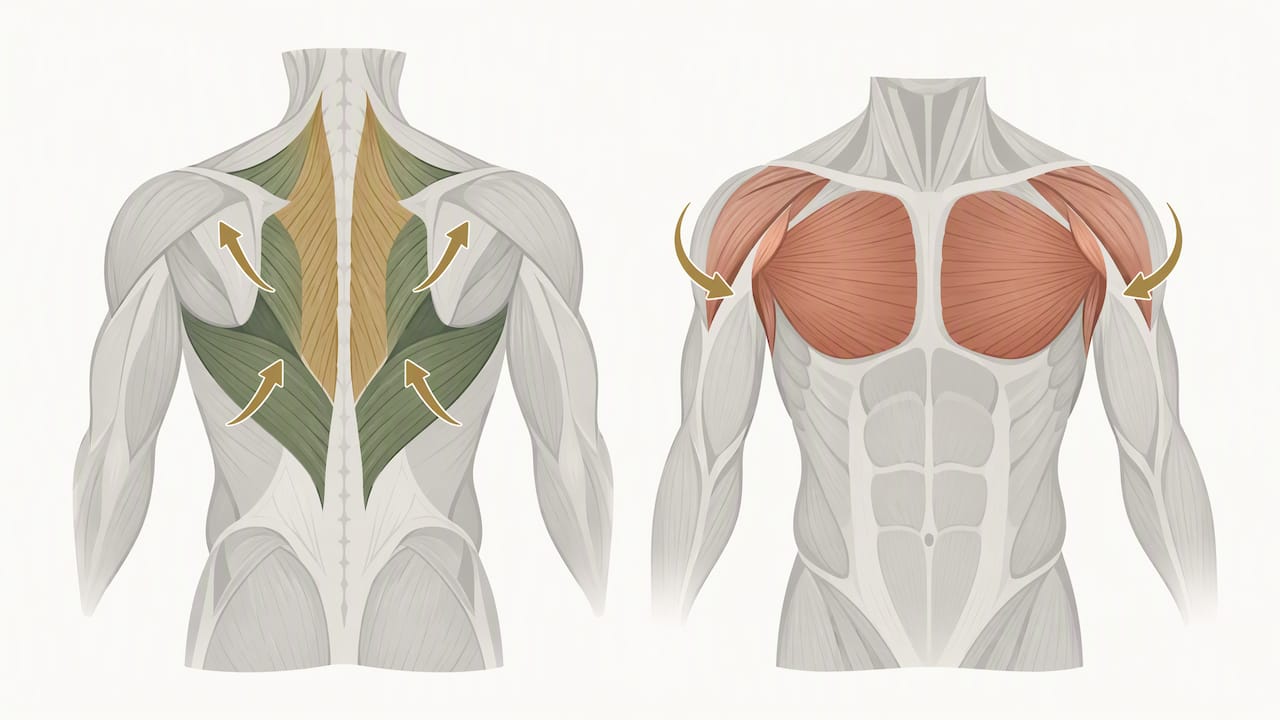
This is why a program that only stretches the chest, or only strengthens the back, tends to underperform. A meta-analysis of intervention trials found that combining stretching of the front of the body with strengthening of the back produces significantly greater improvements in hyperkyphosis than either approach alone, and that supervised programs combining both elements tend to show the largest effects.
The muscles most commonly involved include:
Addressing both sides of this imbalance, rather than picking one, gives your spine the support and the range of motion it needs to sit in a better position throughout the day.
A well-rounded routine pulls from four categories: strengthening, lengthening, mobility, and balance. You do not need every exercise in every session, but hitting each category across a week gives your upper back the mix of support and flexibility it needs.
Pro Tip: Do your pectoral stretch right before your scapular squeezes or rows, since a looser chest makes it easier to fully retract your shoulder blades.
A structured plan beats random exercise because it builds strength gradually while giving your body time to adapt. The following framework works for most adults easing into a kyphosis-focused routine, though anyone with osteoporosis or acute pain should get individualized guidance first.
Clinical guidance and trial protocols commonly use a frequency of two to three sessions per week, and consistency matters more than intensity for building lasting change. Aim for 2 to 3 sets of 8 to 12 repetitions on strength moves, and progress only once the final repetitions of a set feel controlled, not strained.
Some muscle soreness is normal when you start a new routine. If soreness lasts longer than 48 hours, that is usually a sign to scale back resistance or volume before your next session. Persistent pain, rather than typical muscle fatigue, is a reason to pause and check in with a physiotherapist or chiropractor before continuing to progress.
Exercise is generally safe for kyphosis, but a few situations call for caution or a pause before continuing.
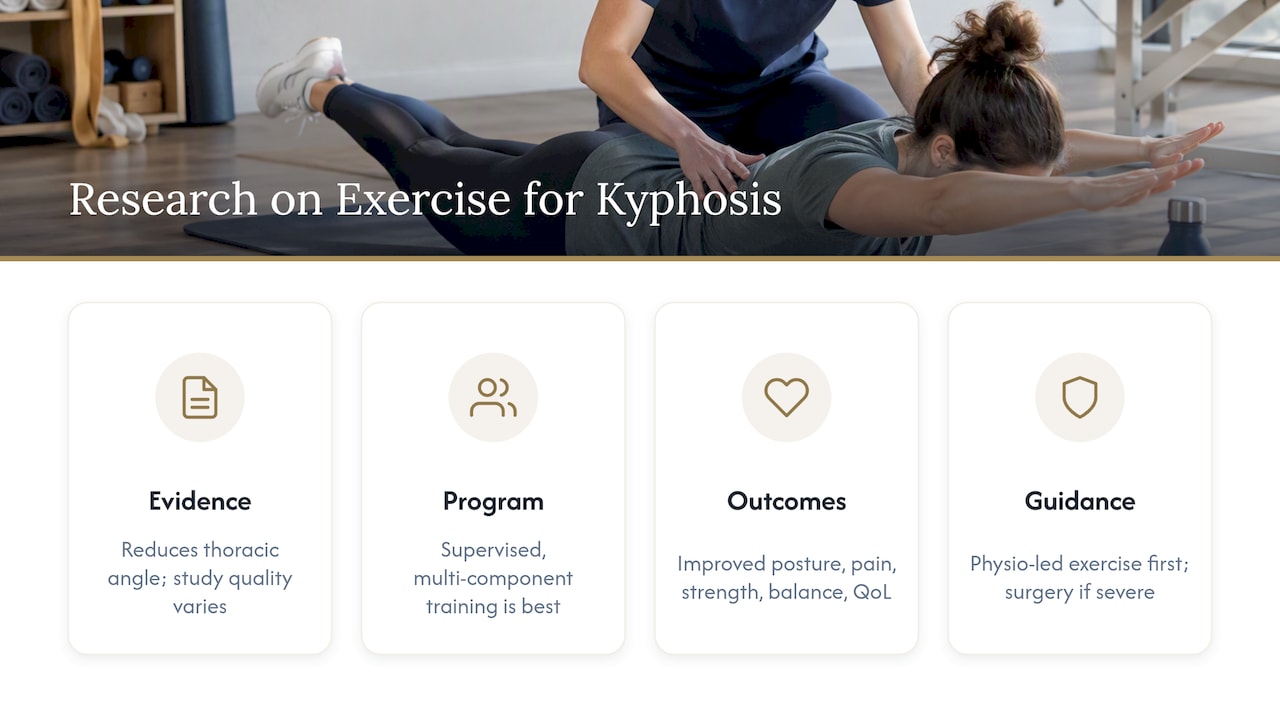
The evidence base for exercise as a treatment for kyphosis is substantial, though not uniform in quality. A systematic review and meta-analysis found that structured exercise programs can significantly reduce thoracic kyphosis angle while improving posture, pain, strength, balance, and quality of life. These programs do not typically restore a fixed structural curve to a fully normal shape, but the functional gains are real and measurable.
Supervised, multi-component programs that combine strengthening, stretching, and postural training consistently show larger benefits than single-focus routines in controlled trials. That pattern holds across age groups, though evidence quality varies in older adult populations, where some trials report conflicting results on the size of the benefit.
NHS guidance reflects this same balance: treatment is recommended when kyphosis is severe, progressive, or affecting daily function, with physiotherapist-led exercise as the first-line approach. Surgery is reserved for cases where the curve is severe or continuing to worsen despite conservative care. For most people with mild to moderate postural kyphosis, exercise sits at the center of management, not as an afterthought to it.
Consistency beats intensity when it comes to improving a rounded upper back. Two to three sessions a week, done with attention to form, will outperform occasional all-out efforts every time. Getting the movement pattern right before adding load protects your shoulders and spine while you build the strength that actually changes your posture.
A few mistakes come up often:
For general background on posture mechanics, our article on unlocking the secrets of good posture covers related principles in more depth.
Pro Tip: Film yourself from the side doing a row or a wall angel. Posture faults are often easier to spot on video than to feel in the moment.
As a healthcare provider specializing in chiropractic services and physical rehabilitation, we build each plan around diagnosis first, matching exercises to what a person’s spine and posture actually need rather than applying a generic routine.
In our experience guiding patients through postural rehabilitation, measurable improvement in posture and comfort tends to show up within 6 to 12 weeks of consistent effort, matching the timelines reflected in the exercise trials we have reviewed. Success usually looks like less pain, steadier balance, and an upright posture that takes less conscious effort to hold through the day.
Full reversal of a structural curve is uncommon, and we think it is worth saying plainly rather than letting marketing language imply otherwise. The honest goal is function and comfort, not a perfectly straight spine. We encourage anyone working through a program like this to check in for a follow-up assessment every few weeks, since adjusting the plan to your actual progress matters more than following a fixed script.
— Deane
A home exercise routine goes further when it starts from an accurate picture of your spine and muscle balance rather than guesswork. Our physical rehabilitation programs begin with a hands-on assessment that identifies which muscles need strengthening and which structures need releasing before we build a plan around your specific posture and goals.

Depending on what the assessment shows, we draw from several tools:
We offer same-day appointments and bill many insurance plans directly, so getting started does not mean waiting weeks for an opening. If you notice any of the red flags described above, or you simply want supervised guidance progressing your routine safely, book an assessment through our services page and we will build a plan around what your spine actually needs.
This article is general information, not a substitute for advice from a qualified doctor. Consult a qualified healthcare professional about your own circumstances before acting on anything here.
Exercise can meaningfully reduce the kyphosis angle and improve posture, pain, and balance, according to a systematic review and meta-analysis. A fixed structural curve is rarely reversed completely, but function and comfort typically improve with a consistent program.
Avoid repeated or loaded spinal flexion exercises if you have osteoporosis or a history of vertebral compression fractures, since this may raise fracture risk according to some systematic reviews. Also avoid pushing through sharp or worsening pain, and get checked promptly if you notice new numbness, weakness, or changes in bowel or bladder control.
The spinal extensors and the scapular stabilizers, including the rhomboids and middle and lower trapezius, are typically weak and underused in kyphosis. At the same time, the pectoralis major and minor and structures at the front of the shoulder tend to be tight, pulling the shoulders forward.
NHS guidance recommends physiotherapist-led exercise as the first-line approach for symptomatic or progressive kyphosis, reserving surgery for severe or worsening cases. Programs that combine strengthening, stretching, and postural training under supervision tend to show the largest measured benefits in trials.
Same Day Appointments Available
We Direct Bill!