

To ease pregnancy back pain now, change position often, try pelvic tilts, and use a warm shower or heat for 15 to 20 minutes. Acetaminophen is the first choice for pain if you need medication, but NSAIDs should be avoided from around 20 weeks onward. Call your clinician if pain worsens, or if you notice fever, numbness, or changes in bladder or bowel habits.
TL;DR:
- Changing between sitting and standing every 30 to 45 minutes can reduce back strain caused by prolonged positions during pregnancy.
- Acetaminophen is safe for pain relief when used at the lowest effective dose, but NSAIDs should be avoided after 20 weeks due to fetal health risks.
- Supportive shoes, supportive pillows, and small modifications like a rolled towel behind your lower back can significantly alleviate daily discomfort.
- Gentle pregnancy-safe exercises such as pelvic tilts, bridges, and aquatic movements can improve function and lessen pain severity over time.
- Seek urgent medical attention if you experience severe pain, numbness, fever, or changes in bladder or bowel control during pregnancy.
Back pain that is not settling? Start with a $67 new patient visit
A chiropractor assesses your spine and movement, treats on day one when it is safe, and gives you exercises matched to what we find. See low back pain care in Calgary. Book online.
Your body is carrying new weight in a new way, and your back feels it first. The good news is that most relief starts with small, free adjustments you can make right now.
Try rotating between sitting and standing every 30 to 45 minutes rather than holding one position for hours. Prolonged sitting rounds your lower back, while prolonged standing tires the muscles that support your pelvis, so pacing yourself between the two keeps either from taking over.
Pro Tip: Slip a small rolled towel behind your lower back when sitting for long stretches. It keeps the natural curve of your spine supported without any special equipment.
When home measures aren’t enough, Health Canada identifies acetaminophen as the first-line option for pain and fever during pregnancy, used at the lowest effective dose for the shortest time you need it. This guidance comes with reassurance: there’s no conclusive evidence tying directed use to neurodevelopmental problems in children.
NSAIDs are a different story. Health Canada’s safety review found that starting around 20 weeks, these medications carry a rare but serious risk of fetal kidney problems and low amniotic fluid, and they’re contraindicated entirely in the third trimester.
Movement is one of the more reliable tools you have. A systematic review and meta-analysis of randomized trials found that regular exercise during pregnancy improves function and lowers pain severity, though it doesn’t reliably prevent every case of low back or pelvic girdle pain from starting. Think of exercise as building your tolerance and mobility rather than promising a cure.
ACOG’s pregnancy exercise guidance supports a short, gentle routine you can build into your day:
Start with a few gentle repetitions and stop if you feel dizziness, sharper pain, or uterine tightening. If your pain doesn’t ease with these moves or you’re unsure how to modify them, a supervised session with a physiotherapist or chiropractor can tailor the intensity to your stage of pregnancy.
Pro Tip: Do your pelvic tilts right after a warm shower, when your muscles are already loosened. You’ll get a better range of motion with less effort.
The load on your back adds up over the course of a day, so small habit changes matter as much as any single exercise. Keeping your ears, shoulders, and hips roughly stacked when you stand, and using a lumbar cushion when you sit, keeps your spine in a position it doesn’t have to fight against.
A small lumbar roll or a pillow under the sacrum when sitting for long periods redistributes pressure and can reduce the fatigue that builds by evening. These are low-effort changes, but they’re often the first ones that make a noticeable difference.
Most pregnancy back pain is uncomfortable but not dangerous. Certain symptoms, though, call for prompt evaluation rather than home care. Watch for fever, progressive leg weakness or numbness, numbness around the groin or inner thighs, or any change in bladder or bowel control.
Severe pain that doesn’t ease with rest or position changes, or that comes with regular tightening across your abdomen, can point to preterm labor and needs immediate attention. If you notice sciatica-type symptoms that shoot down your leg and don’t improve with walking or rest, that’s also worth a call to your provider.
A typical assessment includes a review of your symptoms, a physical exam of your movement and posture, and, depending on findings, a referral to physiotherapy, chiropractic care, or obstetric evaluation. If any of the warning signs above appear, contact your provider the same day or go to an emergency department if symptoms are severe.
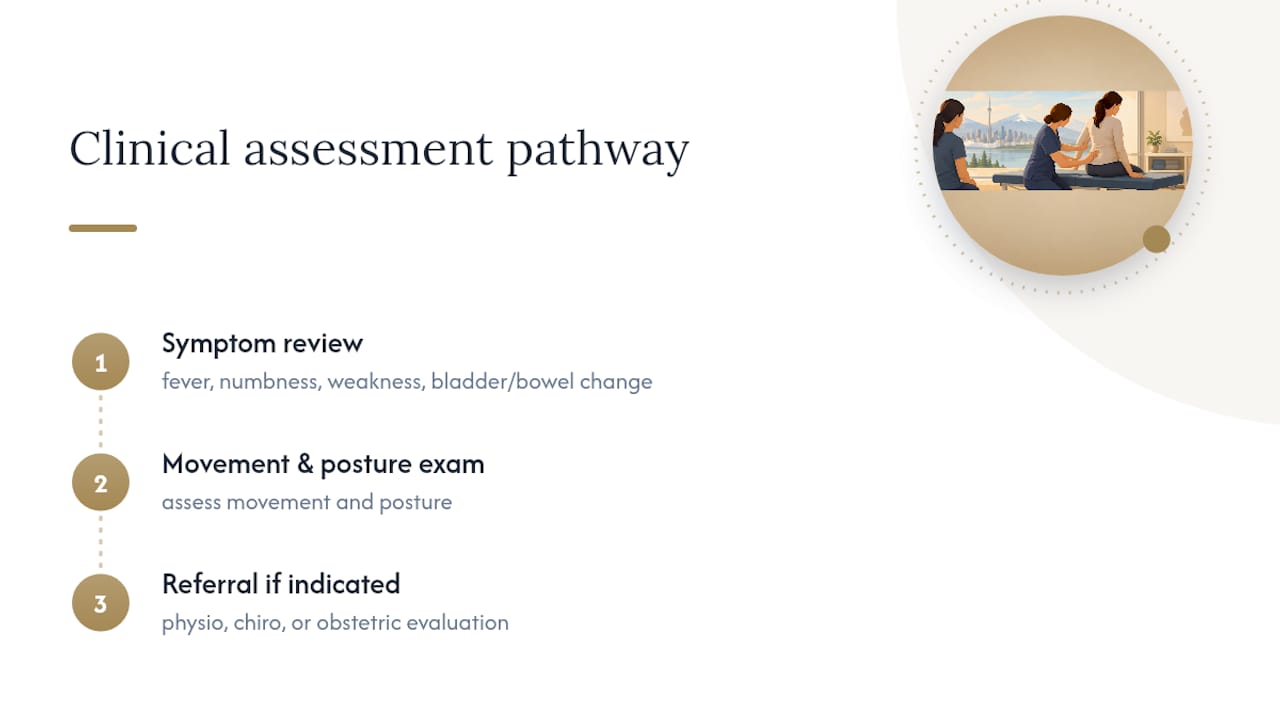
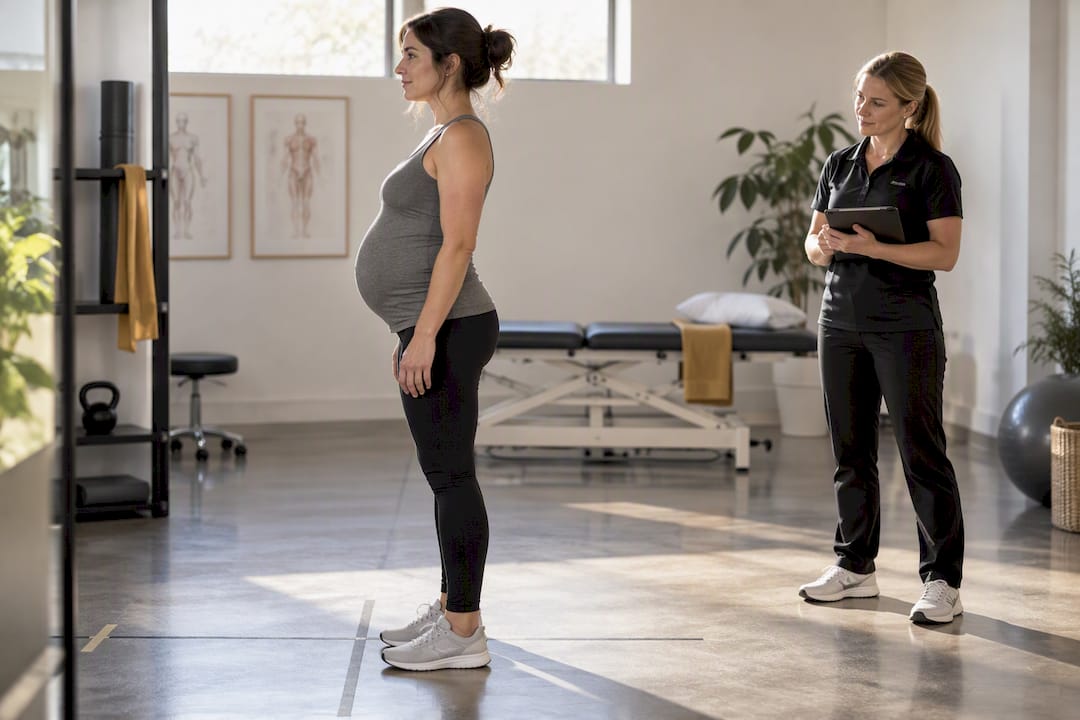
A thorough assessment starts with your history and how your pain behaves: what triggers it, what eases it, and whether it’s centered in your low back or radiating into your hip or leg. Movement testing and a look at your posture and biomechanics help distinguish pelvic girdle pain, often aggravated by single-leg stance or rolling in bed, from mechanical low back pain that stays localized.
From there, non-drug options appropriate for pregnancy can include gentle manual therapy, Active Release Technique for tight soft tissue, supervised exercise progressions, massage therapy, and taping to support strained areas between sessions. These approaches complement the home strategies above rather than replacing them. Many people notice gradual improvement in comfort and mobility over a series of visits, though the pace varies by person and by which structures are involved.
Back pain shows up for a large share of pregnant women at some point, and feeling it doesn’t mean something has gone wrong. Your goal isn’t zero pain. It’s steady improvement in comfort and mobility using the tools that fit your stage of pregnancy.
Combine the home strategies here with a clinician’s input when pain limits your day, and bring a clear picture of your symptoms to that first visit.
— Deane

Home strategies handle a lot, but when pregnancy back pain limits your walking, sleep, or work, a hands-on assessment can pinpoint what’s actually driving it and speed up your relief. At Shephard Health, that starts with a biomechanical assessment tailored to where you are in pregnancy, not a generic protocol.
Bring a note of when your pain started and what makes it better or worse. Shephard Health offers direct billing to insurance where applicable, so book a visit to get an assessment built around your pregnancy.
This article is general information, not a substitute for advice from a qualified doctor. Consult a qualified healthcare professional about your own circumstances before acting on anything here.
Changing positions often, using heat or cold for short periods, and gentle exercises like pelvic tilts are the most accessible first steps. A pregnancy support belt can also help on days when standing or walking makes pain worse.
Sciatica during pregnancy typically causes pain that shoots from the lower back or buttock down one leg, sometimes with tingling or numbness. Walking and gentle extension movements often ease symptoms, and physiotherapy is recommended if the pain persists.
Acetaminophen is recommended as the first-line option for pain during pregnancy, used at the lowest dose that helps for the shortest time needed. NSAIDs like ibuprofen should be avoided starting around 20 weeks because of fetal kidney risks.
Yes, a heating pad on low for 15 to 20 minutes is generally considered a reasonable option for easing back soreness during pregnancy. Avoid direct heat on your abdomen and don’t let your core temperature rise for extended periods.
Same Day Appointments Available
We Direct Bill!