

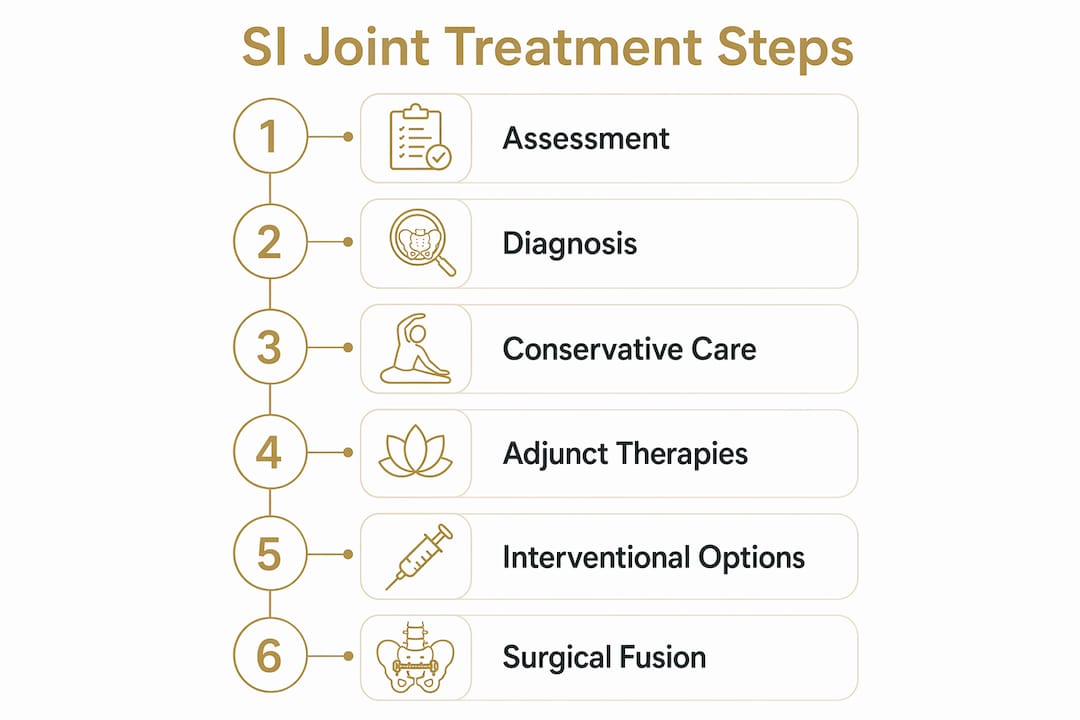
Most people with sacroiliac joint pain get meaningful relief from a stepped plan that begins with targeted physical therapy and manual care, then progresses to image-guided injections or radiofrequency ablation only when conservative measures fall short. Surgery is a last resort, reserved for a small subset of patients who have exhausted every other option.
Your quick-start plan:
For Calgary patients, Shephardhealth offers same-day appointments and direct insurance billing, making it a practical first stop for conservative SI joint care.
Pro Tip: Book your initial assessment before imaging. A skilled clinician can often identify SI joint involvement through provocation testing alone, saving you time and unnecessary costs.
The sacroiliac (SI) joint connects the ilium (the large pelvic bone) to the sacrum at the base of your spine. You have one on each side, and together they transfer load between your upper body and legs during every step you take. Despite their critical role, these joints move very little, roughly two to four degrees of rotation, which makes them vulnerable to stress from trauma, pregnancy, or asymmetric loading over time.
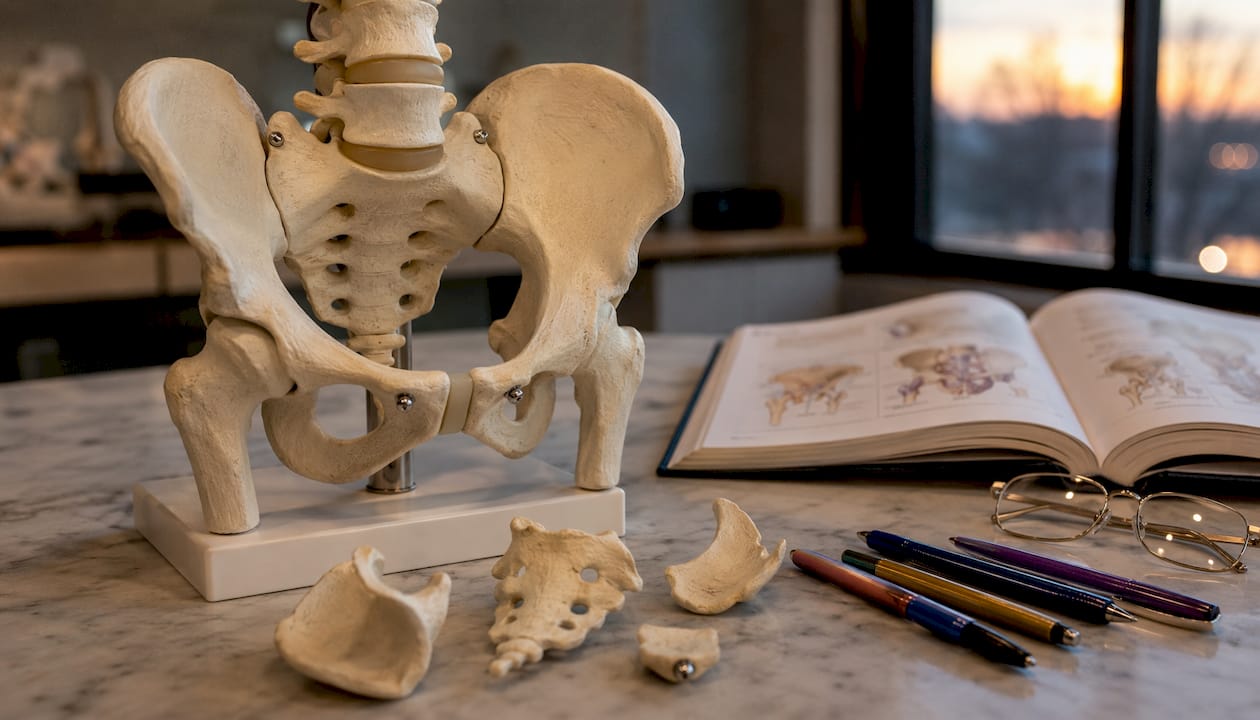
Pain can originate from two distinct areas: intra-articular sources (the joint capsule and cartilage itself) and extra-articular sources (the surrounding ligaments, posterior joint complex, and muscles). This distinction matters because different treatments target different structures.
Structures commonly involved in SI joint pain:
Pro Tip: Because the SI joint’s innervation is complex, involving both anterior and posterior lateral branches, a clinician who understands this anatomy will choose the right injection target rather than defaulting to a single approach.
SI joint pain most often presents as a dull ache on one side of the low back or buttock, just below the belt line. It can radiate into the groin or posterior thigh, but it rarely travels below the knee. Standing for long periods, climbing stairs, rolling over in bed, and transitioning from sitting to standing are the most common aggravating movements.
Specific triggers worth noting: single-leg stance (putting all weight on the affected side), hip flexion combined with rotation, and asymmetric gait patterns. Many patients describe a “catching” sensation when shifting weight.
Red flags that require prompt medical evaluation: sudden neurological deficits (weakness, numbness, or tingling in the leg), loss of bowel or bladder control, progressively worsening pain at night that is unrelated to position, and unexplained weight loss alongside back pain. These symptoms may indicate a serious underlying condition unrelated to the SI joint.
For most patients without red flags, a short trial of activity modification, ice or heat alternation, and over-the-counter NSAIDs like ibuprofen is a reasonable first step. If pain does not improve within two to four weeks, a clinical evaluation is warranted.
Diagnosis requires a careful history and physical exam. Three or more positive provocation tests meaningfully increase the likelihood that the SI joint is the pain source, according to StatPearls.
Step-by-step diagnostic approach:
The ASPN guideline sets a diagnostic threshold of substantial pain relief following a block to confirm the SI joint as the primary pain generator. Many insurance pathways and procedural programs require confirmation via diagnostic blocks before approving RFA or surgical fusion.
Note on false positives: The SI joint shares referral patterns with lumbar disc and facet sources. A positive provocation test alone is not definitive. The combination of clinical exam and a well-performed diagnostic block provides the most reliable confirmation.
The guiding principle is straightforward: start conservative, use diagnostic injections to guide escalation, and reserve irreversible procedures for confirmed, refractory cases.

Physical therapy focused on pelvic stabilization and targeted muscle work is the foundation of SI joint pain management. StatPearls notes that programs combining manual therapy with exercise produce better long-term outcomes than exercise alone. Key targets include the piriformis, gluteals, and iliopsoas, along with thoracolumbar fascia mobility. Chiropractic manipulation, pelvic belts for temporary stabilization, NSAIDs, and activity modification round out this tier.
Platelet-rich plasma (PRP) and prolotherapy offer an intermediate option for patients who have not responded fully to conservative care. The AAPM/ASRA-PM consensus guideline notes weak but growing evidence that dextrose-based prolotherapy and PRP can provide at least three months of pain relief in selected patients. These are not first-line, but they are worth discussing with your provider before moving to interventional procedures. For a broader look at non-invasive treatment options, conservative and regenerative approaches often work well together.
Image-guided corticosteroid injections, both intra-articular and extra-articular, provide diagnostic clarity and short-term therapeutic benefit. The ASPN guideline recommends these after roughly four weeks of persistent pain despite conservative care.
Lateral-branch RFA is the most effective interventional option for confirmed extra-articular SI pain. Strong evidence supports RFA providing relief for at least six months in well-selected patients. Repeat procedures are possible when pain returns.
Minimally invasive SI joint fusion is considered only after a minimum of six months of unsuccessful conservative and interventional care, with a confirmed diagnostic-block response. Outcomes are variable, and patient satisfaction is not uniformly high — careful patient selection is critical.
Recovery timelines vary considerably depending on the treatment tier and individual factors.
Rehab after any procedure should include progressive core and gluteal strengthening, gait retraining, and activity pacing. Common setbacks include returning to aggravating activities too quickly or skipping the muscle-work component. If pain returns or plateaus, follow up with your clinician rather than waiting.
The right provider depends on where you are in the treatment pathway. For most patients starting out, a chiropractor or physiotherapist with experience in pelvic and lumbar assessment is the appropriate first contact. If you need image-guided injections or RFA, you will need access to a pain-medicine specialist or interventional radiologist, either on-site or through a referral network.
Questions to ask any Calgary provider:
Selection criteria to prioritize:
Red flags for poor care: proceeding to injections or RFA without first confirming the diagnosis through provocation testing and a diagnostic block, or offering no referral pathway when conservative care is insufficient.
Pro Tip: Ask specifically whether the clinic can coordinate a referral to a pain-medicine physician if your symptoms do not respond to conservative care. A clinic with no referral pathway leaves you starting over from scratch.
| Provider Type | Common Treatments | Appointment Availability | Insurance / Direct Billing | Best For |
|---|---|---|---|---|
| Chiropractic & rehab clinic (Shephardhealth) | Chiropractic adjustments, targeted rehab, ART, laser therapy, shockwave therapy | Same-day available | Direct billing offered | Conservative care, first-line assessment, adjunct therapies |
| Chiropractic clinic | Chiropractic, acupuncture, manual therapy | Standard scheduling | Varies; confirm with clinic | Patients wanting combined chiropractic and acupuncture |
| Muscle and joint clinic | Manual therapy, exercise rehab, soft-tissue work | Standard scheduling | Varies; confirm with clinic | Physio-led conservative and rehab care |
| Pain management / medical clinic | Injections, nerve blocks, spinal procedures | Referral or scheduled | Varies; confirm with clinic | Interventional procedures, injection-based care |
| Surgical centre | Surgical evaluation, minimally invasive fusion | Referral required | Surgical billing applies | Refractory cases requiring surgical assessment |
Shephardhealth is a strong first stop for most Calgary patients. The clinic offers same-day appointments, direct insurance billing, and a range of on-site therapies including Active Release Technique, laser therapy, and shockwave therapy. For patients who need to progress beyond conservative care, the clinic can support referral coordination to appropriate specialists.
For patients who want guidance on personalized treatment selection before committing to a provider, reviewing an individualized care framework first can help you ask better questions at your first appointment.
Pro Tip: Call Shephardhealth directly to ask about same-day availability. Many Calgary patients are seen within 24 hours, which matters when pain is limiting your daily function.
Costs vary based on provider type, treatment tier, and your insurance coverage. The figures below are general ranges; confirm current fees directly with each clinic.
| Service | Typical Range (CAD) | Notes |
|---|---|---|
| Initial chiropractic or physio assessment | — | Varies by clinic and session length |
| Follow-up treatment session | — | Per visit; frequency depends on treatment plan |
| Image-guided diagnostic injection | — | Often performed at a pain clinic or hospital; may require referral |
| Lateral-branch RFA | — | Specialist procedure; prior authorization often required |
| Minimally invasive SI fusion | Surgical costs apply | Covered under Alberta Health Services for eligible cases |
How billing works in Calgary:
A stepwise approach, starting with physical therapy and manual care and escalating only when needed, gives most patients the best chance at lasting sacroiliac joint pain relief.
| Point | Details |
|---|---|
| Start conservative | Physical therapy, chiropractic care, and NSAIDs are the evidence-backed first line for SI joint pain. |
| Use diagnostic blocks to guide escalation | Pain relief following an image-guided block confirms the SI joint as the source before RFA or fusion. |
| RFA for confirmed lateral-branch pain | Strong evidence supports lateral-branch RFA providing at least six months of relief in well-selected patients. |
| Surgery is a last resort | Fusion is considered only after six or more months of failed conservative and interventional care. |
| Shephardhealth for Calgary patients | Same-day appointments and direct billing make Shephardhealth a practical first step for conservative SI joint care in Calgary. |
The most common mistake patients make is waiting too long before seeking a structured assessment, then expecting a single injection or adjustment to resolve months of dysfunction. SI joint pain responds best when treatment addresses the whole picture: the joint itself, the surrounding muscles, and the movement patterns that put the joint under stress in the first place.
What often gets overlooked is that the diagnostic process is itself therapeutic. A well-performed provocation exam tells you and your clinician which structures are involved. A diagnostic block, when needed, tells you whether an injection-based or ablative approach is even worth pursuing. Skipping these steps and going straight to aggressive interventions is how patients end up with procedures that don’t hold.
The other underappreciated reality is that conservative care done well, meaning targeted rehab with real attention to pelvic stabilization and soft-tissue contributors, often produces results that match or outlast injections in terms of durability. Injections have their place, but they work best as a bridge to rehabilitation, not a replacement for it.
Shephardhealth brings together chiropractic care, targeted physical rehabilitation, and adjunct therapies including Active Release Technique, laser therapy, and shockwave therapy under one roof in Calgary. For patients dealing with sacroiliac joint dysfunction, this means your initial assessment, manual treatment, and progressive rehab can happen in one place, without being bounced between multiple providers before you even start.

The clinic offers same-day appointments and direct billing to most extended health benefit plans, so you can focus on getting better rather than managing paperwork. If your situation calls for a referral to a pain specialist or interventional procedure, the team can help coordinate that next step.
Read more about the benefits of chiropractic care for musculoskeletal conditions, or call Shephardhealth directly to book your SI joint assessment. Same-day availability means you do not have to wait to get answers.
| Source | What It Supports |
|---|---|
| ASPN Best Practice Guideline for SI Disorders (PMC) | Diagnostic-block thresholds, injection indications, RFA sequencing |
| StatPearls: Sacroiliac Joint Pain | Conservative care evidence, exercise targets, soft-tissue contributors |
| AAFP: SI Joint Dysfunction (2022) | NSAIDs, multimodal rehab, biomechanics-first approach |
| PMC Review: Diagnosis and Treatment Algorithm | Comprehensive diagnostic and treatment pathway, surgical indications |
| AAPM/ASRA-PM Consensus Guidelines | RFA evidence, prolotherapy/PRP evidence, diagnostic-block thresholds |
| Mayo Clinic: Sacroiliitis | Conservative and interventional treatment overview, medication options |
| Surgical Fusion Outcomes (Springer) | Variable surgical outcomes, patient selection for fusion |
| Shephardhealth | Local Calgary clinic services, booking, and direct billing details |
This article is general health information, not professional medical advice. Confirm your diagnosis and treatment plan with a qualified clinician or your primary care provider before making any decisions about your care.
Same Day Appointments Available
We Direct Bill!