

TENS targets your sensory nerves to reduce pain signals; EMS targets your motor nerves to produce muscle contractions for rehabilitation and strength support. If your primary goal is managing acute or chronic pain, TENS is your starting point. If you need to re-educate a muscle, prevent atrophy after surgery, or support strength recovery, EMS is the appropriate choice. Both are non-invasive electrotherapy modalities recognized in clinical practice, and both work best as part of a supervised rehabilitation program rather than as stand-alone solutions.
Choose TENS when:
Choose EMS when:
Injured or not recovering as expected? Start with a $67 new patient visit
A chiropractor assesses the injury, treats it on day one when it is safe, and builds a recovery plan with you. See sports injuries care in Calgary. Book online.
TENS stands for transcutaneous electrical nerve stimulation. Its clinical goal is symptomatic pain modulation, meaning it does not repair damaged tissue but rather interrupts or reduces the pain signals your nervous system sends. TENS targets sensory nerves rather than motor nerves, which is why you feel a sensation but do not see your muscles contract.
Two main modes are used in practice. Conventional TENS runs at higher frequencies (50–100 Hz) with a short pulse width (50–200 microseconds) and low intensity. It works primarily through the gate control mechanism, where non-painful sensory input competes with pain signals traveling to the brain. Acupuncture-like TENS uses lower frequencies (2–10 Hz) with longer pulse widths (200+ microseconds) and slightly higher intensity to stimulate endorphin release via descending pain pathways. A third option, burst mode, delivers pulses in low-frequency bursts at higher intensity and can produce mild muscle twitching while combining elements of both approaches.
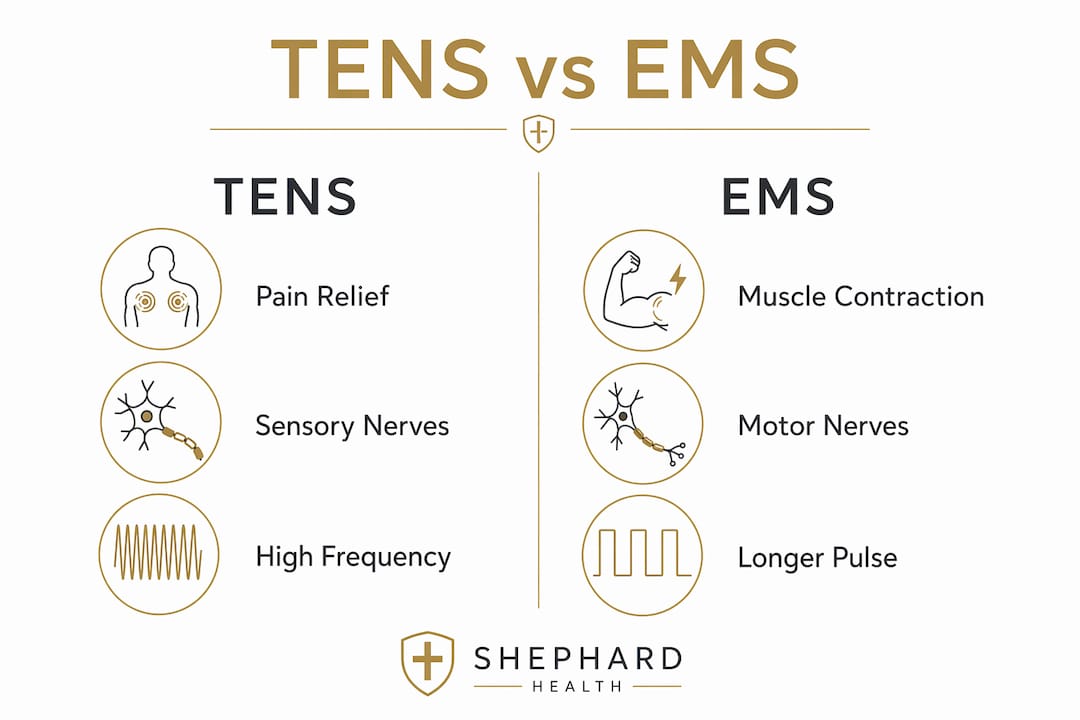
During a session, you should feel a tingling or buzzing sensation at the electrode sites. There is no visible muscle contraction in conventional or acupuncture-like modes. Sessions typically run for multiple minutes, and many people use TENS repeatedly throughout the day for ongoing pain conditions.
Pro Tip: Intensity matters more than most people realize. Increase the output to the strongest comfortable level that remains non-painful. A barely perceptible tingle is unlikely to produce meaningful pain relief. Electrode placement directly over or near the pain site generally produces better results than distant placement.
Electrical muscle stimulation (EMS) is designed to produce a controlled, visible muscle contraction by stimulating motor nerves rather than sensory ones. The clinical goals include muscle re-education after injury or neurological event, prevention of disuse atrophy during immobilization, and recovery support in post-surgical rehabilitation. In sports medicine, EMS is also used to supplement strength training in selected populations.
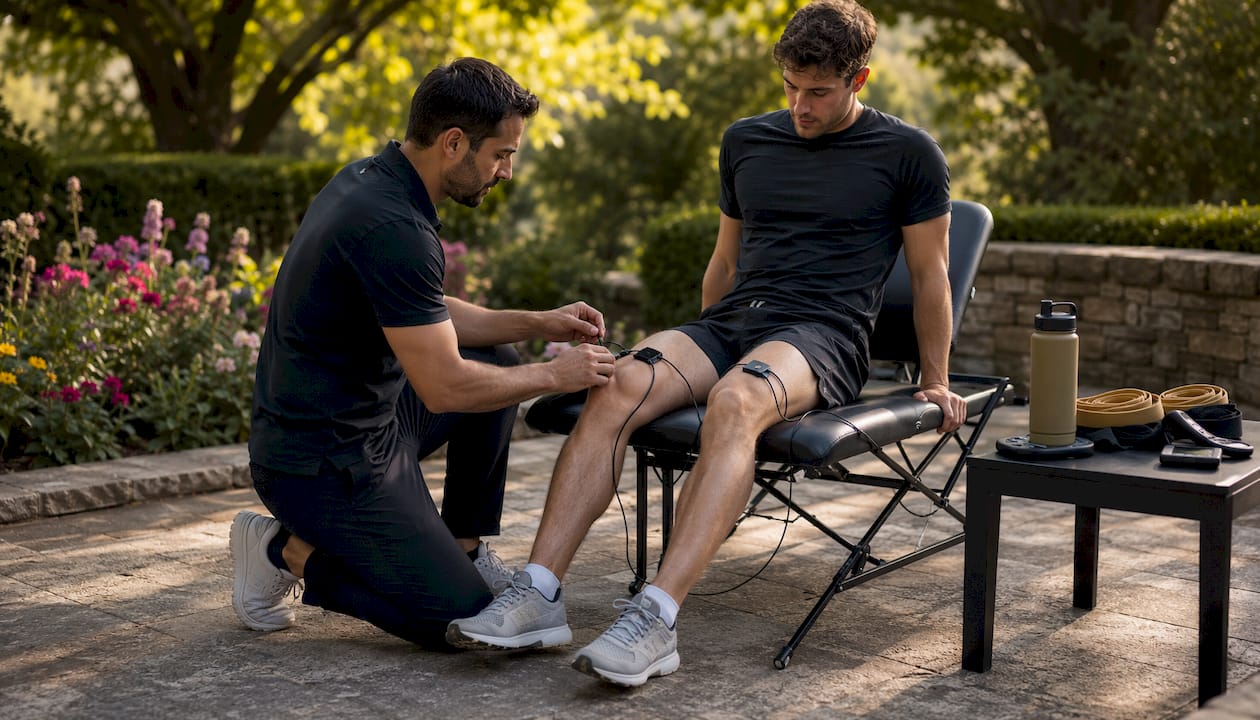
Because motor nerves require more energy to depolarize than sensory nerves, EMS uses higher intensities, longer pulse widths, and lower frequencies than conventional TENS. EMS parameters generally include frequencies in a moderate range with longer pulse widths suitable for muscle stimulation. You will feel a noticeably stronger current than TENS, and you will see or feel the target muscle contract rhythmically. That contraction is the point: it is what drives muscle fiber recruitment and neuromuscular adaptation.
Sessions are generally brief per muscle group, with treatment frequency varying by clinical goal. For atrophy prevention, sessions may be frequent, while for strength support, a few sessions per week is often recommended.
Pro Tip: Post-surgical or neurologic cases should always begin EMS under clinician supervision. A practitioner can confirm correct pad placement, set appropriate parameters for your specific muscle, and monitor your response. At-home EMS devices are convenient for maintenance, but they cannot replicate the precision of a clinician-titrated session, especially in the early stages of recovery.
The table below maps both modalities across the clinical dimensions that matter most when you are deciding which to use.
| Dimension | TENS | EMS |
|---|---|---|
| Primary clinical goal | Symptomatic pain relief | Muscle contraction, re-education, atrophy prevention |
| Target tissue | Sensory nerves | Motor nerves and muscle fibers |
| Typical frequency | Higher frequencies for conventional mode; lower frequencies for acupuncture-like mode | 20–50 Hz |
| Typical pulse width | Shorter pulse widths for conventional mode; longer pulse widths for acupuncture-like mode | 300–400 microseconds |
| Intensity | Low (non-painful tingling) | Higher (visible muscle contraction) |
| Sensation | Tingling, buzzing, no visible contraction | Visible/palpable rhythmic muscle contraction |
| Common clinical uses | Postoperative pain, osteoarthritis, neuropathic pain, sports injury pain, labor pain | Post-op muscle activation, stroke rehab, disuse atrophy prevention, sports recovery |
| Key contraindications | Pacemaker, malignancy at site, carotid sinus, eyes, pregnancy (abdomen/pelvis) | Same as TENS, plus: open wounds, incisions, active infection at site |
| Delivery setting | Clinic or at-home device | Clinic-supervised (complex cases); at-home (maintenance) |
| Typical session length | 20 minutes | — |
| At-home device cost (Canada) | Typical consumer units available at accessible price ranges | Combo units generally cost more |
The most consequential difference for your decision is the target tissue. TENS will not meaningfully contract a muscle, and EMS will not provide the same degree of pain modulation as a properly dosed TENS session. Using one when you need the other is not just inefficient; it can delay your recovery.
Quick-use decision guide:
TENS has the broadest evidence base for pain conditions. A meta-analysis of 381 randomized controlled trials found moderate-certainty evidence that pain intensity is lower during or immediately after TENS compared with placebo, with a standardized mean difference of -0.96 (95% CI -1.14 to -0.78). Well-supported indications include postoperative pain, osteoarthritis, some neuropathic pain variants, labor pain, and sports injury pain. The NHS also recognizes TENS for period pain and arthritis-related discomfort. The honest caveat: mixed evidence for long-term outcomes means TENS is best understood as a tool for symptom management, not a cure. Effectiveness depends heavily on adequate intensity and appropriate patient selection.
EMS evidence is strongest in rehabilitation contexts: post-surgical muscle activation, stroke-related motor impairment, and prevention of atrophy during immobilization. Research published in PMC on TENS and EMS advancements confirms that EMS enhances neuromuscular function by recruiting additional muscle fibers and improving neuromuscular efficiency, particularly in clinical rehabilitation settings.
Statistic to keep in mind: Studies on EMS for muscle strength typically report modest gains over several weeks in selected populations. EMS is a useful adjunct to exercise, not a replacement for it.
Two misconceptions worth addressing directly. First, neither TENS nor EMS heals damaged tissue on its own. TENS modulates the perception of pain; it does not repair the source. Second, EMS will not produce meaningful hypertrophy in a healthy, active person the way progressive resistance training does. Its value is in clinical rehabilitation scenarios where voluntary muscle activation is compromised or limited.
Both modalities share several absolute contraindications. You should not use either if you have an implanted electronic device such as a cardiac pacemaker, implantable cardioverter-defibrillator, or spinal cord stimulator. Electrodes must never be placed over a suspected malignancy, over the carotid sinus (sides of the neck), or near the eyes.
Additional cautions specific to each:
In Canada, both TENS and EMS devices sold for consumer use are regulated as medical devices. Health Canada requires that consumer-grade devices meet safety standards before they can be sold. Always check that any device you purchase carries appropriate regulatory approval and review the device labeling for contraindications specific to that unit.
A note on professional supervision: Post-surgical patients and those with neurological conditions should not begin electrotherapy at home without clinician guidance. Incorrect pad placement or inappropriate parameters in these populations can delay recovery or cause harm. A supervised assessment is the safest starting point.
Yes, with an important qualification. Many consumer combo units on the market switch between TENS and EMS modes, and a quality combo device with distinct, properly tuned programs and adequate output can serve both purposes well. The key word is quality.
The technical reason the two modes are not interchangeable on a single generic setting comes down to waveform, pulse width, and intensity. TENS requires lower intensity and shorter pulse widths to stimulate sensory nerves without recruiting motor nerves. EMS requires longer pulse widths (300–400 microseconds) and higher output to reliably depolarize motor nerves and produce a contraction. Many low-cost units cannot sustain the thresholds needed for true EMS, so they deliver a stronger-feeling TENS session rather than genuine motor recruitment.
When a combo unit is a good choice:
Red flags in cheap combo units:
Start with this short checklist before you purchase a device or book a session.
Diagnostic checklist:
If you answered yes to any of the last four questions, your first step is a clinician assessment, not a device purchase.
Questions to ask your clinician:
Red flags for at-home use: Avoid self-managing with either device if you have had surgery in the past three months, have a neurological condition affecting the treatment area, experience unexpected pain during use, or notice skin changes at the electrode sites.
Cost context in Canada: Quality at-home TENS units typically range from $50–$200 CAD. EMS or combo units run $80–$250 CAD. Clinic-supervised electrotherapy sessions are generally included within a broader physiotherapy or chiropractic treatment visit; session costs vary by provider and are often partially covered by extended health benefits.
Pro Tip: Before buying any at-home device, ask your clinician which specific unit they recommend for your condition. A $120 device with the right parameters and proper instruction will outperform a $250 device used incorrectly every time.
Look for units with adjustable frequency and pulse width controls, not just a single intensity dial. Confirm the device lists its parameter ranges in the specifications. For TENS, a unit covering 2–100 Hz with pulse width adjustment gives you access to both conventional and acupuncture-like modes. For EMS, verify the unit can reach 300–400 microsecond pulse widths and produces a visible contraction at moderate intensity. Replacement electrode pads are an ongoing cost; check availability and price before committing to a brand.
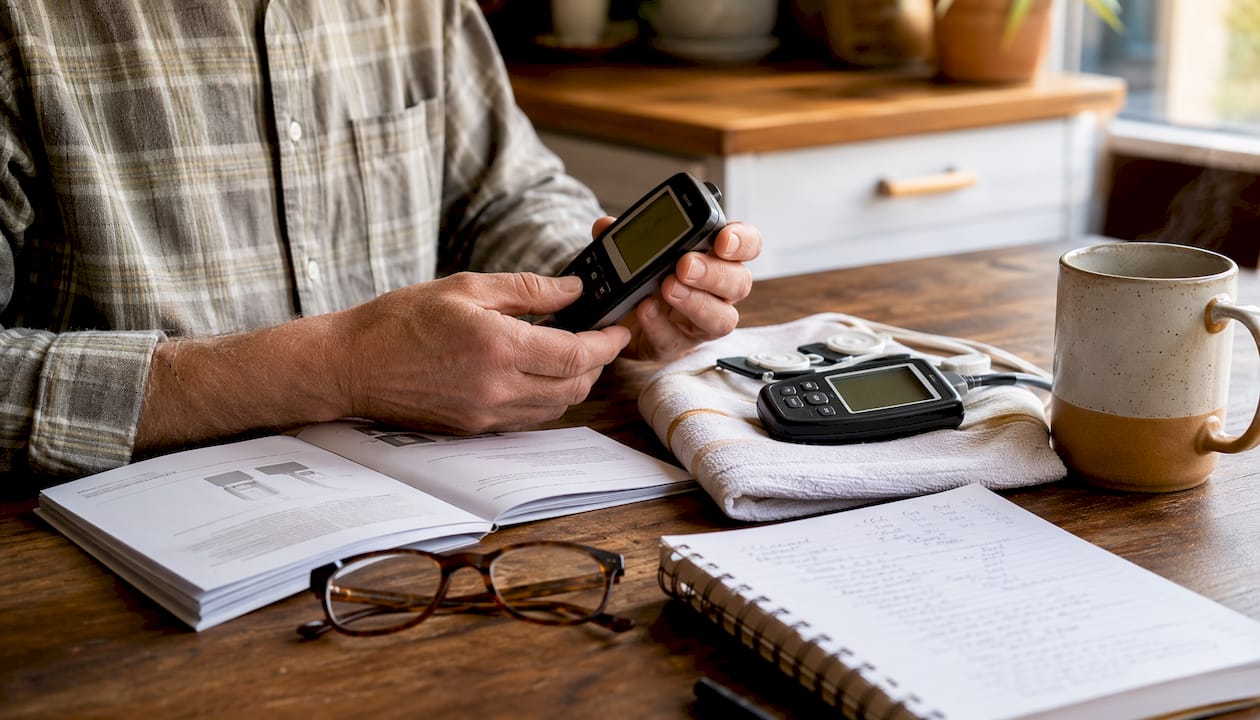
For readers managing soft tissue injuries at home, a quality TENS unit for pain control between clinic visits is a practical investment. EMS at home is most useful for maintenance once a clinician has established your parameters.
Your first electrotherapy session at a clinic begins with an assessment: the practitioner reviews your condition, identifies the target tissue, and selects the appropriate modality and parameters for your goals. Electrode placement is tailored to your anatomy and the specific nerve or muscle being targeted. The practitioner adjusts intensity during the session to reach the therapeutic threshold. Most sessions run 20–40 minutes and are integrated with manual therapy, exercise, or other modalities rather than delivered in isolation. You will typically receive guidance on home use, exercise homework, and a recommended treatment schedule.
Clinician-led titration is where the real difference lies. Incorrect pad placement and inadequate intensity are the most common reasons devices fail for people using them at home. A single supervised session can correct both issues and significantly improve your outcomes.
Pro Tip: Ask your clinician to mark the electrode positions on your skin or take a photo during your first session. Replicating exact placement at home is one of the most underrated factors in consistent results.
At Shephardhealth in Alberta, electrotherapy is not used in isolation. It is one component of a multimodal rehabilitation plan that may include Active Release Technique, manual therapy, exercise prescription, and other evidence-based modalities. The clinical approach follows the principle that electrotherapy works best as an adjunct to a supervised program rather than as a stand-alone treatment.
A typical patient flow at Shephardhealth begins with a thorough assessment of the presenting condition, movement patterns, and functional goals. From there, the practitioner selects the appropriate modality, places electrodes with precision, and titrates parameters to the individual. For pain-focused cases, TENS is integrated to reduce discomfort during manual therapy and allow more productive movement work. For rehabilitation cases involving muscle weakness or post-injury atrophy, EMS supports motor recruitment alongside progressive exercise.
The guiding principle at Shephardhealth: Electrotherapy reduces the barrier to active rehabilitation. When pain is controlled or a muscle can be activated more effectively, patients engage more fully with the exercise and manual therapy components that drive lasting recovery.
Treatment frequency at the clinic is matched to your goals: acute pain cases may benefit from two to three sessions per week initially, while rehabilitation cases are structured around progressive loading milestones. The integration of soft tissue treatments alongside electrotherapy is a key part of how the clinic addresses both the symptom and the underlying cause.
Pro Tip: If you are considering electrotherapy for a condition that has not responded to at-home devices, the issue is often dosing or placement rather than the modality itself. A single assessment session can identify the gap and redirect your treatment plan.
TENS relieves pain by targeting sensory nerves; EMS builds or restores muscle function by targeting motor nerves. Choosing the right modality depends on your clinical goal, not on which device is more popular or more expensive.
| Point | Details |
|---|---|
| TENS for pain relief | Targets sensory nerves at 50–100 Hz (conventional) or 2–10 Hz (acupuncture-like) to modulate pain signals without producing muscle contractions. |
| EMS for muscle rehab | Uses 20–50 Hz at 300–400 microsecond pulse widths to recruit motor nerves and produce visible contractions for re-education and atrophy prevention. |
| EMS strength gains are modest | Published studies report roughly 5–10% strength gains over several weeks; EMS is a rehab adjunct, not a substitute for resistance training. |
| Quality combo units work | A combo device with distinct, properly tuned programs and adequate output can serve both goals; cheap units often under-deliver on true EMS. |
| Shephardhealth supervised approach | Shephardhealth integrates TENS and EMS into multimodal rehab plans in Alberta, pairing electrotherapy with Active Release Technique, manual therapy, and exercise prescription. |
This article is general information, not professional medical advice. Confirm which modality and parameters are appropriate for your specific condition with a qualified clinician or Health Canada-approved device labeling before beginning treatment.
The most common mistake people make with both TENS and EMS is treating the device as the treatment. A TENS unit that reduces your knee pain by 40% during a session has done something useful, but if you go home and do nothing else, the underlying cause of that pain is unchanged. The same logic applies to EMS: a muscle that contracts under electrical stimulation is not the same as a muscle that has been trained to contract voluntarily under load.
What actually drives recovery is what happens around the electrotherapy. Pain relief from TENS creates a window for movement, manual therapy, and exercise that would otherwise be too uncomfortable to perform. EMS-induced contractions prime a muscle for the voluntary activation that progressive rehabilitation demands. The device opens the door; the supervised program is what you walk through.
Practitioners who see the best outcomes with electrotherapy are those who use it as a preparation tool, not a destination. That means pairing it with hands-on treatment, loading the tissue progressively, and measuring outcomes in terms of function and return to activity rather than how the device feels during a session. For patients in Alberta managing pain or recovering from injury, that integrated approach is what separates meaningful progress from temporary relief.
Deciding between TENS and EMS is straightforward when your goals are clear. Getting the parameters, placement, and program right is where professional guidance pays off. At Shephardhealth in Alberta, you receive a thorough clinical assessment before any electrotherapy begins, with treatment integrated alongside Active Release Technique and exercise prescription for a complete rehabilitation plan. Same-day appointments are available, and direct insurance billing is offered where applicable.

Whether you are managing chronic pain, recovering from a soft tissue injury, or working to restore muscle function after surgery, the team at Shephardhealth will identify the right modality, set the correct parameters, and build a plan around your specific goals. Book your assessment at shephardhealth.com and get a clear answer on which therapy is right for you.
The following sources informed this article and provide reliable further reading for patients, caregivers, and clinicians in Canada.
A reminder for Canadian readers: Always verify that any TENS or EMS device you purchase carries Health Canada approval for its intended use. Device labeling will list contraindications specific to that unit. When in doubt, consult a regulated health professional before beginning treatment.
Same Day Appointments Available
We Direct Bill!