

Treatment depends entirely on the subtype you have: most people with neurogenic thoracic outlet syndrome start with a supervised physical therapy program and a 3 to 6 month conservative trial before surgery is even discussed, while venous or arterial TOS calls for urgent vascular care and often surgical decompression within weeks. Many people improve substantially with targeted rehab, though some need injections or an operation. When the diagnosis is unclear, a multidisciplinary assessment sorts out which pathway applies to you.
TL;DR:
- Neurogenic TOS usually starts with supervised physical therapy, and surgery is considered after a 3–6 month trial unless weakness or muscle wasting appears.
- Venous TOS with sudden swelling or discoloration needs urgent anticoagulation and clot removal, followed by first rib decompression, ideally within 2–6 weeks.
- Arterial TOS is a vascular emergency, and chronic compression may damage the artery enough to require reconstruction alongside rib removal.
- Home programs commonly combine posture resets, muscle stretches, scapular strengthening, nerve glides, and breathing; first rib mobilization belongs in supervised clinical care.
Back pain that is not settling? Start with a $67 new patient visit
A chiropractor assesses your spine and movement, treats on day one when it is safe, and gives you exercises matched to what we find. See low back pain care in Calgary. Book online.
The three subtypes of thoracic outlet syndrome share an anatomical root, compression of nerves or blood vessels as they pass between your collarbone and first rib, but they demand very different responses from your care team.
Features like deep vein thrombosis, signs of poor circulation, progressive weakness, or visible muscle wasting push a case toward urgent or surgical management rather than a trial of exercise and posture work. If your presentation lacks those red flags, physical therapy is typically where your treatment begins.
For neurogenic TOS, physical therapy is the established first-line treatment, and a well-built program does more than hand you a stretching sheet. A detailed review of TOS management outlines the core components clinicians use:
Medications play a supporting role rather than a central one. NSAIDs and short-term muscle relaxants help manage flare-ups, and neuropathic agents are sometimes added when nerve pain is prominent. Anticoagulants enter the picture only for vascular cases, not for straightforward nTOS. Injections, including Botox into the scalene muscles, can serve both diagnostic and therapeutic purposes, helping confirm the pain source while offering temporary relief, but they are not a long-term substitute for rehab.
Pro Tip: Keep a simple symptom log tracking which arm positions trigger your pain. It helps your therapist target the exact tissue causing compression instead of guessing.
One point worth taking seriously: manipulative first-rib mobilization is generally not recommended without careful assessment, since it can aggravate inflammation in the wrong candidate.
A well-structured home program reinforces what happens in the clinic, and adherence matters more than any single exercise choice. The core categories clinicians build programs around include:
First-rib mobilization and similarly hands-on techniques belong in the clinic under direct supervision, not in a home routine. A practical structure for most people looks like daily to every-other-day sessions, with two to three sets of eight to twelve repetitions per exercise, progressing gradually as symptoms allow. Readers managing related neck tension may find our cervical radiculopathy exercise plan a useful companion for posture-related chin tuck work.
Stop and check in with your provider if you notice new numbness, worsening weakness, or swelling. Consistency and graded exposure, not intensity, predict who improves.
Venous TOS often shows up with sudden arm swelling and discoloration, a pattern consistent with deep vein thrombosis, and it is treated as time-sensitive. UCSF’s vascular surgery guidance describes the typical sequence: immediate anticoagulation, followed by catheter-directed thrombolysis or mechanical thrombectomy to clear the clot, then surgical decompression once you are stabilized.
A 2024 systematic review found that declotting followed by first-rib decompression within about 2 to 6 weeks produces meaningfully better outcomes than delaying surgery past 6 weeks. Timing genuinely changes your odds of a full recovery.
Surgery for neurogenic TOS is reserved for people who complete a 3 to 6 month conservative trial without adequate relief, or who show objective muscle atrophy or persistent weakness that signals ongoing nerve damage. Vascular presentations usually move to surgery as a first-line step rather than after months of waiting.
Surgeons choose among several approaches depending on anatomy and presentation, as outlined in a review of surgical options for thoracic outlet syndrome:
Surgical success is judged primarily by symptom resolution rather than imaging changes, and outcomes depend heavily on patient selection. Complications can include pneumothorax or brachial plexus irritation, which is why a careful workup before surgery matters as much as the procedure itself.
Surgery addresses the compression, but your recovery depends on what happens afterward. Postoperative rehab guidance treats structured therapy as mandatory, not optional, since skipping it raises the risk of scar-related recurrence.
Pro Tip: Treat the first few postoperative weeks as the foundation for everything after. Rushing strengthening before scar tissue settles is a common reason symptoms return.
We build each treatment plan around a detailed biomechanical assessment, since thoracic outlet syndrome responds differently depending on which tissues are involved. Our approach typically moves from thorough evaluation to supervised conservative care, drawing on Active Release Technique, shockwave therapy, and laser therapy, with referral for vascular or surgical workup whenever your presentation calls for it.
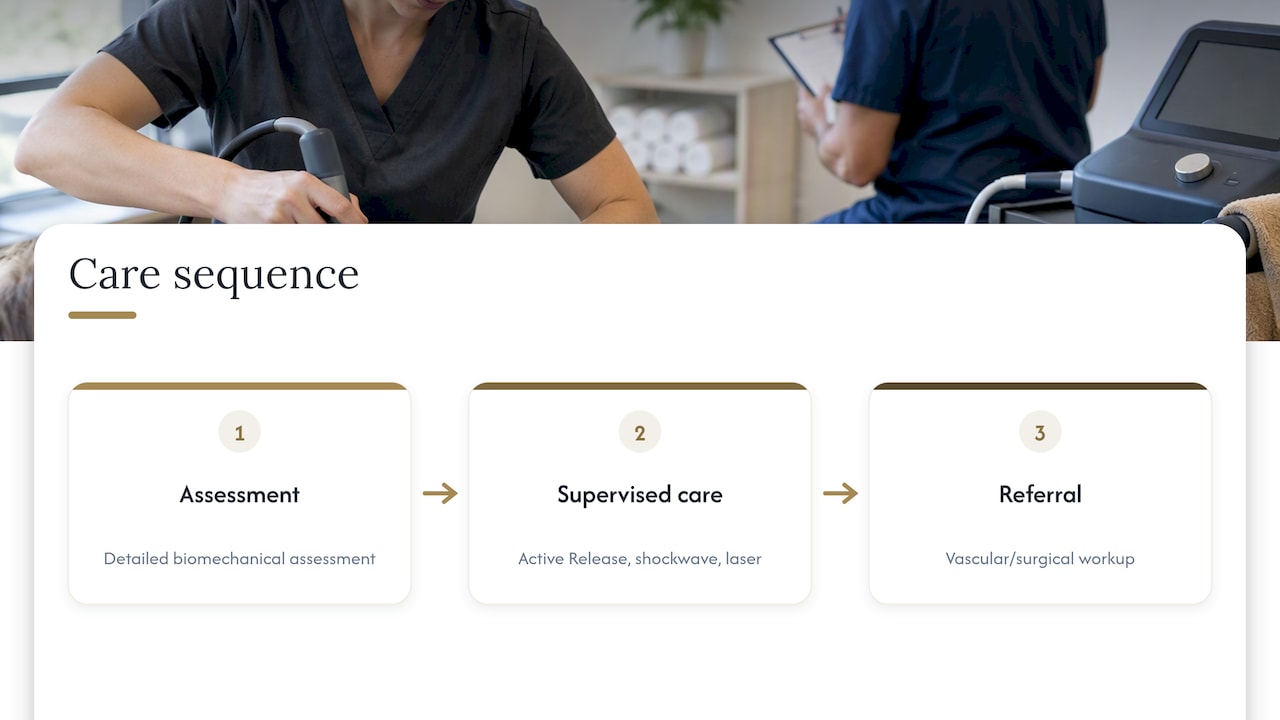
Early, guided rehab gives you the best shot at avoiding surgery altogether, so do not wait out months of symptoms before seeking assessment. Bring any imaging reports and a log of what triggers your symptoms to your first visit. Many people improve with focused physical therapy, and we coordinate further care if vascular or surgical treatment becomes necessary.
— Deane
We offer same-day assessment appointments and direct insurance billing, so getting started does not mean weeks of waiting. Our team combines physical rehabilitation with hands-on modalities suited to nerve and muscle-related compression, including chiropractic care and spinal decompression.

If posture and workplace habits are part of your symptom picture, humn.’s posture microbreak routine offers quick, adherence-friendly exercises between your clinic visits. Ready to find out what is driving your symptoms? Browse our services and book your first visit today.
This article is general information, not a substitute for advice from a qualified doctor. Consult a qualified healthcare professional about your own circumstances before acting on anything here.
Dizziness is not a typical symptom of thoracic outlet syndrome itself, since TOS primarily affects nerves and blood vessels in the arm and shoulder region rather than those supplying the brain. If you experience dizziness alongside arm symptoms, it is worth mentioning to your provider so other causes can be ruled out during assessment.
Brachial plexus compression syndrome is another name for neurogenic thoracic outlet syndrome, where the network of nerves running from your neck into your arm gets compressed as it passes through the thoracic outlet. It causes pain, tingling, numbness, or weakness in the neck, shoulder, or arm, and physical therapy is the established first-line treatment.
Core exercises include chin tucks, scalene and pectoral stretches, scapular stabilizer work, nerve gliding drills, and diaphragmatic breathing, all described in clinical reviews of TOS management. First-rib mobilization techniques should be performed only under clinician supervision rather than at home.
Ear pain is not a commonly reported symptom of thoracic outlet syndrome, which typically centers on the neck, shoulder, chest, and arm. Referred pain patterns vary between people, so persistent ear pain alongside TOS symptoms warrants its own evaluation to rule out unrelated causes.
For neurogenic TOS, the recommended conservative trial runs 3 to 6 months before surgery enters the conversation, unless objective weakness or muscle atrophy appears sooner. Venous and arterial TOS follow a much faster timeline, often moving to surgery within weeks of initial vascular treatment.
Same Day Appointments Available
We Direct Bill!