

Rest for 24 to 48 hours, then start gentle movement. Apply cold for the first few days, switch to heat, and use over-the-counter pain relievers as needed. If pain, stiffness, or headaches persist beyond a few days, book a supervised rehab evaluation rather than waiting it out. Most people who follow this sequence recover within a few weeks, and the non-surgical treatments below (targeted exercise, manual therapy, and short-term pain control) do the heavy lifting for nearly everyone.
Do this:
Don’t:
Seek emergency care immediately if you notice worsening arm or leg weakness, numbness that spreads, loss of bladder or bowel control, or severe pain after a high-speed or high-impact collision.
Neck pain or headaches? Start with a $67 new patient visit
A chiropractor assesses your neck, upper back and posture, and treats on day one when it is safe. See neck pain and headache care in Calgary. Book online.
Effective whiplash recovery combines brief initial rest, early guided movement, targeted pain control, and supervised rehab rather than prolonged immobilization or passive waiting.
| Point | Details |
|---|---|
| Move early, not late | Limit rest to 24 to 48 hours, then start gentle range-of-motion movement to avoid chronic stiffness. |
| Cold first, then heat | Ice for 15 minutes every 3 hours for the first 48 to 72 hours, then switch to moist heat before stretching. |
| Combine exercise with manual therapy | Manual therapy and chiropractic care work best paired with active rehab, not as a standalone fix. |
| Watch for red flags | Worsening weakness, numbness, or loss of bladder control means urgent care, not a wait-and-see approach. |
| Get a supervised plan | Shephardhealth offers same-day assessments combining active rehab, Active Release Technique, and laser therapy with direct insurance billing. |
For deeper reading, the Mayo Clinic’s whiplash overview, Cleveland Clinic’s diagnosis and treatment guide, and Harvard Health’s explainer cover the clinical basics well. For the research behind psychosocial recovery factors, the PubMed review on whiplash-associated disorders is worth a look. None of this replaces an actual exam from a clinician who can see your specific case.
A clinician evaluating whiplash is listening for a story that matches a specific pattern: how fast the vehicles were moving, which direction the impact came from, and when symptoms started. Neck pain and stiffness usually show up first, sometimes with a delay of several hours. Headaches, dizziness, arm tingling, and trouble concentrating often follow, and none of these are unusual for a soft-tissue neck injury.
The physical exam covers a neurological screen (reflexes, strength, sensation), range-of-motion testing, and provocative maneuvers that reproduce your pain in specific positions. Most of this exam will feel unremarkable, and that is actually a good sign.
Imaging is not automatic. X-rays, CT scans, or MRIs come into play when there are red flags: a high-impact mechanism, focal neurological deficits, suspected fracture, or pain that does not fit the usual pattern. Here is the detail most people never hear: imaging often rules out fracture or dislocation but does not reliably show soft-tissue sprain. A normal scan does not mean nothing is injured. It means the clinician has ruled out the dangerous stuff and can move forward with a rehab-focused plan. If your symptoms followed a vehicle collision, reviewing what typically happens after motor vehicle accidents can help set expectations for that first visit.
The first seven days set the tone for your recovery, and the instinct to protect a sore neck by not moving it at all usually works against you.
A soft cervical collar can help briefly, particularly for sleep in the first day or two, but a clinician should guide how long you wear it.
Pro Tip: Apply moist heat about 10 minutes before doing your stretches, not after. Warming the tissue first makes the range-of-motion work easier and less painful, which means you actually do the exercises instead of avoiding them.

If your neck pain is tied to hours at a desk on top of the accident, ergonomic adjustments can take pressure off healing tissue while you recover.
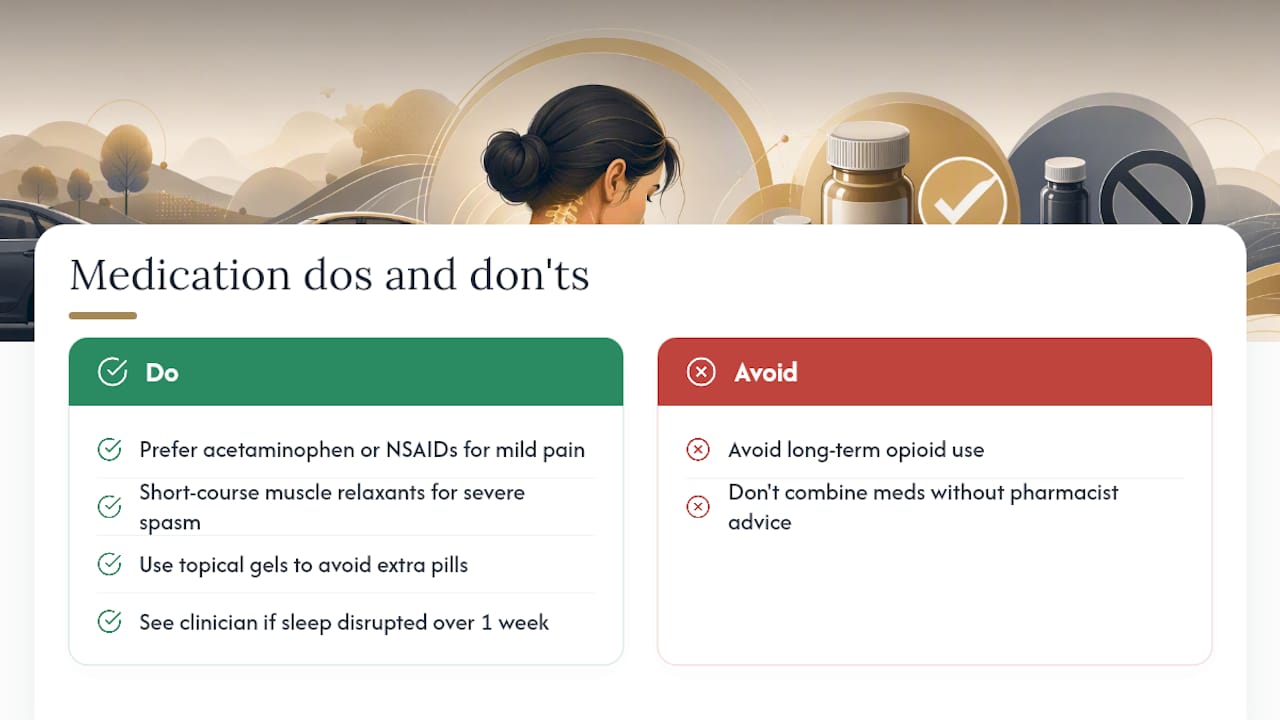
For most people, acetaminophen and NSAIDs like ibuprofen handle whiplash pain well enough to let you move and sleep. NSAIDs also address the inflammation driving early stiffness, while acetaminophen is gentler on the stomach for people who need it for more than a few days. Check with a pharmacist before combining the two or if you have kidney, liver, or stomach conditions.
For more severe pain or muscle spasm, a clinician may prescribe a short course of muscle relaxants. Opioids are sometimes used for a few days after a severe injury, but they carry real risks of dependence and are not a long-term whiplash treatment option. Topical analgesics (menthol or diclofenac gels) can take the edge off without adding to your pill count.
Pain that disrupts sleep for more than a week deserves its own conversation with your clinician. Poor sleep slows tissue repair and makes everything else feel worse, so treating it directly is not optional.
Medication buys you comfort. Movement is what actually restores function, and that distinction matters for how you should spend your energy during recovery. Physiotherapists commonly build exercise-based treatment plans, sometimes paired with manual therapy, to rebuild range of motion and strength while teaching you a home program you can keep using.
A typical rehab sequence includes:
Manual therapy and chiropractic care, when combined with active exercise and physical therapy, have shown efficacy in easing pain and improving range of motion. The word “combined” is doing real work in that sentence. Manual therapy on its own, without an exercise program behind it, tends to produce shorter-lived results. The sequence that holds up best in practice is supervised therapy first to establish safe movement patterns, followed by a home program you actually stick with. A step by step rehabilitation approach that progresses gradually tends to outperform jumping straight to aggressive strengthening.
Pro Tip: If a clinic hands you a home exercise sheet and nothing else, ask for a follow-up appointment to check your form. Most people unintentionally shortcut range-of-motion exercises once the sharp pain fades, which slows the last stretch of recovery.
For specific movements to try early on, a guide to neck pain exercises walks through progressions appropriate for the first few weeks.
A soft collar can ease pain for the first day or two, particularly at night, but wearing one long-term slows recovery by letting neck muscles weaken from disuse. Treat it as a short-term comfort tool, not a treatment plan.
TENS units, laser therapy, and ultrasound show mixed evidence individually, but clinicians often use them alongside active rehab to manage pain during the harder stretches of exercise. Acupuncture and massage fall into the same category: research on these adjuncts is mixed, but many patients find short-term relief that makes it easier to stay consistent with exercise. Massage therapy in particular can loosen the guarding pattern that develops around a sore neck.
Most whiplash cases are safely managed at home with a follow-up clinic visit. A smaller group needs same-day attention. Go to an emergency department or urgent clinic if you notice:
Absent those signs, a routine visit with your family doctor or a clinic that handles motor vehicle accident injuries within the first week is the right pace. And remember: normal imaging does not close the case. It rules out fracture, not soft-tissue injury, so ongoing symptoms still deserve clinical follow-up even after a clean scan.
Most minor whiplash cases improve within a few days to a few weeks with consistent at-home care and early movement. Severe injuries, particularly ones involving nerve irritation or high pain levels from the start, can take several months.
What actually slows recovery is often not the injury itself. Psychosocial and legal or financial stress around a car accident claim can prolong symptoms just as much as the physical damage does. Poor sleep, high initial pain, and nerve involvement are the other usual suspects. If symptoms persist past six to eight weeks, that is typically the point where a clinician considers referral to multidisciplinary care, which may include cognitive behavioral therapy alongside continued physical rehab. This combination addresses the pain-avoidance cycle that keeps some patients stuck long after tissue has healed. For a fuller breakdown of timelines by severity, see this whiplash recovery timeline.
A solid first appointment for whiplash follows a predictable structure: intake and history covering the accident mechanism, a focused physical exam with a red-flag screen, then a short-term plan combining pain control with early movement. From there, expect a rehab progression tailored to your findings, not a one-size-fits-all handout.
Come prepared to ask:
Clinics equipped for musculoskeletal injuries may use tools like Active Release Technique, laser therapy, or TENS as part of a broader plan, not as standalone fixes. These are factual options worth understanding rather than a checklist to demand. If you are unsure whether your symptoms warrant a clinic visit yet, this decision guide walks through the signs that tip the scale.
The biggest mistake I see is patients treating rest as the treatment itself, when early mobilization is what actually prevents chronic stiffness. One tip that surprises people: doing your gentle stretches right after a hot shower, when tissue is already warm, gets you noticeably more range of motion than stretching cold. Small timing changes like that add up over a recovery that usually runs weeks, not months.
If you would rather have a professional guide your recovery than piece it together from articles, Shephardhealth offers same-day whiplash assessments so you are not waiting weeks just to start treatment while symptoms stiffen up.

A visit typically includes a focused history and exam, red-flag screening, and a personalized plan that may combine active rehab exercises with modalities like Active Release Technique or laser therapy depending on what your neck actually needs. Bring your accident details, any imaging you have already had, and a list of current medications to your first appointment. Shephardhealth bills most major insurers directly, so you are not stuck fronting the cost and filing paperwork yourself. If you are ready to stop guessing and get an actual plan, book an assessment and find out what to expect on your first visit.
What is the best treatment for whiplash in the first week?
Short rest followed by early, gentle movement works better than staying still. Combine that with cold therapy for the first 48 to 72 hours, then heat, plus OTC pain relievers as needed.
How do I treat whiplash effectively without surgery?
Surgery is rarely needed for whiplash. Non-surgical whiplash therapy centered on active exercise, manual therapy, and short-term pain management resolves the vast majority of cases.
When should I see a doctor after a car accident for whiplash?
See a clinician within the first few days if pain, stiffness, or headaches persist, and seek emergency care immediately for spreading numbness, limb weakness, or loss of bladder or bowel control.
How long does whiplash pain management typically take?
Most people notice significant improvement within a few weeks. More severe cases, especially with nerve involvement, can take several months to fully resolve.
Are chiropractic adjustments a good whiplash recovery technique?
Yes, when combined with active exercise rather than used alone. That pairing is where the evidence for manual therapy is strongest.
This article is general information, not a substitute for advice from a qualified doctor. Consult a qualified healthcare professional about your own circumstances before acting on anything here.
Same Day Appointments Available
We Direct Bill!