

Kinesio taping for plantar fasciitis works, and the evidence is specific: a randomized clinical trial found kinesiotape reduced pain by 2.0 VAS points more than low-dye tape within the first 24 hours. That relief is real, measurable, and available to you today with a single strip of kinesiology tape applied at home. Three steps to start: try a simple arch-support KT application using the FAST-style method described below, combine it with daily calf and plantar stretching, and book with a clinician if your pain is severe, has lasted more than six weeks, or limits your ability to walk normally. Clinical guidelines consistently list taping as a short-term adjunct alongside stretching, orthotics, and manual therapy, not a standalone cure.
Kinesio taping for plantar fasciitis reliably reduces acute pain in the short term and works best as an adjunct to stretching, strengthening, and clinician-led care.
| Point | Details |
|---|---|
| Short-term pain relief is real | A randomized trial found a 2.0 VAS-point advantage over low-dye tape at 24 hours. |
| Tension on the sole matters | Keep plantar strips at 15–25% stretch; over-tensioning can worsen activity limitation. |
| Tape is an adjunct, not a cure | Combine taping with daily calf and plantar stretching for lasting improvement. |
| Wear 2–5 days, remove safely | Peel at a low angle with oil; stop if rash, blistering, or numbness appears. |
| Shephardhealth for persistent cases | Book a clinical assessment when pain limits activity or does not improve after 4–8 weeks. |
Three kinesiology tape brands dominate U.S. clinical and retail settings, and each suits a slightly different situation.
KT Tape is the most widely available option, sold at Target, Walmart, and most pharmacies. The pre-cut strips make home application straightforward, and the Pro version offers stronger adhesion for active use. It suits first-time users who want a ready-to-go format without cutting.
RockTape uses a stronger adhesive than most consumer brands and holds up well through sweat and water exposure. It comes in 2-inch rolls, which gives you more control over strip length. Athletes and people who spend long hours on their feet tend to prefer it for durability.
Kinesio Tex Gold is the original clinical-grade tape developed by Dr. Kenzo Kase. It is available in rolls at medical supply stores and online.
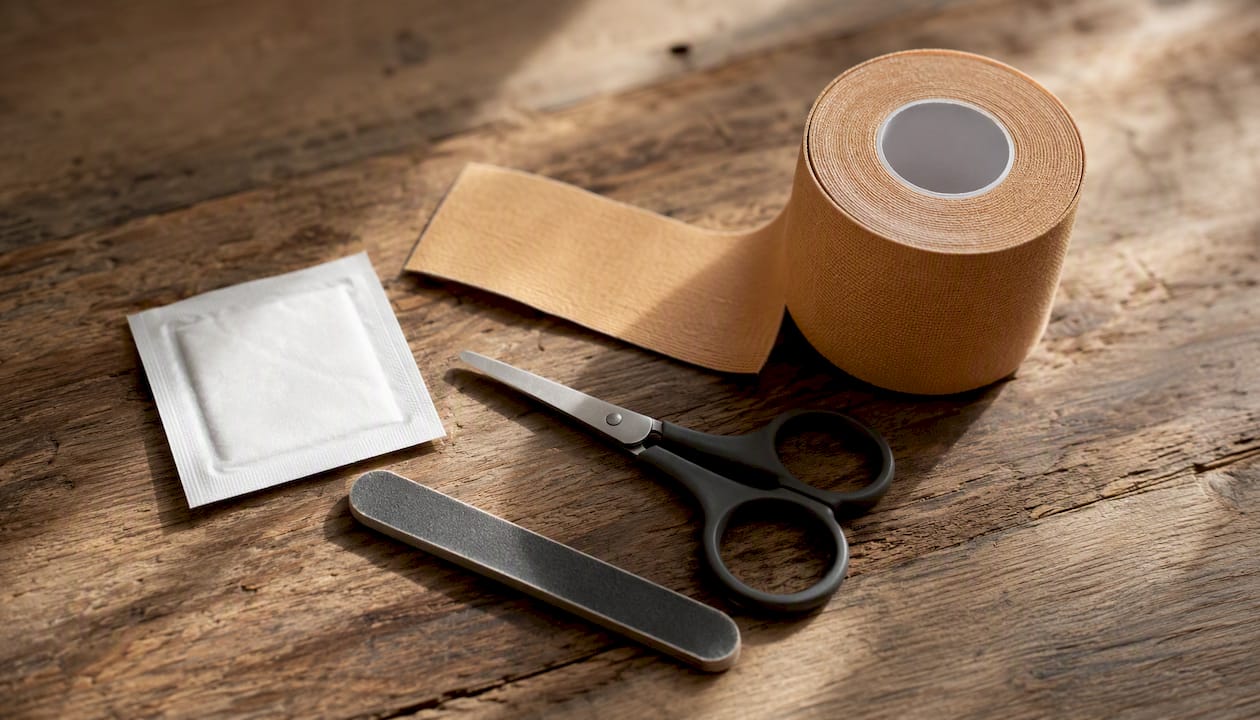
You need: a roll or pre-cut strips of 2-inch (5 cm) kinesiology tape, scissors if using a roll, an alcohol wipe or skin-prep spray to clean the application area, and a nail file or rounded scissors to smooth any sharp tape corners after application. Rounded edges reduce early peeling significantly.
Hypoallergenic note: all three brands offer latex-free versions. If you have a history of adhesive reactions, choose Kinesio Tex Gold’s cotton version or RockTape’s H2O hypoallergenic line.
Why not rigid low-dye tape? Low-dye athletic tape provides firm arch support but has no elasticity, which limits comfort during movement. Kinesiology tape stretches with your foot, allowing more natural gait mechanics while still offloading the plantar fascia.
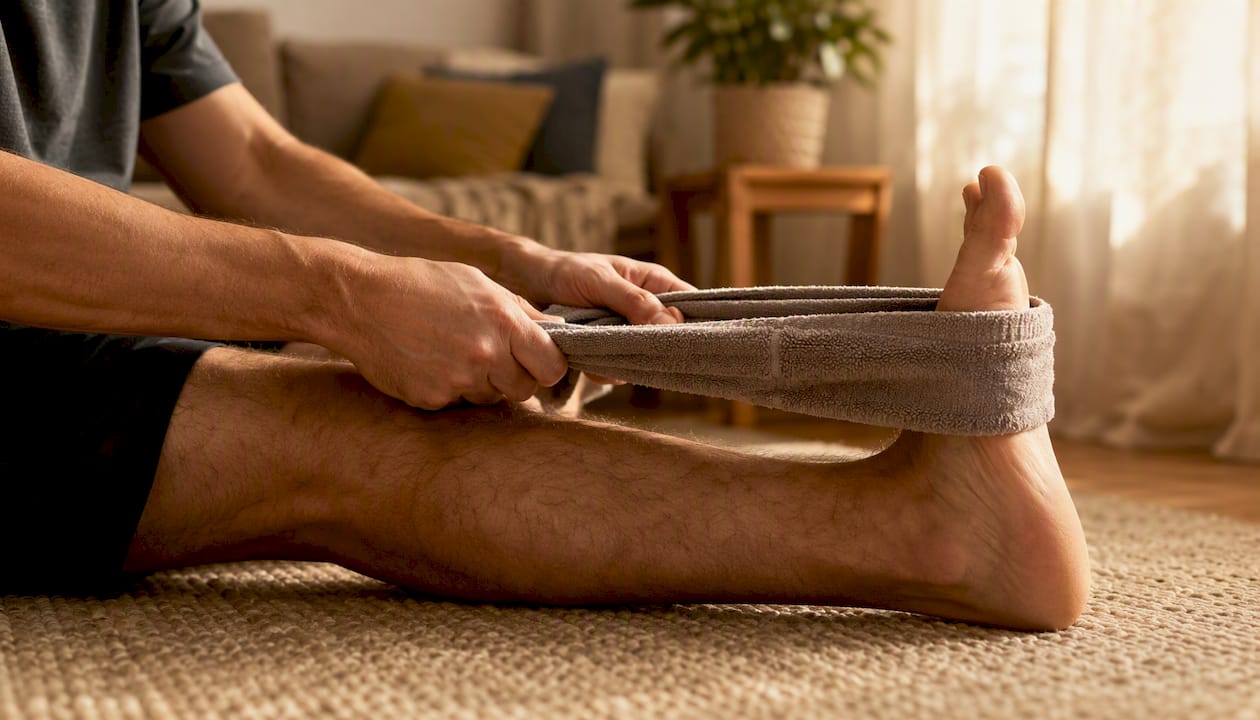
The Functional Anatomic Support Taping (FAST) method was designed specifically for self-application and showed a significant reduction in pain at two weeks in its study sample. Start with the arch strip first, then add the heel anchor.
Avoid applying excessive longitudinal tension on the sole. A randomized trial found that over-tensioned tape on the plantar surface can create a rigid surface under the foot, which may worsen activity-limitation outcomes rather than improve them. Keep plantar strips at 15–25% stretch, never pulled taut.
Pro Tip: Clean the skin with an alcohol wipe and let it dry fully before applying tape. Applying tape over any moisture, lotion, or sunscreen cuts adhesion time in half. For extra hold, apply a thin layer of skin-prep spray (such as Mueller Tuffner) and let it tack for 30 seconds before laying the strip down. This is the single most effective adhesion hack used in clinical settings.
For visual learners, Shephardhealth’s kinesio taping for sports injuries page includes clinical demonstration guidance that applies directly to foot taping patterns.
The short answer: kinesio taping reliably reduces acute plantar fasciitis pain in the short term and improves comfort during daily activity, but its long-term advantage over other conservative treatments is limited when used alone.
The MDPI randomized trial is the clearest data point: a 2.0-point VAS advantage over low-dye tape at 24 hours, with the gap narrowing after tape removal. That is a clinically meaningful first-day difference for someone who wakes up with severe morning heel pain.
A separate randomized study comparing dynamic taping, KT plus physical therapy, and physical therapy alone found both taping approaches outperformed PT alone on pain scores. Dynamic taping produced larger gains in foot function and balance in that sample, which suggests KT is effective but not necessarily the best possible taping effect.
Limitations are worth naming directly. Most trials have short follow-up periods of four to eight weeks, small sample sizes, and varied application protocols, making it difficult to draw firm conclusions about which tape pattern or tension level is optimal. A double-blind controlled trial found no long-term advantage for KT when compared as an adjunct over several weeks, reinforcing the view that tape controls symptoms while you build the rehab habits that produce lasting change.
The clinical implication is straightforward: use kinesio taping for short-term symptom control while you progress through a structured exercise and load-management program. For a deeper look at the broader evidence base, Shephardhealth’s review of kinesiology tape research covers the full picture.
Wear time: most applications hold well for 2–5 days. Remove sooner if the adhesive starts lifting at the edges, if the tape feels wet or dirty, or if any skin irritation appears. Leaving tape on past its adhesion life does not extend the therapeutic benefit.
Removal: peel slowly at a low angle, pulling the tape back over itself rather than lifting it away from the skin. Saturating the edge with baby oil or coconut oil for 60 seconds before peeling significantly reduces discomfort and skin trauma. Avoid pulling upward.
Stop taping and consult a clinician if you notice: blistering, a rash, increased redness, skin breakdown, numbness, tingling, or pain that worsens after application. These are signals that the tape is not appropriate for your skin condition or that the application tension is too high.
Common questions:
Contraindications: do not apply kinesiology tape over open wounds, active skin infections, or fragile skin. People with uncontrolled diabetes, peripheral vascular disease, or known adhesive allergies should consult a clinician before taping. Pregnancy is not a contraindication for foot taping, but check with your provider if you have any circulatory concerns.
Taping is a tool for short-term pain control and function support, not a replacement for the interventions that address the underlying load and tissue issue. Think of it as a way to make your first steps in the morning manageable while you commit to the rehab work that produces lasting results.
A registered randomized trial on IASTM tests whether adding weekly instrument-assisted soft tissue mobilization to a structured stretching and strengthening program improves plantar fascia pain and stiffness versus exercise alone, measuring outcomes at weeks 0, 4, 8, and 12. That design reflects how clinicians increasingly think about plantar fasciitis: layered, multimodal care rather than a single intervention.
A clinical case report documented full pain-free recovery and normalized plantar fascia imaging after eight visits combining manual therapy, IASTM, stretching, and orthotics. Taping was part of the support structure, not the primary driver of tissue change.
When to use each approach:
Refer to a clinician when: pain has not improved after 6–8 weeks of consistent home care, night pain is present, you notice neurological signs such as numbness or tingling, or your gait has changed to compensate for heel pain. A mobility restoration checklist can help you track functional progress between clinical visits.
The clinical evidence for kinesio taping in plantar fasciitis is genuinely encouraging for short-term pain relief. What concerns me about how taping is often presented, though, is the gap between “it reduces pain on day one” and “it fixes plantar fasciitis.” Those are very different claims, and conflating them leads patients to over-rely on tape while underinvesting in the stretching, calf strengthening, and load management that actually change the tissue.
The most useful way to think about tape is as a pain-management bridge. It buys you comfortable steps while you build the capacity to not need it. Patients who use taping as a cue to stay active and compliant with their exercise program tend to do well. Those who use it as a substitute for rehab tend to plateau.
One nuance the literature rarely emphasizes: tape tension matters more than most self-application guides acknowledge. The finding that over-tensioned plantar tape can worsen activity limitation is not a minor footnote. It is a reason to apply conservatively, check your skin daily, and not assume that tighter means better.
When heel pain limits your daily activity or has not improved after four to eight weeks of home care, taping alone is no longer the right primary tool. That is the point where a structured clinical assessment changes the outcome.

At Shephardhealth, a plantar fasciitis visit begins with a thorough musculoskeletal assessment to identify the specific drivers of your pain, whether that is fascial stiffness, calf tightness, arch mechanics, or a combination. From there, your clinician may use IASTM, Active Release Technique, shockwave therapy, or laser therapy depending on what your tissue needs. Custom orthotics and taping instruction are integrated into the plan when they add value for your specific foot type and activity level. You can read more about the soft tissue treatments available at the clinic to understand what each approach involves.
Bring your current footwear, a brief history of when the pain started, and a note of any treatments you have already tried. Same-day appointments and direct insurance billing are available. Book your assessment at Shephardhealth to get a clear plan and stop guessing at what your foot needs.
This article provides general information and is not a substitute for professional medical advice. Confirm your treatment plan with a qualified clinician, particularly if symptoms are severe, worsening, or accompanied by neurological signs.
Same Day Appointments Available
We Direct Bill!