

Chiropractic care can help some runners with patellofemoral pain, but it works best alongside exercise therapy, which remains the first-line treatment. Manual techniques may ease symptoms and improve how well you tolerate rehab. They are not a guaranteed standalone cure. If pain lingers, we can assess your knee, hips and running mechanics together at Shephard Health.
TL;DR:
- Guidelines recommend hip and knee strengthening first, adding manual therapy, taping, or orthoses only if there is no meaningful change after six weeks.
- If running causes pain, pause or modify it, build hip and quadriceps strength, then resume short, easy runs once daily activities feel comfortable.
- Your first visit should review mileage and training changes, test control during one leg tasks, check hip strength and ankle mobility, and observe running mechanics.
- Manual therapy can cause mild soreness, stiffness, or headache for about a day; serious complications are rare, and clinicians should screen patients and explain risks.
- Most people recover within one to two months, but severe pain or symptoms that fail to improve warrant clinical reassessment.
Runner’s knee, known clinically as patellofemoral pain syndrome (PFPS), is pain around or behind the kneecap. It tends to show up in runners because the same joint absorbs repeated load during a run. Typical signs include:
Several factors usually stack up. Clinical descriptions of PFPS point to quadriceps weakness, foot mechanics and alignment as common sources, and training load matters too. A sudden jump in weekly mileage or hill work can tip a tolerable knee into a painful one. Weak hip muscles often let the thigh drift inward as you land, which changes how the kneecap tracks.
Diagnosis is mostly clinical: a history, movement tests and hands-on examination. Imaging comes into play when something looks atypical or when you are not responding as expected, mainly to rule out other causes.
Chiropractic care for knee pain starts from a simple idea: the knee does not work in isolation. Your lower back, pelvis, hips and feet all shape how force travels through the kneecap. We use manual techniques to improve how those areas move so that your exercise program has a better chance of working.
One approach is lumbopelvic manipulation (LPM), a gentle thrust or mobilization applied to the lower back and pelvis. The reasoning is both mechanical and neurological: better pelvic motion may change how the hip and thigh muscles fire, and manual input can temporarily dial down pain signals. A 2024 meta-analysis of randomized trials found LPM significantly reduced pain in people with PFPS, with larger effects when it was paired with other physical therapies.
We also use soft-tissue and modality options as adjuncts:
Pro Tip: Treat manual therapy as the door opener, not the whole house. The sessions that matter most are the ones that let you do your strengthening work with less pain.
For runners who load their tissue repeatedly, Active Release for runners is one soft-tissue option we use.
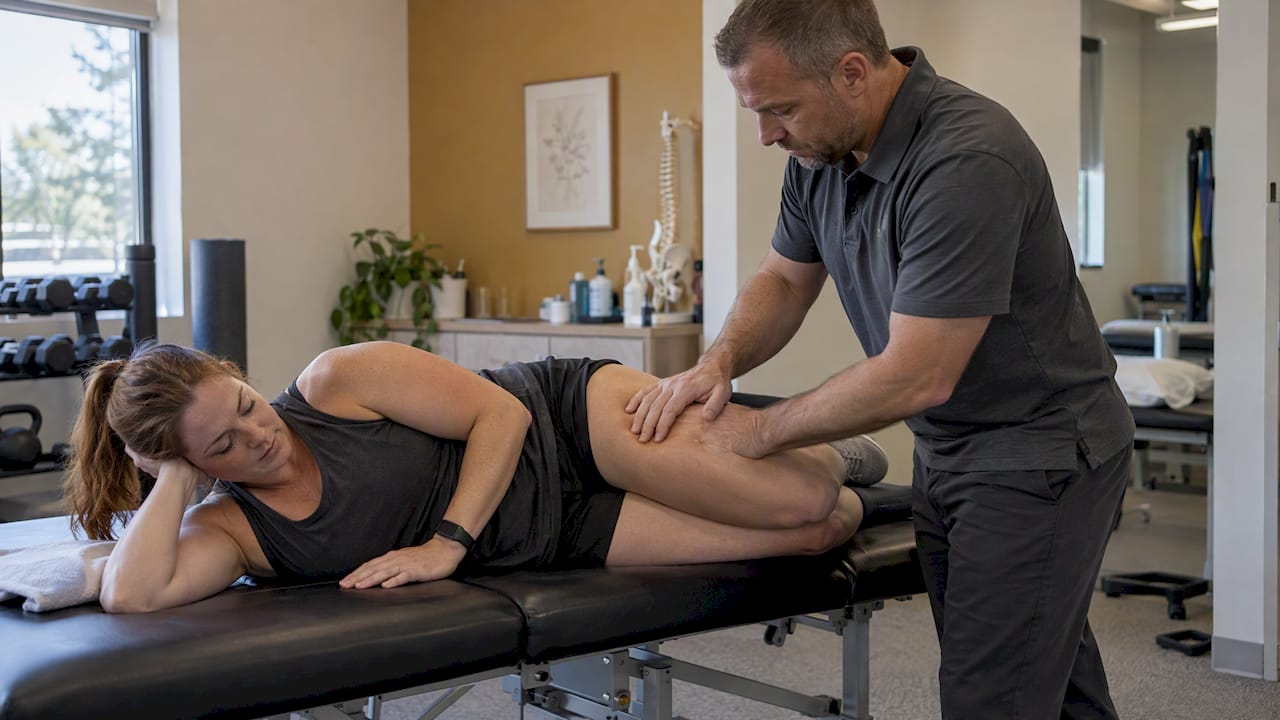
Your first visit is built around your running, not a generic template. Expect the following:
Treatment usually comes in short courses with built-in progress checks rather than open-ended visits. You may notice mild soreness or stiffness for up to a day afterward, which is a common, short-lived response to manual therapy. If you want a walkthrough of the process, our guide on what to expect on your first chiropractic visit covers it step by step.
Guidelines are clear on priorities. A multidisciplinary guideline recommends starting PFPS management with exercise therapy and adding other conservative treatments only if there is no clinically relevant change after six weeks. The JOSPT clinical practice guideline likewise calls for hip- and knee-targeted exercise, and notes that combined interventions with adjuncts such as foot orthoses, taping or manual therapy beat no treatment, with exercise as the critical component.
What this means for you:
Soreness, stiffness or a mild headache are common after manual therapy, and serious complications from spinal manipulation are rare. That is the NCCIH safety summary of what to expect. Because rare serious events have been reported, we screen every patient before treatment and explain what you may feel afterward. Our review of chiropractic adjustment safety goes deeper if you want the detail.
Use this sequence as a framework, and adjust it with a clinician if pain is sharp or swelling appears.
Fueling matters for tissue health, too, and this tendon health supplements guide is a useful read on nutrition support.
Pro Tip: Keep a simple log of pain on stairs and during runs. A clear trend by week six tells you whether to stay the course or change it.
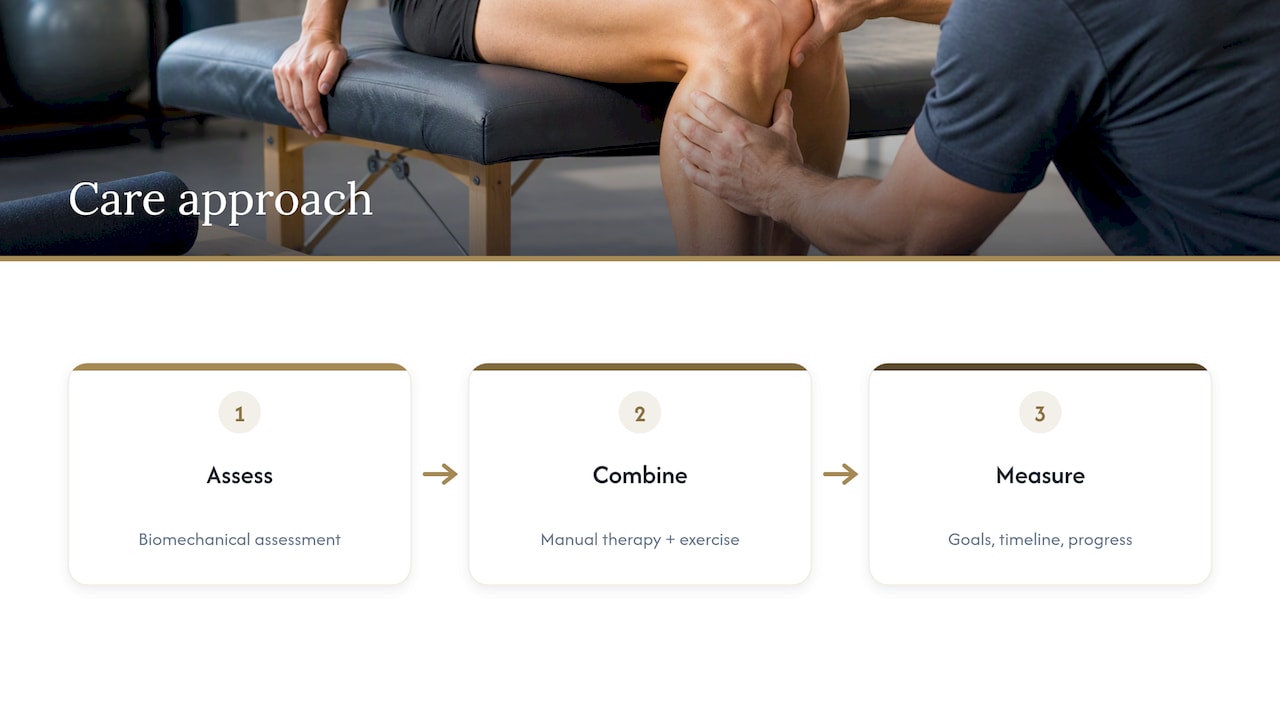
Our view is that the best results come from refusing to pick a side between hands-on care and rehab. Runners often arrive having tried one or the other: rest and stretching on their own, or adjustments with no strengthening plan. Neither tends to hold up. The evidence points to combining manual therapy with exercise, and that is also how we treat.
We start with a thorough biomechanical assessment, then pair techniques such as A.R.T., Graston and adjustments with an exercise prescription written for your sport and schedule. We offer appointments, bill insurance directly and have experience treating athletes. Most importantly, we explain your goals, your likely timeline and how we will measure progress, so you can help steer the plan. Our runner’s knee treatment action plan shows that approach in detail.
— Deane
If your knee is limiting your runs, we can build an individualized plan around your diagnosis, not a guess. Our chiropractic and rehab services include options that support runner recovery:
Bring your running shoes, a note of your weekly mileage and any imaging or insurance details. We offer appointments and direct insurance billing, so booking an assessment is the next step.

This article is general information, not a substitute for advice from a qualified doctor. Consult a qualified healthcare professional about your own circumstances before acting on anything here.
There is no shortcut, but the quickest route is usually to cut aggravating load, then start progressive hip and quadriceps strengthening right away. Exercise therapy is the guideline-recommended starting point, and adding manual care can help if pain stops you from exercising. Most people improve within one to two months, according to Cleveland Clinic.
Mild soreness, stiffness or a headache is common within about 24 hours of manual therapy and usually passes quickly. Feeling truly unwell is less typical, so tell your clinician about it. Serious complications are rare, and the NCCIH stresses screening and informed consent.
Not in the sense of permanently shifting bones, but you can change how your kneecap tracks. Stronger hips, better foot support and improved running mechanics all reduce the stress that causes pain. Manual therapy may help the surrounding joints and tissues move more freely.
Exercise therapy is the first choice, and taping, foot orthoses and manual therapy can be added when needed. We also use soft-tissue work, shockwave and laser therapy as adjuncts. If you are not improving after about six weeks, further evaluation is the next step.
Same Day Appointments Available
We Direct Bill!