

Most hip flexor strains respond to relative rest, wrapped cold therapy, symptom-guided movement, and a progressive rehab program. Cleveland Clinic notes that many uncomplicated strains improve within 1–2 weeks, though severity changes the timeline. If you have severe swelling, a visible bulge, or cannot walk normally, get assessed promptly. We can assess you at Shephard Health.
TL;DR:
- For 2 to 3 days, apply a wrapped cold pack for 20 minutes every 3 to 4 hours, stop provoking activity, and continue comfortable movement.
- Move from mobility to strengthening and sport drills only when each phase feels comfortable; sharp pain, limping, or next day soreness calls for stepping back.
- Resume full activity when daily pain stays below 2 out of 10, hip motion matches the other side, and sport drills are pain free.
- If symptoms do not improve after a few weeks, seek an examination; ultrasound or MRI may help assess tissue damage or identify another cause.
- Ask a clinician or pharmacist before taking ibuprofen or naproxen if you have heart disease, high blood pressure, kidney disease, or a history of ulcers.
The acute phase is about calming pain and swelling without shutting your hip down completely. Relative rest means you stop the activity that provoked the strain, but you keep moving comfortably. Total immobilization is a common mistake. Gentle walking and non-irritating cross-training, such as swimming, help you hold onto mobility while the tissue settles. A worsening limp, sharp pain, or spreading bruising tells you the load is still too high.
If you have heart disease, high blood pressure, kidney disease, or a history of ulcers, talk with a clinician or pharmacist before taking an anti-inflammatory.
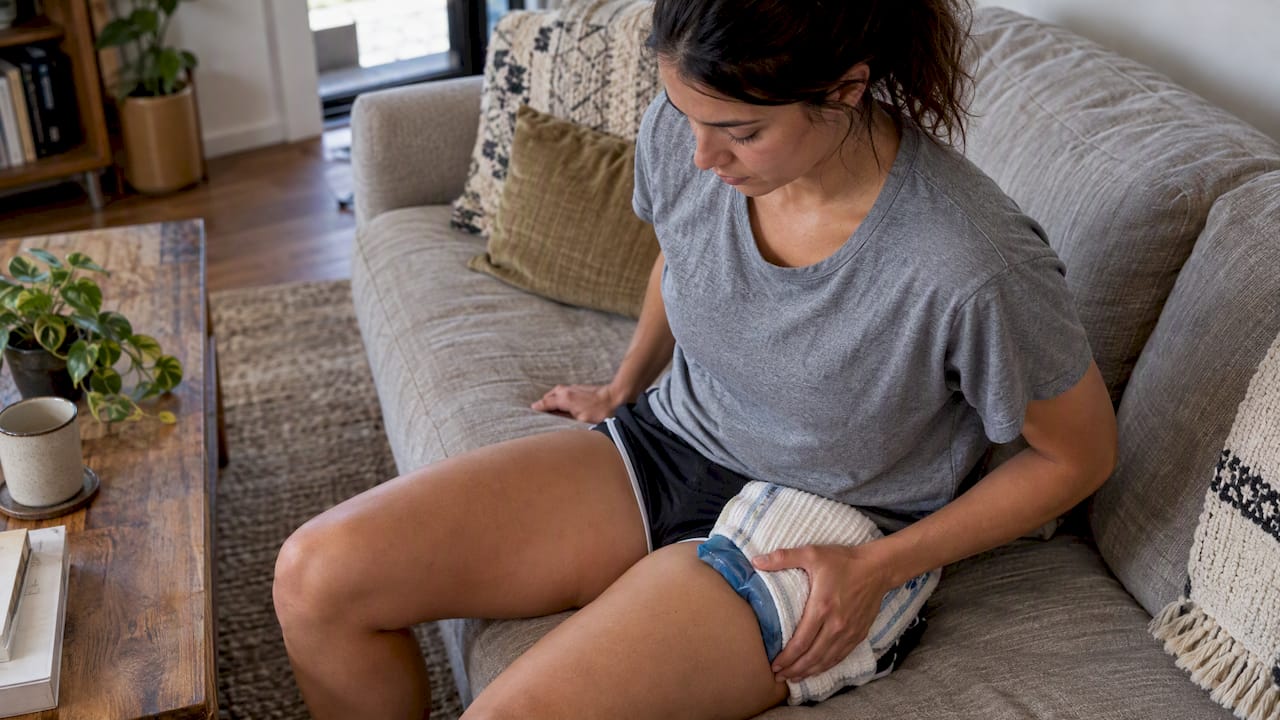
MedlinePlus recommends ice for 20 minutes every 3–4 hours for 2–3 days for acute muscle strains, with the cold pack wrapped rather than placed on skin. That protocol is simple enough to follow on a busy day.
Progress in phases, and move on only when the current phase feels comfortable. Your pain and function set the pace, not the calendar. If you want a related set of hip drills, our hip impingement exercises show clear demonstrations.
Mild, short-lived soreness that settles within a day is acceptable. Sharp pain, a return of limping, or soreness that lingers into the next day means you should drop back a step and repeat the earlier phase for a few more days.
Pro Tip: Compare both sides during every phase. If the injured hip fatigues much earlier or feels noticeably weaker, hold your progress, and rate effort on a 0–10 scale so you keep it below a 4.
Many uncomplicated strains improve within 1–2 weeks, and they often heal within a few weeks with home care, according to Cleveland Clinic. Partial or complete tears take longer. Because no single timeline fits every strain, we use function as the guide rather than a day count. Clinicians look at walking, stairs, and getting out of a chair, along with bruising and weakness.
Feeling better for a day is not a reason to jump back in. AAOS guidance stresses restoring range of motion and strength, and warns that returning too early to high-load activity can cause setbacks.
These checkpoints are practical signs you are ready to progress:
Athletes show why clinician-led progression matters. A review of hip flexor injuries in athletes reports that most are treated conservatively with high return-to-play rates, yet rehabilitation time can still be significant. Our muscle strain recovery guide covers what to expect in more detail.
Home care is enough for many mild strains, but some signs mean you should not wait. Mayo Clinic recommends prompt assessment for:
Book an assessment if you see no improvement after a few weeks of correct home care, or if you are unsure of the diagnosis. Persistent front-of-hip pain is not proof of a simple strain, because hip and pelvic conditions overlap. A clinician starts with your history and a physical exam. Ultrasound or MRI is used when needed to judge how severe the tissue damage is or to look for another cause.
Good clinical rehab does not treat the painful muscle in isolation. A peer-reviewed rehabilitation review describes assessing the hip, pelvis, trunk, and the wider kinetic chain, then progressing strength, flexibility, and sport-specific drills one step at a time. The same literature, indexed on PubMed, stresses that overlapping hip and pelvic problems mean related impairments need checking too.
Common tools in a clinic include:
In-clinic care makes the most sense when the strain is severe, symptoms persist, walking stays limited, or a safe return to sport or work matters. Guided progression takes the guesswork out of when to load more and when to hold back.
Pro Tip: Bring your pain log to your first visit, including which movements aggravate the hip and how many days you have been symptom-free. It speeds up the assessment.
A hip flexor strain is a muscle injury, so adjustments are not a cure for the torn fibers themselves. Where they can help is the surrounding picture. A stiff lower back, restricted pelvis, or tight hip joint can force the front of the hip to work harder. Restoring motion in those areas can ease that extra load and make your rehab exercises more comfortable.
At our clinic, we pair chiropractic care with manual therapies that address the muscle directly. Active Release Technique (A.R.T.) works on the strained muscle and the tissue around it. Graston Technique uses instruments to address restricted soft tissue. Which approach fits you depends on what the examination finds, which is why we assess before we treat.
Manual care works best alongside active rehab, never in place of it. You still need to rebuild strength and control through the exercise phases above. If you are curious about what an adjustment involves, our chiropractic safety checklist and our overview of what to expect on a first chiropractic visit walk through it step by step.
Kinesio taping and massage support recovery. Neither replaces progressive loading.
Kinesio taping gives light feedback on the skin over the front of the hip and thigh. Many people find it a helpful reminder to move with better control and avoid the painful end range while the muscle settles. We apply it during the early and middle phases, then taper it as strength returns.
Massage therapy addresses the surrounding muscle tension that often builds up when you guard an injured hip. The quadriceps, hip flexors, and low back can all tighten as you compensate. Soft tissue work eases that tension, which can make walking and your stretches more comfortable. Our guide to massage for hip pain outlines a practical plan you can follow.
Time massage sensibly. In the first couple of days, keep pressure light and stay away from the most tender spot. As the strain calms, deeper work can be added. Pair either approach with the exercise phases above, and let your pain and function decide how fast you move. You can see our massage therapy options for more detail.
Your feet are the foundation of every step, so the way they absorb load can travel up the chain to your hip. If your arches collapse or your feet roll inward, your pelvis and hip muscles may have to work harder to keep you stable. That extra demand can contribute to a hip flexor that never quite settles, or one that keeps flaring after you return to running.
Custom foot orthotics aim to improve how your foot meets the ground, which can reduce unnecessary strain higher up. Fitting begins with an assessment of how you stand, walk, and move, so the device matches your actual mechanics instead of a generic template. We then check how it feels in your shoes and during activity, and adjust if needed.
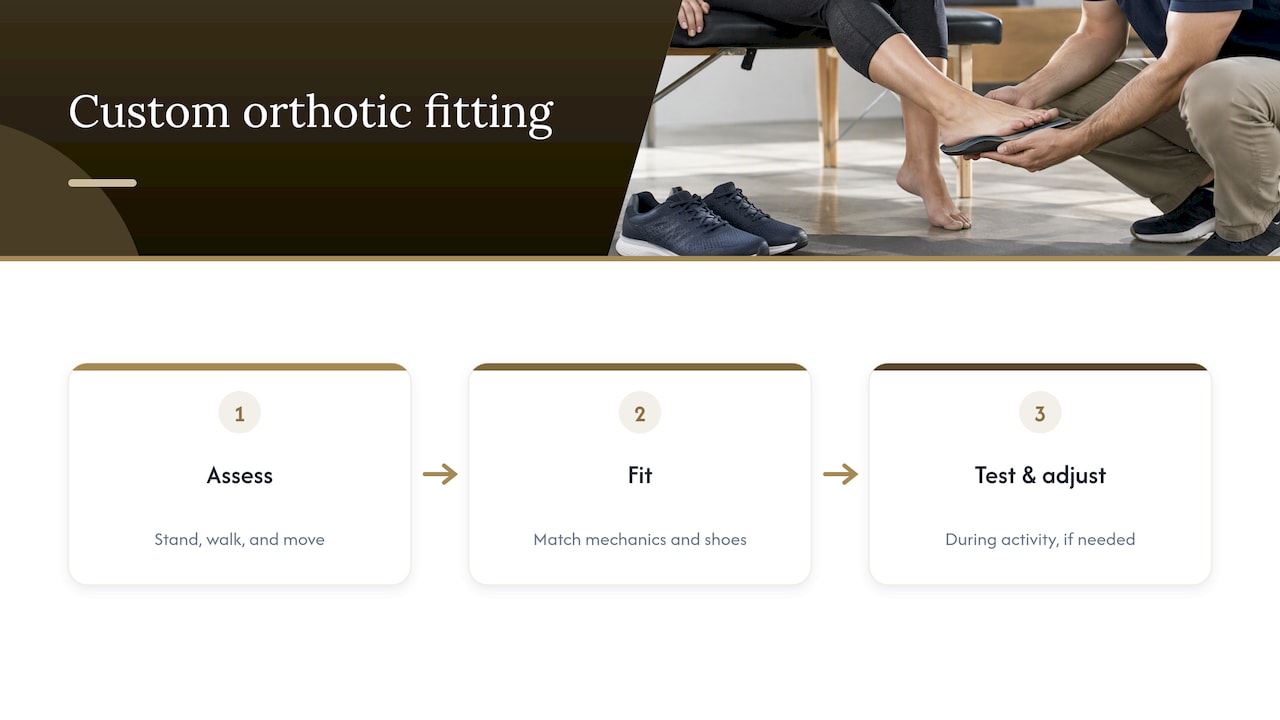
Orthotics are not right for everyone with a hip flexor strain. They make the most sense when your assessment shows a foot or lower-limb pattern that plausibly adds to the problem. They work best alongside strengthening, not instead of it. Our services page lists custom foot orthotics among the options we offer.
Sometimes front-of-hip pain involves more than muscle. Nerves that run near the hip and thigh can become irritated or stiff, and that can add tingling, burning, or a pulling sensation that feels out of proportion to a simple strain. Nerve flossing, also called nerve gliding, uses gentle movements to help a nerve slide more freely through the tissues around it.
A basic example is a seated or lying slider where you gently straighten your knee while moving your head or ankle in a coordinated pattern, then release. The goal is a mild stretch or tension, never pain, numbness, or lingering tingling afterward. Do a few slow repetitions, and stop if symptoms spike.
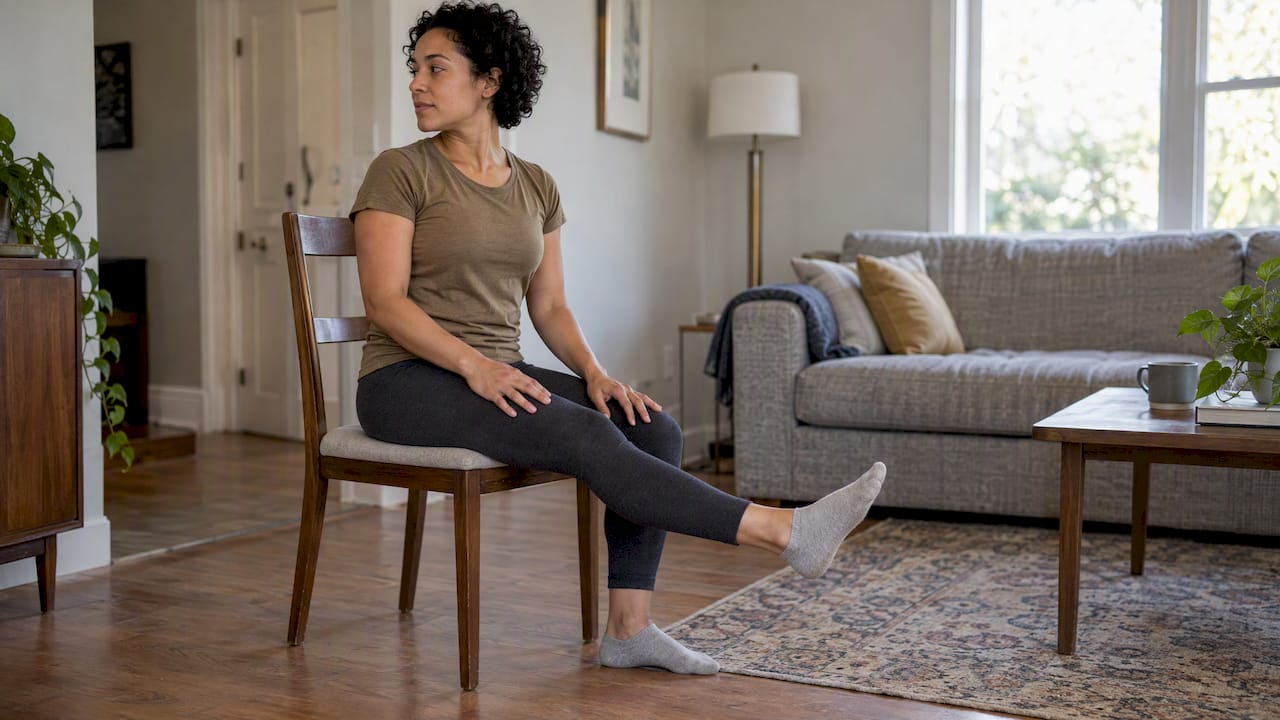
Nerve flossing is a targeted tool, so it should follow an assessment rather than be added to every routine. We check whether neural involvement is likely before we prescribe it, and we show you how to perform each glide with the right amount of tension. If you notice numbness, spreading tingling, or growing weakness, book an assessment instead of treating it yourself.
Recurrence usually traces back to rushing the return or ignoring the habits that overloaded the muscle to begin with. Prevention starts with finishing your rehab phases and meeting the function-based checkpoints, rather than stopping when pain first fades.
Build these habits into your week:
Ergonomics matter too. Long hours of sitting keep the hip flexors in a shortened position. Stand up and walk every 30 to 60 minutes, set your chair so your hips sit slightly above your knees, and do a short half-kneeling stretch during the workday. Check your footwear as well, since worn shoes change how load reaches your hip.
Most people look for a single magic exercise, but the best predictor of a clean recovery is a thorough assessment. We examine how your hip, pelvis, spine, and feet work together, then build a plan around what we find. A first visit covers your history, a hands-on exam, treatment options, and a realistic timeline. We offer same-day appointments and direct insurance billing, so you can start without a long wait.
— Deane
If your symptoms persist or you have any of the red flags above, book an assessment with us. We will find out what is driving your pain and build an individualized rehab plan. We offer these services:

Book through our services page, or call us directly if you have urgent red-flag signs.
This article is general information, not a substitute for advice from a qualified doctor. Consult a qualified healthcare professional about your own circumstances before acting on anything here.
The fastest route is early relative rest, wrapped cold therapy, and a progressive exercise plan rather than complete immobilization. MedlinePlus supports ice and gradual return to movement. Pushing too hard too soon usually costs you time.
You typically feel a pulling or sharp pain at the front of the hip, sometimes with cramping and difficulty with walking or stairs. In more severe cases, bruising, spasms, and a visible muscle bulge can appear, as described in the MedlinePlus aftercare guide.
It depends on severity. Many uncomplicated strains improve within 1–2 weeks, while partial or complete tears take longer. Use function, such as pain-free walking and symmetric strength, as your guide, not a fixed number of days.
Gentle walking is usually fine if it stays comfortable and you are not limping. Stop and rest if walking causes sharp pain, a worsening limp, or increased bruising. If you cannot bear weight normally, get assessed promptly.
Same Day Appointments Available
We Direct Bill!