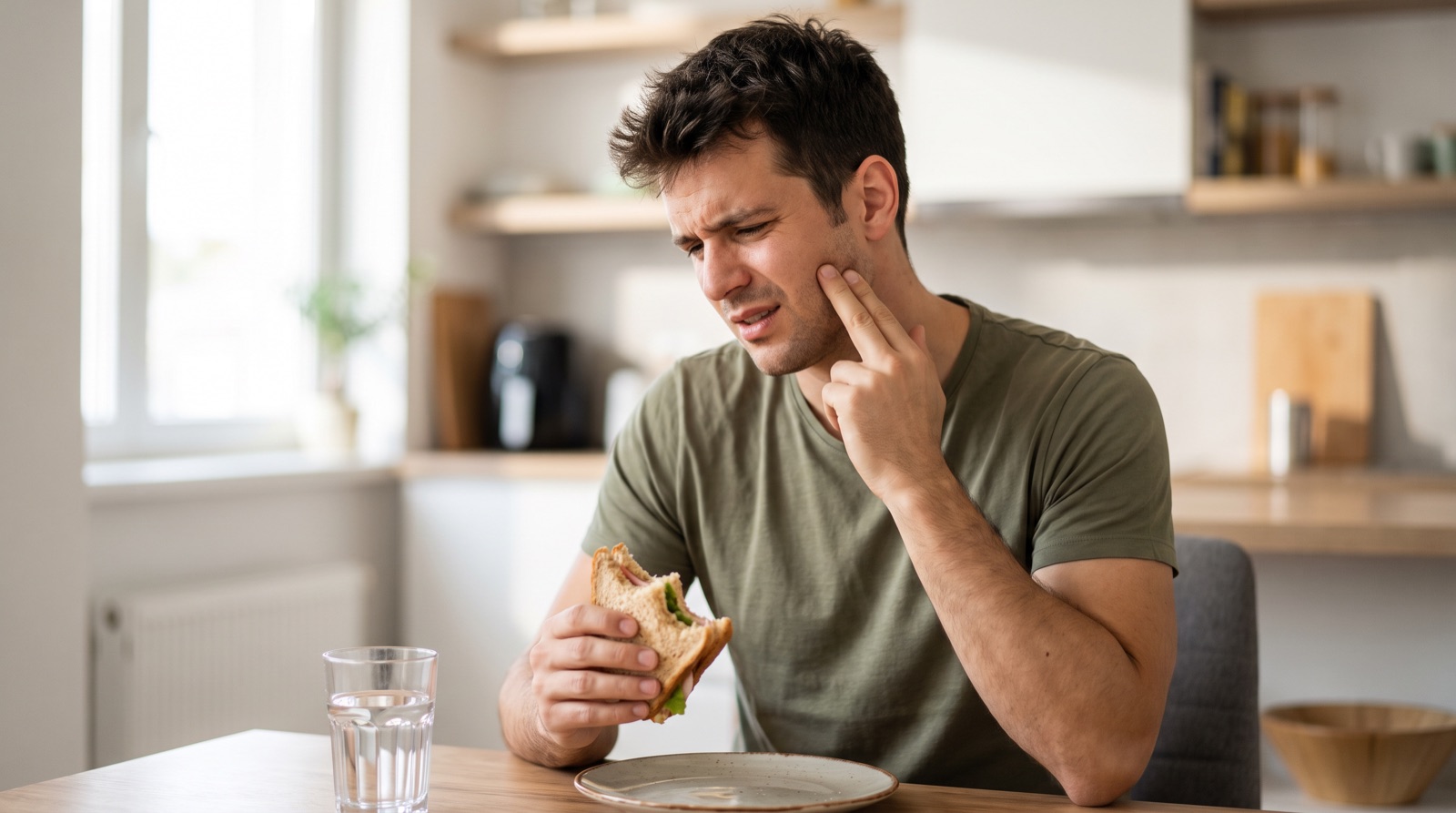

Jaw clicking or popping is common and, on its own, usually harmless. The click is most often a small disc inside the jaw joint slipping forward and then snapping back into place as you open. Get it checked when the click comes with pain, catching or locking, trouble opening your mouth, or a change in your bite. At Shephard Health in Kensington, Calgary, a jaw assessment starts with our $67 new patient exam and treatment, and we direct bill most major insurance providers.
Clicking with pain or catching? Start with a $67 new patient visit
A jaw and neck assessment, treatment on day one when it is safe, and simple exercises to calm the joint. Same-day appointments are often available, and we direct bill your benefits. Book online.
Each jaw joint has a small disc of cartilage between the jaw bone and the skull that works like a cushion. Clicking usually comes from one of these:
Often, yes. The US National Institute of Dental and Craniofacial Research says clicking or popping in the jaw joints without pain is common, is considered normal, and does not need treatment. Many people click for years with no trouble.
A click that suddenly stops, followed by limited opening, can mean the disc is no longer slipping back into place. It often settles with conservative care, but it is easier to manage early, so book an assessment soon.
Tough foods such as bagels, steak and gum make the jaw open and close under load many times. If clicking hurts when you chew, cut food smaller, chew on both sides, and skip gum for a few weeks.
One-sided clicking is common, because each joint has its own disc. Chewing mostly on one side, resting your chin in your hand, or an old injury can load one joint more than the other.
The jaw joint sits right in front of the ear canal, so jaw clicks often sound like they are inside the ear. Ear fullness and ringing can come with TMJ problems, but ear pain with fever or discharge needs your doctor.
Be realistic about the goal. Many clicks get quieter or less frequent with treatment, but the aim is a jaw that opens fully without pain, not a silent jaw.
Your first visit takes about an hour. We ask when the clicking started and what makes it worse, measure how wide you can open, watch the path your jaw takes, feel and listen for the click, and check the jaw muscles, neck and upper back. Then we treat the tight areas the same day when it is safe and give you exercises to start at home. If the clicking points to a dental problem or needs imaging, we tell you and refer you. Bring your benefits card: we direct bill most major insurance providers.
Sometimes. Painless clicking often stays the same for years without causing trouble. Painful clicking usually needs some treatment and a change in the habits that load the jaw.
See your dentist if your bite changed, your teeth hurt, or you grind at night and need a guard. See a chiropractor for clicking with sore jaw muscles, neck tension or limited opening. Many people use both.
The click itself does not, but the muscle tension that often comes with painful clicking can cause temple headaches. Read more about tension headaches and migraines.
Not on its own. Clicking without pain is common and normal. Clicking with pain, catching or locking is a sign of a TMJ problem worth checking.
The new patient exam and treatment is $67, and we direct bill most major insurance providers.
Same Day Appointments Available
We Direct Bill!