

Massage for lower back pain is defined as a hands-on therapeutic intervention that reduces muscle tension, breaks up soft tissue adhesions, and restores lumbar mobility. Clinically, it falls under manual therapy, a recognized non-pharmacological treatment category for musculoskeletal conditions. Research confirms that multimodal massage sessions combining trigger point therapy, deep tissue work, and stretching can drop mean pain scores dramatically in a single visit. For Albertans dealing with chronic stiffness from desk work, long commutes, or physical labor, understanding which techniques work and when to use them is the difference between short-term relief and lasting recovery.

Want hands-on help? Start with a $67 new patient visit
A chiropractor assesses what is driving the tightness and treats it the same day when it is safe. See massage therapy in Calgary. Book online.
The right technique depends on your pain type, how long you have had it, and what is causing it. Using the wrong approach, such as aggressive deep tissue work on an acute flare-up, can make things worse instead of better.
Pro Tip: If you are unsure where to start, ask your therapist to begin with Swedish techniques for the first 15 minutes. This warms the tissue and reduces guarding before any deeper work begins.
Massage produces pain relief through several overlapping biological processes, not just relaxation. Understanding the mechanism helps you set realistic expectations and choose the right technique.
Most people feel a combination of all five effects after a session. The proportions vary depending on your pain type and the technique used.
Session frequency and length matter as much as technique. Too few sessions and the tension rebuilds. Too many sessions in a short window and the tissue does not have time to recover.
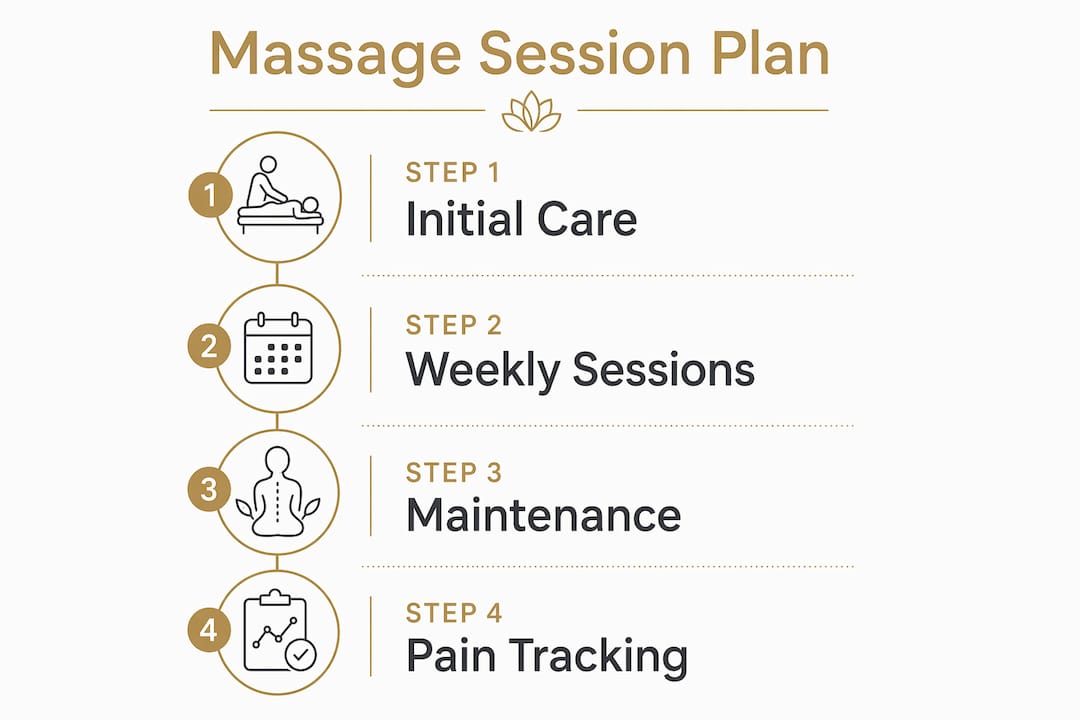
For acute flare-ups, a single session can provide 60–80% short-term relief lasting several days. That relief is real and clinically meaningful, but it is not permanent without follow-up care.
For chronic lower back pain, the evidence points to a structured protocol. A 401-person study found that 10 weekly massage sessions significantly reduced chronic low back pain and improved daily activity compared to standard care. Most clinical protocols recommend 3–4 sessions over 4–6 weeks as a starting point, then reassessing.
| Pain Type | Recommended Frequency | Session Length | Maintenance |
|---|---|---|---|
| Acute flare-up | 1 session, reassess | 50–60 minutes | As needed |
| Subacute (2–6 weeks) | 1–2 sessions per week | 50–75 minutes | Monthly |
| Chronic (6+ weeks) | Weekly for 4–6 weeks | 60–90 minutes | Every 3–4 weeks |
| Post-exercise strain | 1 session within 48 hours | 50–60 minutes | After intense training |
Tension typically rebuilds 7–14 days after a single session without lifestyle changes. This is why spacing sessions and combining them with stretching and core work produces better long-term results than massage alone.
Pro Tip: Track your pain level on a simple 1–10 scale before and after each session. If you are not seeing at least a 2-point drop by session 3, discuss adjusting the technique or adding complementary care.
Getting the most from back pain massage therapy requires preparation, honest communication, and consistent self-care between sessions.
Before your session:
During your session:
Between sessions:
When to stop and seek medical evaluation:
Avoid massage and seek immediate medical attention if you experience leg numbness, muscle weakness, loss of bladder or bowel control, or sudden severe pain following trauma. These red-flag symptoms indicate a serious underlying condition that massage cannot treat and may worsen.
Deep tissue and multimodal massage are the most evidence-backed approaches to lower back pain relief, but technique selection, session frequency, and consistent self-care between visits determine whether results last.
| Point | Details |
|---|---|
| Match technique to pain phase | Use Swedish massage for acute flare-ups and deep tissue for chronic tension. |
| Multimodal sessions produce the best results | Combining trigger point therapy, deep tissue, and stretching delivers the strongest pain reduction in a single session. |
| Chronic pain needs a structured protocol | Plan 3–4 sessions over 4–6 weeks, then reassess with monthly maintenance visits. |
| Lifestyle changes extend relief | Daily stretching and core strengthening prevent tension from rebuilding between sessions. |
| Red-flag symptoms require medical care | Leg numbness, weakness, or loss of bladder control contraindicate massage and need immediate evaluation. |
The most common mistake I see is treating massage as a standalone fix. Patients come in after months of chronic pain, get two or three sessions, feel significantly better, and then stop. Six weeks later, the pain is back because nothing changed in their daily routine.
Massage is genuinely powerful. The physiological mechanisms are real and well-documented. But the lumbar spine sits at the intersection of your posture, your movement habits, your stress levels, and your core strength. A therapist can release the tension that has built up. Only you can change the conditions that created it.
The second thing I have learned is that pressure is not a measure of quality. Patients sometimes equate pain during a session with effectiveness. That is not accurate. Controlled, tolerable pressure produces better outcomes than aggressive work that leaves you sore for three days. If you leave a session feeling beaten up rather than relieved, the pressure was too high for your tissue’s current state.
My honest recommendation for anyone in Alberta managing chronic lower back pain: start with a proper clinical assessment, not just a massage booking. Knowing whether your pain comes from muscle tension, a disc issue, a nerve problem, or a postural pattern changes everything about which treatment you need. Shephardhealth’s approach to lower back pain treatment starts with exactly that kind of assessment before any hands-on work begins.
Massage works best when it is part of a plan, not a reaction to pain.
— Deane
Persistent lower back pain responds best to care that addresses both the muscle tension you feel and the underlying patterns driving it.

Shephardhealth’s therapists are trained in deep tissue, Swedish, trigger point, and multimodal techniques, and they build treatment plans around your specific pain pattern rather than a one-size approach. Massage integrates directly with chiropractic care, Active Release Technique, and other therapies available at the clinic, so your sessions build on each other. If you are ready to understand what is actually causing your pain and get a plan that addresses it properly, explore the unexpected benefits of chiropractic care alongside massage, or book directly through Shephardhealth to get started.
Multimodal massage combining trigger point therapy, deep tissue work, and stretching produces the strongest pain reduction. For acute flare-ups, Swedish massage is the safer starting point.
Clinical evidence supports weekly sessions for 4–6 weeks for chronic lower back pain, followed by monthly maintenance visits to prevent tension from rebuilding.
Excessive pressure during deep tissue massage can trigger muscle guarding and temporarily worsen pain. Always communicate your tolerance clearly to your therapist during the session.
Avoid massage if you have leg numbness, muscle weakness, loss of bladder or bowel control, or sudden severe pain after a trauma. These symptoms require immediate medical evaluation.
Sessions typically run 50–90 minutes depending on the technique. Multimodal and deep tissue sessions benefit from the longer end of that range to allow adequate warm-up and focused work.
Same Day Appointments Available
We Direct Bill!