

Treat shin splints with activity modification, ice, and a staged rehab program built around calf and hip strengthening. Most people feel real relief in 2 to 4 weeks, but full recovery from medial tibial stress syndrome typically takes 3 to 6 months. If pain persists past a few weeks of conservative care, or you notice focal bone tenderness or night pain, get it checked before you push through it.
TL;DR:
- It typically takes three to six months for full recovery from shin splints, with most people feeling relief in two to four weeks.
- Self-care should include activity modification, ice therapy, short-term NSAIDs, and footwear assessment, with progress guided by pain levels during walking and jogging.
- A comprehensive rehab program focusing on calf, tibialis anterior, and hip strengthening reduces recurrence and prepares you for a staged return to running over four to six weeks.
- Persistent or worsening pain, focal bone tenderness, or night pain require prompt clinical evaluation to rule out stress fractures or compartment syndrome.
- Long-term prevention depends on gradual training increases, replacing worn shoes, and maintaining calf and hip strength year-round, rather than relying solely on rest.
Shin splints, clinically called medial tibial stress syndrome, produce a dull, diffuse ache along the inner edge of your shin bone. It usually shows up during or right after running, jumping, or marching drills, and it tends to fade with rest, which is your first clue you’re not dealing with something worse.
Most cases trace back to a handful of predictable triggers:
You want to rule out two more serious conditions before you settle on self-care. A stress fracture usually produces pain in one specific spot you can press on, rather than the broad ache of shin splints, and it often hurts even at rest. Compartment syndrome brings tightness, numbness, or swelling that worsens steadily during exercise instead of settling down. If either pattern sounds familiar, that’s a different conversation than the one this article is having.
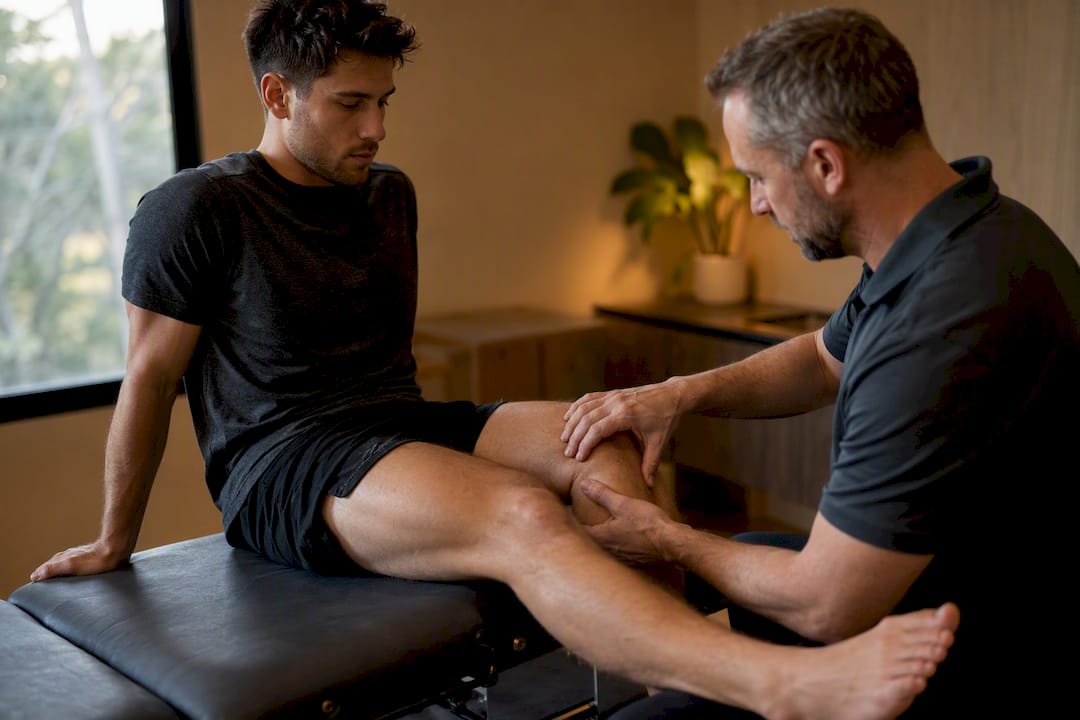
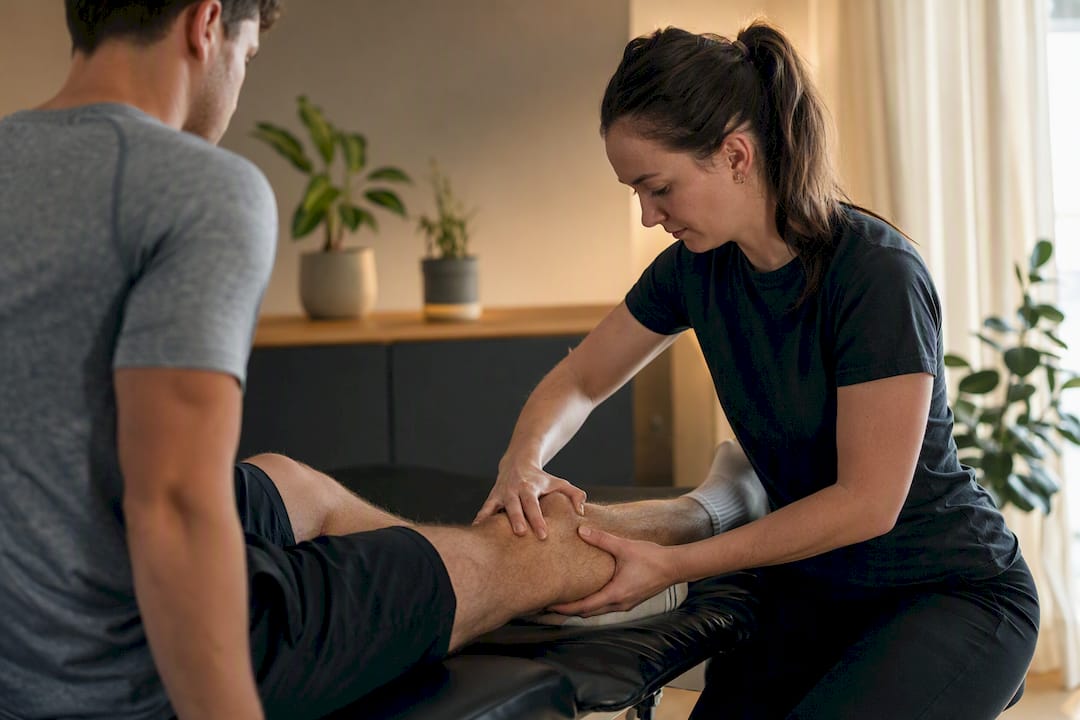
A clinician typically confirms medial tibial stress syndrome through history and a hands-on exam, not a scan. They’ll press along the inner shin looking for that broad, tender band, ask about your training load, and check your footwear and running mechanics.
A few signals move things toward X-rays or an MRI:
Most clinicians give conservative treatment a fair trial, generally two to four weeks, before ordering imaging. If you’re improving on that timeline, imaging usually isn’t needed at all.
The first two to four weeks are about calming inflamed tissue without losing your fitness base entirely. Here’s the sequence that actually moves the needle:
Pro Tip: Test your leg with a simple rule before adding any impact back: if walking briskly for 20 minutes produces zero pain, you’re probably ready to reintroduce light jogging. If it produces even mild discomfort, give it another few days.
This initial approach lines up with what Mayo Clinic and other clinical sources recommend as first-line care: rest, ice, short-term anti-inflammatories, and a temporary shift away from impact. None of it is exotic, but doing all of it consistently, rather than picking one piece, is what separates a two-week recovery from a two-month one.
Once acute pain settles, the real work begins. Rest alone doesn’t fix the weakness or mechanical faults that caused the problem in the first place, and physical therapy focused on calf, tibialis anterior, and hip strength is what actually lowers your risk of this coming back.
A staged, pain-guided return to running cuts re-injury risk far more reliably than jumping back to your old mileage the moment pain fades. Gait analysis and manual therapy from a physical therapist can also catch mechanical issues, like overstriding or excessive pronation, that you’d never spot on your own. For a related model of progressive loading, the same logic applies in calf strain rehab, where volume increases only after pain-free function at the current stage.
Recurrence is the norm, not the exception, when athletes skip the boring parts of recovery. A few habits make the difference between one bad season and a pattern that follows you for years.
See a clinician promptly if you notice focal bone tenderness, pain that wakes you at night, symptoms that worsen instead of improve over two to three weeks, or any trouble bearing weight. These are the red flags that separate ordinary shin splints from a stress fracture or compartment syndrome.
For persistent cases that don’t respond to a solid four-week self-care and exercise program, in-clinic options like targeted physical therapy, gait retraining, custom orthotics, and adjuncts such as shockwave or laser therapy can help, though the evidence on those adjuncts is mixed and they work best as add-ons, not replacements for the fundamentals. The goal is straightforward: restore your tolerance for load, cut the pain, and keep this from becoming a repeat visitor every training season.
Most articles on this topic treat rest as the whole treatment. It isn’t. Rest stops the pain signal, but it does nothing to fix the hip weakness, worn shoes, or training spike that caused the injury in the first place. That’s the gap between advice that sounds responsible and advice that actually prevents a repeat injury three months later.
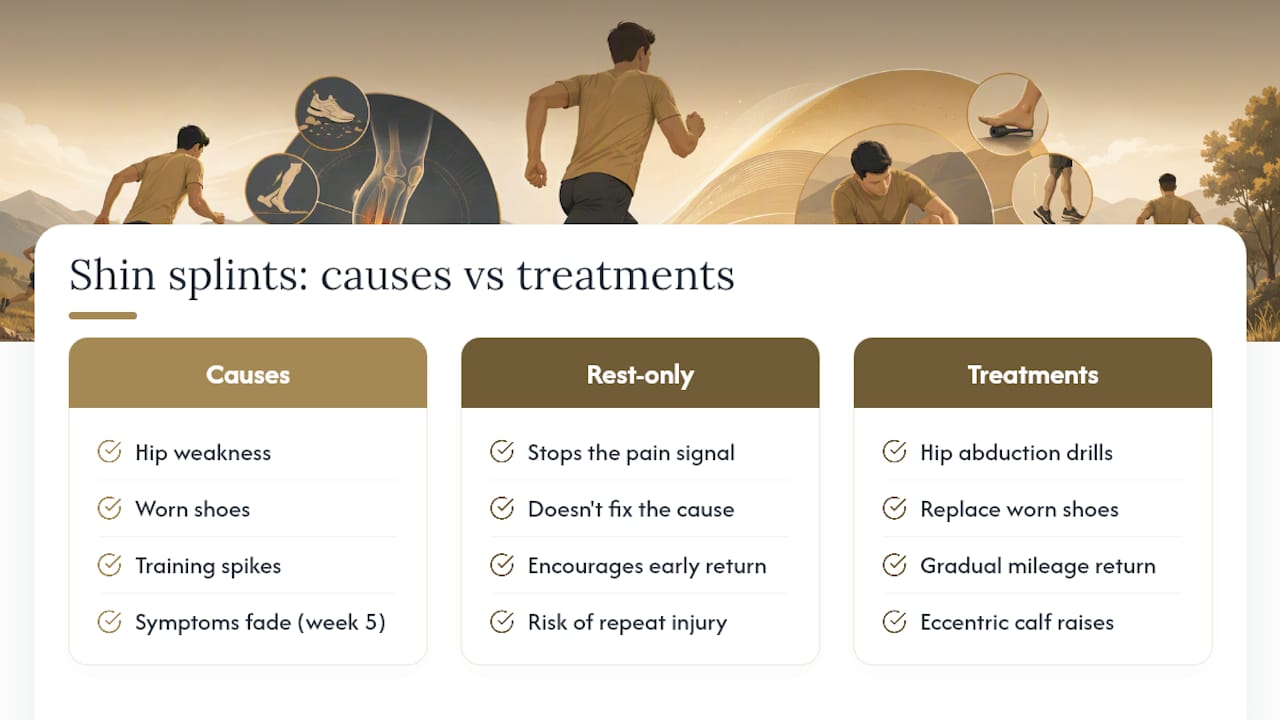
The failure point isn’t usually the first two weeks. It’s week five, when the pain is gone, the runner feels great, and they jump straight back to their old mileage without ever doing the hip and calf work that would have prevented the problem. Research on medial tibial stress syndrome backs this up: conservative management works for the overwhelming majority of cases, and surgery is rare and reserved for outliers. The real risk isn’t that conservative care fails. It’s that people abandon it the moment symptoms fade.
I’d also push back gently on the instinct to reach for shockwave or laser therapy early. These adjuncts have a place, but the evidence supporting them is genuinely mixed, and they work far better layered onto a solid exercise program than used as a shortcut around one. If you’re going to invest time and money into a treatment, invest it first in the boring stuff: the eccentric calf raises, the hip abduction drills, the shoes you’ve been meaning to replace since last spring.
— Deane
When shin pain outlasts a few weeks of solid self-care, an in-person assessment catches what you can’t diagnose from home. A Shephard Health visit typically starts with a movement and gait assessment to spot the mechanical issues driving your symptoms, followed by manual therapy techniques like Active Release Technique to address soft tissue restrictions in the calf and surrounding muscles. For cases that need extra support, shockwave and laser therapy are available as adjuncts alongside a structured rehab plan, and custom orthotics can be fitted if off-the-shelf inserts aren’t cutting it. Bring your current running shoes and a rough training log to your appointment. It gives the clinician a faster read on what changed right before your symptoms started.
If four weeks of rest, ice, and home exercises haven’t resolved your shin pain, Shephardhealth offers what a generic rehab app or a stack of online exercise videos can’t: a hands-on assessment that finds the specific mechanical cause behind your symptoms, not just a generic protocol. Where self-guided programs leave you guessing whether your hip weakness or your worn-out shoes are the real problem, an in-clinic evaluation identifies it directly and builds a plan around it.

Shephardhealth’s approach combines manual therapy, including Active Release Technique, with adjunct options like shockwave therapy for cases that haven’t responded to a standard exercise program. Same-day appointments and direct insurance billing mean you can get an assessment scheduled before a minor issue turns into a lost training season. If your shin pain has lingered past the point where self-care alone should have worked, book a first visit and get a clear answer on what’s actually going on.
This article is general information, not a substitute for advice from a qualified doctor. Consult a qualified healthcare professional about your own circumstances before acting on anything here.
Same Day Appointments Available
We Direct Bill!