

Nonsurgical spinal decompression may help relieve sciatica for some people with nerve-root pain, especially when it is paired with an active rehabilitation plan rather than used alone. It is not a cure, and it works best after a clinician has confirmed your pain is radicular and ruled out red flags. We mean motorized, nonsurgical decompression here, not spinal surgery, and we recommend a clinical assessment before you start.
TL;DR:
- In a 2022 trial, adding decompression to physical therapy improved pain by 1.07 cm and disability by 5.65 Oswestry points after four weeks.
- Broader reviews found short term benefits mainly in low quality supine traction studies, while higher quality prone traction studies showed no significant effect.
- Progressive weakness or new bowel or bladder changes require urgent assessment, while pregnancy, infection, recent fracture, and spinal instability generally preclude treatment.
- Clinicians should reassess pain and function at defined checkpoints, track walking tolerance and leg symptoms, and adjust or stop care if progress stalls.
Back or leg pain that is not settling? Start with a $67 new patient visit
A chiropractor assesses your spine and nerves, treats on day one when it is safe, and tells you honestly if you need other care. See sciatica and back treatment in Calgary. Book online.
Nonsurgical spinal decompression uses a computer-controlled table that applies gentle, intermittent traction to your spine. The goal is to create negative pressure within the disc space, which may reduce pressure on a disc or an irritated nerve root and support fluid exchange that helps the disc rehydrate, as the Cleveland Clinic explains. This is a meaningfully different intervention from surgical decompression, which physically removes or enlarges tissue to free a compressed nerve, and from simple manual traction, which lacks the controlled, programmed stretch-and-release cycle of a motorized system.
A session typically lasts around 20 to 30 minutes, with settings adjusted to your weight, diagnosis, and comfort level.
Decompression is most often considered for people with a herniated or bulging disc, degenerative disc disease, or radicular sciatica, where pain radiates down the leg following a nerve pathway rather than staying confined to the lower back. Clinicians look for dermatomal leg pain, a clear nerve-root pattern, and a stable or improving neurologic exam before recommending a trial of treatment.
Canadian primary-care guidance places real weight on this triage step. The Clinical Practice Guideline for low back pain emphasizes neurologic assessment and red-flag screening ahead of treatment choices, and it cautions against routine motorized traction for chronic low back pain without that individualized workup. This is why a proper history and exam, not a standard protocol applied to everyone, should come first.
A typical course is built around short, frequent sessions rather than one long intervention. Many patient-education sources describe courses with multiple sessions, though the exact number varies and should be individualized. The right number for you depends on your diagnosis, how you respond early on, and whether exercise-based rehab is layered in alongside it, according to a Healthline overview of decompression therapy.
Symptom relief is the outcome that matters, and imaging changes do not always track with how you actually feel, so clinicians focus on function and pain scores over time rather than disc appearance on a scan, a point echoed in conference proceedings from World Physiotherapy.
Pro Tip: Keep a simple daily symptom diary, rating leg pain and noting walking distance, and bring it to each clinical review so adjustments to your plan are based on real data, not memory.
The research on decompression is encouraging in places and genuinely mixed in others, and it is worth understanding both sides before you commit to a course. A 2022 randomized controlled trial in people with lumbar radiculopathy found that adding nonsurgical decompression to routine physical therapy produced statistically significant short-term improvements in pain, disability, lumbar motion, and back-muscle endurance after four weeks, compared with physical therapy alone.
A 2022 trial found a between-group improvement of 1.07 ± 0.32 cm on a pain scale and 5.65 ± 1.48 points on the Oswestry Disability Index when decompression was added to physical therapy, reflecting medium-to-large effect sizes reported in that study. That is a meaningful short-term signal, though it does not establish the therapy works for everyone.
Broader reviews temper the picture. A 2021 systematic review found significant short-term pain and disability benefits for supine traction added to physiotherapy, but only in low-quality studies, while higher-quality studies of prone traction showed no significant effect. A meta-analysis published in PMC similarly found no consistent superiority among traction types, with outcomes heavily influenced by patient selection and protocol differences.
The honest takeaway is that evidence supports decompression as a plausible adjunct for some patients, not as a stand-alone, one-size-fits-all solution.
Every sciatica case should start with a full assessment: history, neurologic exam, and a review of prior imaging when it exists, before deciding whether decompression belongs in a treatment plan. From there we build an individualized care pathway rather than a fixed package.
You can read more about how we evaluate candidates in our explainer on spinal decompression and what aftercare looks like between sessions.
Pro Tip: Ask your clinician to define what “success” looks like for your specific case before your first session, so you both know what you are measuring against at your review.
If your clinician confirms radicular sciatica and no red flags, decompression is a reasonable adjunctive trial within an active rehab plan. Expect to reassess at defined checkpoints, typically every few weeks, against pain and function, not disc imaging. Seek urgent care for progressive leg weakness, new bowel or bladder changes, fever, or suspected infection.
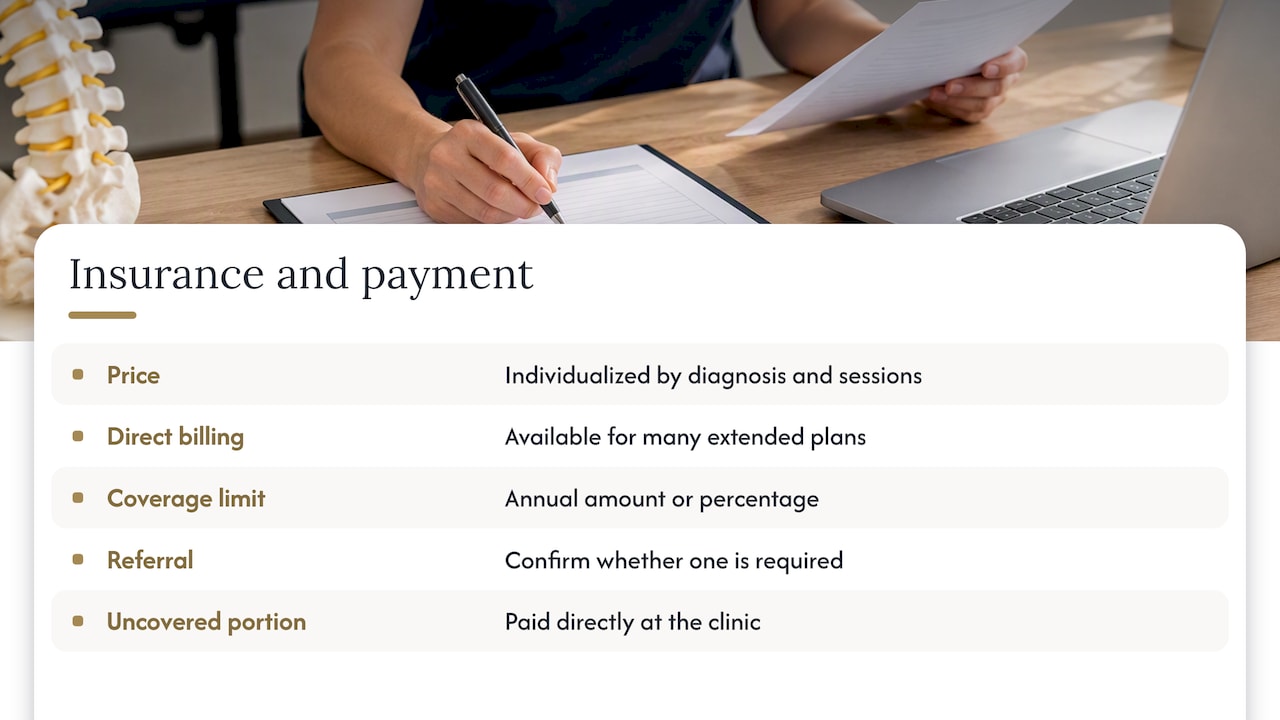
Spinal decompression does not have a single published price, since treatment is individualized based on your diagnosis and the number of sessions your plan calls for. We bill many extended health insurance plans directly, which means you often do not need to pay up front and claim later, though coverage specifics depend on your individual policy and provider.
Before your first visit, it is worth calling your insurer to confirm what portion of chiropractic or rehabilitation services, including decompression, your plan covers and whether a physician referral is required. Some plans cover a set dollar amount per calendar year rather than a percentage, so understanding your remaining balance helps you plan a realistic course length.
We also offer direct billing for a range of related services, including chiropractic care, massage therapy, and shockwave therapy, so your broader rehab plan can often be processed the same way. If mobility is limited while you wait for symptoms to settle, resources like this guide to walking frames in rehabilitation can help you and a caregiver think through short-term support options.
Payment for any portion not covered by insurance is typically handled directly at the clinic, with estimated session costs provided after assessment and care plan development, as the number of visits varies by individual.
We believe decompression earns its place in a plan only when the evidence and your individual presentation both support it, not because it sounds impressive. Our role is to set honest expectations and measure what actually changes for you.
— Deane
If sciatica has been limiting your walking, sitting, or sleep, the next step is a proper assessment, not guesswork about whether decompression will help. Some clinics offer same-day appointments and direct billing to many insurance plans, and provide candidacy guidance based on exam findings.

Visit our spinal decompression service page to learn more or to book your assessment.
This article is general information, not a substitute for advice from a qualified doctor. Consult a qualified healthcare professional about your own circumstances before acting on anything here.
It can help some people with nerve-root sciatica, particularly when combined with physical therapy. A 2022 randomized trial found added short-term benefit for pain and disability when decompression was paired with routine physical therapy, though results do not guarantee improvement for every patient.
Keep moving within your pain tolerance rather than resting completely, and track symptoms like leg pain and walking distance in a simple diary. Share that record with your clinician so your home exercises and treatment plan can be adjusted based on real patterns, not guesswork.
People who are pregnant, have an active spinal infection, a recent fracture, or spinal instability are generally not candidates. Progressive neurologic deficits, such as worsening leg weakness or new bowel or bladder changes, require urgent evaluation rather than a decompression trial, consistent with Canadian primary-care guidance.
Surgery is typically reserved for cases with severe or progressive neurologic deficit, significant loss of function, or symptoms that do not improve after a reasonable trial of conservative care. Most sciatica cases are managed nonsurgically first, with surgical referral considered when red flags or lasting deficits are present.
Same Day Appointments Available
We Direct Bill!