

Sports massage for runners is a goal-oriented, phase-driven form of manual therapy that supports tissue recovery, maintains mobility, and helps identify soft-tissue problems before they become injuries. It is not a performance miracle, but used at the right time and frequency, it is one of the most consistent tools you have for staying healthy through a heavy training block.
Your most practical next step: schedule a maintenance session every 4–8 weeks during base or build phases, and avoid any aggressive deep work within a day of a hard session or several days of a target race.
Three things you will notice after a well-timed session:
Want hands-on help? Start with a $67 new patient visit
A chiropractor assesses what is driving the tightness and treats it the same day when it is safe. See massage therapy in Calgary. Book online.
Sports massage for runners reliably reduces DOMS and improves perceived recovery, and works best as a consistent, phase-timed tool within a broader training and rehabilitation plan.
| Point | Details |
|---|---|
| Primary value | Reduces DOMS and improves perceived recovery; also supports fascial mobility and early detection of soft-tissue imbalances. |
| Timing rules | Avoid deep work within 24 hours of a hard session and at least 3–5 days before a target race to prevent neuromuscular dulling. |
| Frequency guideline | Schedule maintenance sessions every 4–8 weeks during base and build phases; increase frequency as your race approaches. |
| Self-care between sessions | Foam rolling, compression, active mobility drills, and adequate sleep extend the benefits of professional treatment. |
| Shephardhealth | Offers runners in Calgary integrated care combining sports massage, ART, laser therapy, and fascial stretch therapy with direct insurance billing. |
Sports massage is defined in clinical settings as a goal-driven, phase-based approach that uses techniques such as effleurage, petrissage, friction, and compression, paired with assisted stretching or PNF, to meet timing-specific goals. The therapist’s clinical reasoning, not the stroke list, is what separates it from a relaxation treatment.
In practical terms, a sports massage session for a runner begins with a brief assessment of your training phase, recent load, and any current complaints. The therapist then sequences techniques based on what your tissue actually needs, not a preset menu. A session two days before a race looks completely different from one three days after a long run.
The contrast with a spa or generic “deep-tissue” massage is worth understanding clearly. A spa treatment prioritizes relaxation and uses consistent, moderate pressure across the whole body. A generic deep-tissue session applies heavy pressure to reach deeper muscle layers, but without the clinical context of your training schedule or movement patterns. Sports massage, by contrast, is interactive. Your therapist may use resisted movements, active stretches, or reassessment tests mid-session to measure whether the tissue is responding. The goal is a specific functional outcome, not a general sense of relaxation, though that often follows anyway.
For runners in Alberta, the distinction also matters for insurance purposes. Sessions delivered by a Registered Massage Therapist (RMT) or physiotherapist are typically eligible for direct billing to extended health benefits, while spa treatments are not.
The most consistent finding across reviews and meta-analyses is that sports massage reliably reduces delayed onset muscle soreness (DOMS) and improves perceived recovery. If you have ever felt noticeably less stiff two days after a massage than after a comparable training week without one, that tracks with the research. The effect on DOMS is real and repeatable.
At a cellular level, a controlled study published on PubMed found reduced inflammation markers in massaged limbs and greater expression of a gene linked to mitochondrial biogenesis under certain conditions. The authors caution that more research is needed, but the finding points toward a plausible cellular pathway for the recovery benefits runners report.
Research and expert commentary indicate that massage helps soften fascia and remove adhesions between fascia and muscle, supporting the joint mobility that running mechanics depend on. Tight fascia in the lateral hip or calf does not just feel uncomfortable; it alters your stride pattern and loads adjacent structures unevenly. Regular soft-tissue work addresses that before it compounds.
One of the least-discussed benefits is surveillance. A therapist working through your calves, hamstrings, and hip flexors every few weeks will often find a developing hot spot before you feel it during a run. Maintenance massage used as part of a routine helps identify areas of imbalance and tightness before they become injuries, and many recreational runners schedule sessions every 4–8 weeks during heavy training for exactly this reason.
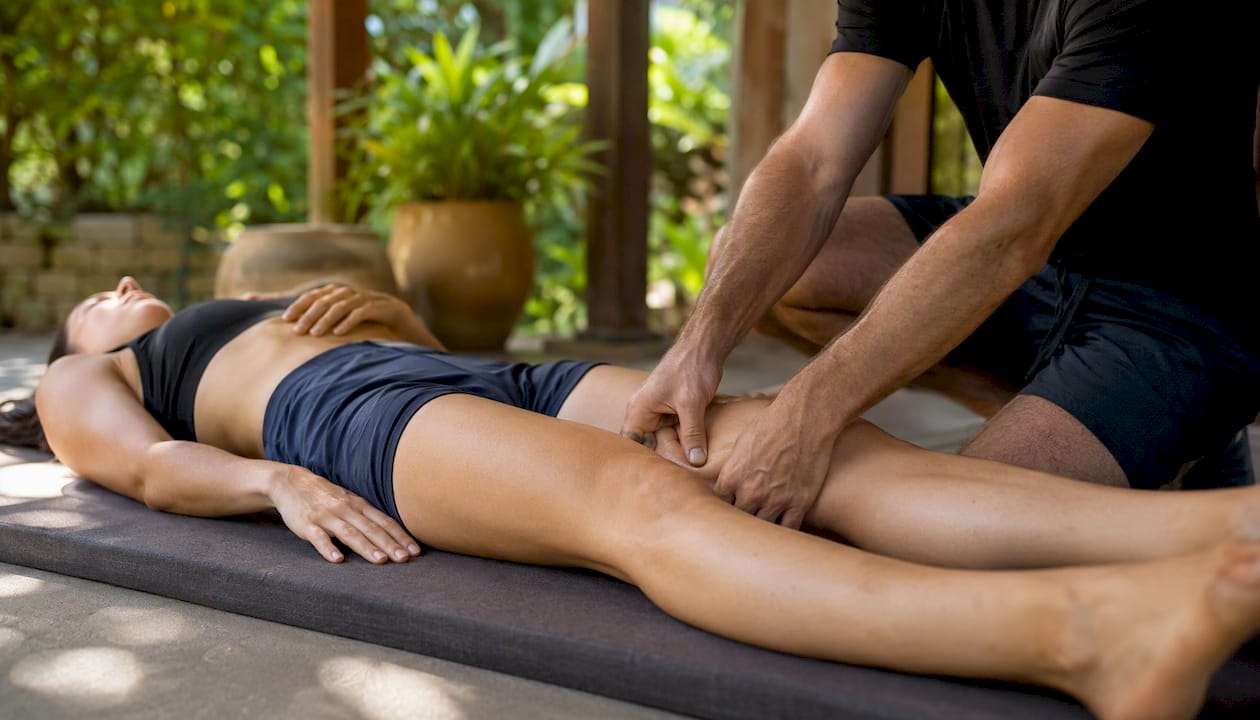
Direct performance improvements from massage are generally small or inconsistent across studies. Massage does not make you faster in a measurable, repeatable way. What it does do is improve mood, perceived readiness, and flexibility, and reduce DOMS, all of which support training consistency. A runner who recovers better, sleeps better, and stays injury-free across a 16-week block will almost certainly perform better on race day than one who does not, even if no single massage session moved their lactate threshold.
Reduced cortisol, improved sleep quality, and a lower perceived effort on easy runs are reported consistently by runners who include regular massage in their training. These are not trivial outcomes. Sleep is where adaptation happens, and chronic training stress without adequate recovery is one of the most common paths to overuse injury.
Modern sports massage is not defined by a fixed stroke sequence. Technique selection depends on your training phase, tissue state, and session goal. The table below outlines the core techniques used with runners, their primary purpose, and appropriate timing.
| Technique | Primary Purpose | Best Timing |
|---|---|---|
| Effleurage | Warm-up, circulation, nervous-system preparation | Pre-event, session opening, post-event flush |
| Petrissage | Deeper tissue mobilization, reducing muscle tension | Maintenance, post-event (24–48 hrs after) |
| Friction | Breaking down adhesions, targeting scar tissue | Maintenance, rehab |
| Trigger point therapy | Releasing localized hyperirritable muscle knots | Maintenance, rehab |
| Myofascial release | Restoring fascial mobility and reducing restrictions | Maintenance, rehab |
| Tapotement | Neuromuscular stimulation, alertness | Pre-event only |
| Compression | Increasing local circulation, reducing tension | Pre-event, maintenance |
| Assisted stretching | Improving range of motion, reducing stiffness | Post-event, maintenance |
| PNF stretching | Neuromuscular re-education, deeper ROM gains | Maintenance, rehab |
| Active Release Technique (ART) | Releasing adhesions under active movement | Maintenance, rehab |
| Lymphatic drainage | Reducing swelling and post-event fluid accumulation | Post-event (immediate) |
A well-structured session follows a logical sequence: brief movement assessment, targeted soft-tissue work on priority areas, mobility integration (assisted stretching or PNF), and a short reassessment to confirm the tissue has responded. Pressure alone is not the measure of a good session. Sequencing, timing, and clinical reasoning are what determine whether the work is productive.
Pro Tip: Before your session, do a 30-second single-leg calf raise and a standing hip flexor stretch on each side. Note which side feels tighter or weaker. Reporting this to your therapist takes 10 seconds and gives them a useful starting point for their assessment.
For runners dealing with chronic restrictions, Active Release Technique adds a layer of precision that standard massage alone cannot replicate. ART works by applying tension to the affected tissue while the runner actively moves through a range of motion, breaking adhesions under load rather than at rest.
Timing is where most runners make avoidable mistakes. The general rules are straightforward: avoid aggressive deep work within 24 hours of a hard session, and finish any heavy manual therapy at least 3–5 days before a target race to prevent neuromuscular dulling. A massage that leaves your legs feeling heavy on race morning is worse than no massage at all.
Light, stimulating work (effleurage, tapotement, compression) 24–48 hours before a race can reduce perceived tension and support readiness without compromising neuromuscular function. Keep pressure moderate and duration short, typically 20–30 minutes. This is not the session for deep friction or trigger point work.
Immediately after a race or very long run, lymphatic drainage and light effleurage help manage swelling and perceived fatigue. Deeper work is more appropriate 48–72 hours post-event, once the acute inflammatory phase has settled. Pushing deep into fatigued tissue in the first 24 hours can increase soreness rather than reduce it.
Practitioner guidance recommends maintenance sessions every 4–8 weeks during base and build phases, with frequency increasing as your race approaches. A practical schedule for a heavy training month might look like this:
Runners in a high-volume block (70+ km per week) often benefit from sessions every 2–3 weeks rather than monthly. The tissue accumulates load faster than it can self-regulate, and a therapist who sees you regularly will track changes over time rather than treating each session as a standalone event.
Knowing which areas matter most helps you use your session time well and communicate clearly with your therapist.
Calves (gastrocnemius and soleus): These absorb enormous load with every foot strike. Tightness here limits ankle dorsiflexion, which forces compensations at the knee and hip. The soleus, sitting beneath the gastrocnemius, is often overlooked but is a common contributor to Achilles tendinopathy and plantar fascia problems.
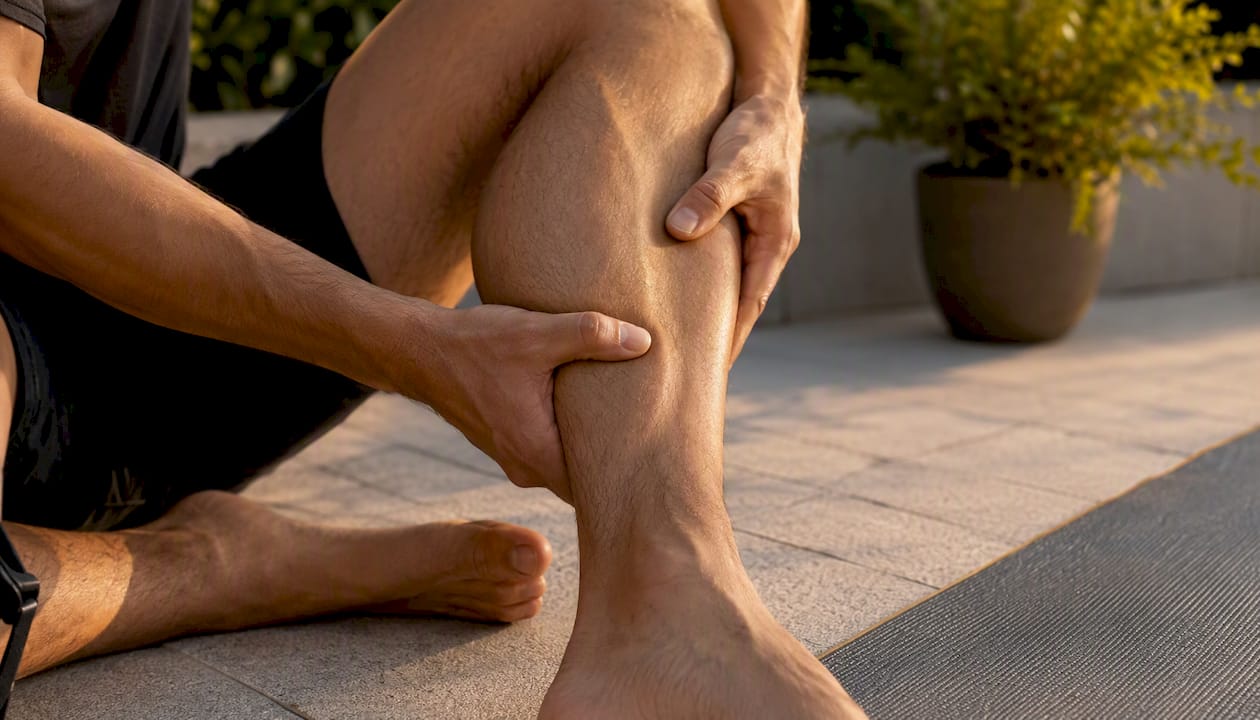
Hamstrings: Chronically shortened hamstrings reduce stride length and increase posterior chain strain. They also refer pain into the lower back and glutes in patterns that can be misread as something more serious. Runners who sit for long hours before evening training are particularly prone to hamstring tightness.
Glutes (maximus and medius): Gluteus medius weakness is one of the most common contributors to IT band syndrome, patellofemoral pain, and hip drop. Even when strength is adequate, the muscle can carry significant tension that alters hip mechanics. Glute medius work is often underweighted in a session relative to how much it matters for runners.
Hip flexors (iliopsoas): Tight hip flexors limit hip extension, shortening your stride and increasing anterior pelvic tilt. This loads the lumbar spine and can contribute to hip flexor strains and stress reactions in the femur. Runners who do not include regular hip flexor release often find their stride efficiency degrades over a long race.
Quadriceps and IT band region: The tensor fasciae latae (TFL) and the lateral fascial chain connecting it to the IT band are common pain generators in runners. The IT band itself does not stretch meaningfully, so the work targets the TFL and lateral quad rather than the band directly.
Adductors: Often ignored, the adductors stabilize the pelvis during single-leg stance. Tightness here can contribute to groin strains and medial knee pain.
Plantar fascia and foot intrinsic muscles: The foot is the first point of contact with the ground on every stride. Plantar fascia tightness and intrinsic muscle weakness are directly linked to plantar fasciitis, metatarsal stress, and altered foot mechanics. A few minutes of targeted foot work in a session pays disproportionate dividends for runners logging high mileage.
A quick self-assessment before your session: stand on one leg for 10 seconds and note any hip drop or wobble (glute medius), do a standing forward fold and note where you feel the pull (hamstrings vs. lower back), and press your thumb along the arch of your foot (plantar fascia tenderness). These three checks take under a minute and give your therapist useful clinical context.
Professional sessions are most effective when supported by consistent at-home recovery habits. The goal of self-care is not to replicate what a therapist does but to maintain tissue quality between appointments and monitor how your body is responding to training load.
Clinical guidance recommends careful use of self-massage tools and close attention to tissue response. Foam rollers, percussion devices, and compression garments all provide partial maintenance benefits, but they can be overused or applied with excessive pressure, which may worsen tissue guarding rather than reduce it.
Foam rolling: Use a medium-density roller on calves, hamstrings, glutes, and the TFL/lateral quad. Spend 60–90 seconds per area, moving slowly and pausing on tender spots rather than rolling aggressively. Avoid rolling directly on the IT band with heavy pressure; target the TFL at the hip instead.
Percussion devices (massage guns): Useful for calves and glutes post-run. Keep the device moving and use a lower intensity setting on sensitive areas. Do not use percussion directly over bony prominences, the spine, or acutely inflamed tissue.
Compression: Compression socks or sleeves worn for 1–2 hours post-run support venous return and reduce perceived swelling in the lower leg. They are particularly useful after long runs or races.
Active mobility drills: Hip 90/90 stretches, couch stretches for hip flexors, and ankle dorsiflexion mobilizations address the three most common runner restrictions without requiring equipment. Ten minutes of targeted mobility work after an easy run is more productive than a single long stretching session once a week.
Contrast baths: Alternating cold and warm water immersion (roughly 1 minute cold, 3 minutes warm, repeated 3–4 times) can reduce perceived soreness and support circulation after hard efforts. The evidence is modest but the practice is low-risk and widely used by distance runners.
Sleep and nutrition: These are not optional add-ons. Protein intake adequate for muscle repair (distributed across meals rather than concentrated in one sitting) and 7–9 hours of sleep are the foundation that makes every other recovery tool more effective. Massage does not compensate for chronic sleep debt or inadequate fueling.
Pro Tip: After a self-massage session, note whether the tissue feels softer and less reactive, or whether it feels more guarded and tender. Positive response: the area feels looser within 10–15 minutes. Negative response: increased sensitivity or tightness that persists. If you consistently see a negative response, reduce pressure and frequency, and report the area to your therapist at your next session.
For adjunctive support between sessions, Kinesio taping can help offload irritated soft tissue and maintain proprioceptive feedback during training, particularly useful for runners managing IT band irritation or plantar fascia sensitivity.
Sports massage is safe for most runners most of the time, but there are clear situations where it should be avoided or where you need medical assessment first.
Absolute contraindications (do not proceed without medical clearance):
Relative contraindications (proceed with modification or therapist judgment):
Red flags that require urgent medical review before any massage:
Communicating during a session: Sharp, guarding pain during massage is a signal to stop or reduce pressure, not push through. Productive discomfort (a “good hurt” on a tight area) is normal; sharp or shooting pain is not. Tell your therapist immediately if you feel either. A well-trained therapist will reassess and modify rather than continue regardless.
If you are uncertain whether a condition is a contraindication, consult your physician or a registered clinician before booking.
Canada does not have a single national credential for sports massage, so understanding the regulatory landscape in your province matters before you book.
In Alberta, Registered Massage Therapists (RMTs) complete a minimum 2,200 hours of accredited training and are regulated by the Remedial Massage Therapist Association of Alberta (RMTAA) or the Massage Therapist Association of Alberta (MTAA). RMTs are the most common providers of sports massage and are typically covered by extended health benefits.
Physiotherapists hold a master’s-level degree and are regulated by the Alberta Physiotherapy Association. Many physiotherapists incorporate soft-tissue techniques, including sports massage, into their treatment plans alongside exercise prescription and movement rehabilitation.
Chiropractors in Alberta are regulated by the Alberta College and Association of Chiropractors (ACAC). Clinics like Shephardhealth combine chiropractic care with soft-tissue therapies including massage, ART, and the Graston Technique, offering a more integrated approach than a standalone massage session.
Before your first appointment, it is worth confirming a few practical details:
A thorough initial session should include a brief intake covering your training history, current complaints, and goals. The therapist should perform at least a short movement assessment before beginning hands-on work, and reassess at the end to confirm the tissue has responded. SOAP notes (Subjective, Objective, Assessment, Plan) are standard in regulated practice and indicate a clinician who is tracking your progress over time.
Clinics that integrate sports massage with complementary therapies, such as ART, fascial stretch therapy, laser therapy, or shockwave, can address the same tissue problem from multiple angles in a single visit. This is particularly relevant for runners managing chronic restrictions or recovering from a soft-tissue injury.
The evidence base for sports massage is real but nuanced. Understanding what the science supports, and where it is less clear, helps you use massage as a tool rather than a cure.
What the research consistently supports:
Where the evidence is weaker or mixed:
The practical interpretation: Sports massage is not a substitute for training, strength work, or adequate sleep. It works best as one component within a broader plan that includes strength training for runners, sensible load management, and good nutrition. The manual therapy literature supports its role in musculoskeletal recovery as part of a multimodal approach, not as a standalone intervention.
The runners who get the most from massage are those who use it consistently, communicate clearly with their therapist, and integrate it with the rest of their training rather than treating it as an occasional luxury.
Most runners who come to Shephardhealth for soft-tissue work arrive with one of two presentations: they have been ignoring a tightness for weeks and it has finally become a problem, or they are proactively managing load during a heavy training block and want to stay ahead of it. The second group almost always has a smoother training cycle.
At Shephardhealth, the initial evaluation for a runner includes a movement screen, a history of recent training load and any current complaints, and hands-on tissue testing to identify areas of restriction or asymmetry. That assessment determines whether the session focuses on soft-tissue release, ART for adhesion work, assisted stretching, or a combination. Laser therapy is sometimes added for areas with persistent inflammation or delayed healing response.
The clinic workflow is designed to minimize friction: same-day appointments are available for acute issues, and direct insurance billing means you are not managing paperwork after a session. SOAP notes are kept for every visit, so if you come in three months later with a recurrence, the therapist has a baseline to work from.
For runners managing chronic restrictions, the most effective plans combine regular soft-tissue sessions with a short home mobility program and, where appropriate, strength work targeting the glutes and hip stabilizers. Massage addresses the tissue state; strength work changes the load tolerance. Both are necessary for lasting results.
Shephardhealth offers runners in Calgary a clinician-led approach to soft-tissue injury treatment and recovery that goes beyond a standard massage appointment. Whether you are managing a nagging IT band issue mid-block, preparing for a spring marathon, or recovering from a race, the clinic combines sports massage with Active Release Technique, fascial stretch therapy, laser therapy, and chiropractic care under one roof.

At your first appointment, you will complete a brief intake covering your training history and current goals. The therapist or chiropractor will assess your movement patterns and tissue state before any hands-on work begins, so the session is built around your specific needs rather than a generic protocol. Direct insurance billing is available for eligible extended health plans, and same-day bookings are accepted for acute concerns.
To book your initial assessment or a maintenance session, visit Shephardhealth or call the Calgary clinic directly.
Same Day Appointments Available
We Direct Bill!