

The fastest safe way to remove kinesio tape is to soak the adhesive in oil, warm water, or a mild soap for 5 to 15 minutes, then roll the tape back slowly while holding the skin taut underneath. Hold the skin near the edge, pull along the direction your hair grows, and never rip. A few ground rules before you start:
Pro Tip: Rub a little baby oil or olive oil over the tape and let it sit for five to ten minutes before you touch a corner. The wait feels slow, but it’s the difference between a smooth peel and a sting you’ll remember all day.
Painless kinesio tape removal depends on softening the adhesive with oil before peeling, supporting the skin, and pulling along the direction of hair growth.
| Point | Details |
|---|---|
| Soften before peeling | Soak tape in oil or warm water for 5 to 15 minutes; oil works better since the adhesive is oil-soluble. |
| Watch the clock | Remove tape within 3 to 7 days and rest the skin about 24 hours before reapplying. |
| Know the red flags | Persistent itching, blistering, numbness, or lasting redness mean remove it now. |
| Peel with technique | Support the skin, pull with hair growth, and roll the tape back rather than yanking up. |
| Patch-test sensitive skin | Test a forearm strip for one hour before full application if you’re prone to reactions. |
| Get clinical help when needed | Shephard Health offers same-day removal and skin or soft-tissue assessment when home methods fall short. |
Most clinical guidance points to a window of about 3 to 7 days for continuous wear, with roughly 24 hours of bare skin rest before you tape the same spot again, according to St George’s NHS guidance. That timeline isn’t arbitrary. Adhesive breaks down, sweat and skin oils build up underneath it, and the longer it stays, the more likely irritation sets in.
Some signs mean you should take the tape off right now, not at the end of the week:
If the tape starts peeling on its own, gets soaked and loses its grip, or you notice swelling nearby, don’t wait for day seven. Take it off early.
Persistent itching, blistering, unusual pain, numbness, or redness lasting more than 24 hours after removal are all reasons to stop and remove the tape immediately, per St George’s NHS.
You have three realistic options at home, and the right one usually comes down to what’s already in your bathroom cabinet.
1. Oil-based removal. Baby oil, mineral oil, olive oil, or coconut oil all work because kinesio tape adhesive is oil-soluble, not water-soluble, according to KT Tape’s own care guidance. Saturate the tape completely, let it sit for 5 to 15 minutes, then find a loose corner and roll the tape back on itself while your other hand presses the skin flat, a technique also recommended by Healthline.
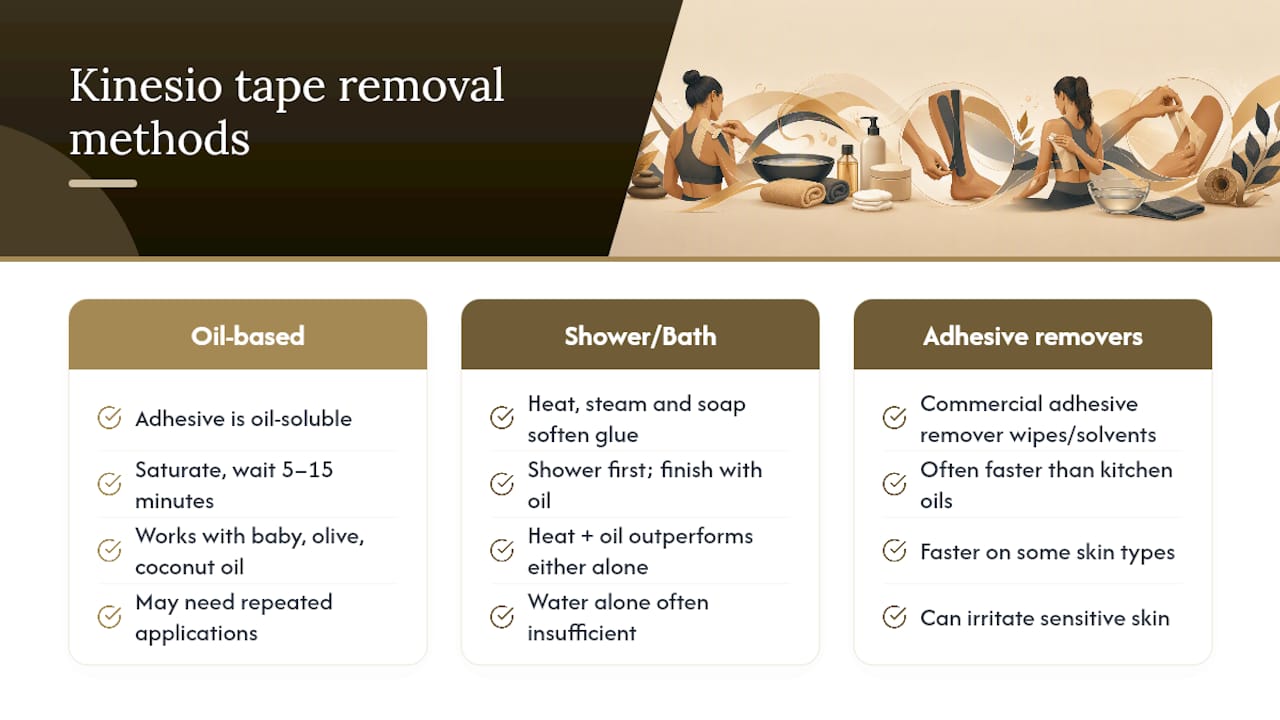
2. Shower or bath technique. Warm water and mild soap soften the glue on their own, but water alone often isn’t enough on stubborn spots. Combining heat, steam, and a splash of oil in the shower tends to outperform either one alone, since the warmth loosens the bond while the oil actually dissolves it. Shower first, then finish the peel with oiled fingers if any patch is holding on.
3. Adhesive removers or lotion alternatives. Commercial adhesive remover wipes or medical adhesive solvents work faster than kitchen oils on some skin types, but test a small patch first since these products carry their own irritation risk for sensitive skin.
If a section refuses to budge, don’t force it. Reapply oil, give it another five minutes, and try again. Ripping tape off to save time almost always costs you more in skin damage than the extra few minutes would have.
Pro Tip: Keep a small bottle of coconut oil near wherever you usually remove your tape. It doubles as a moisturizer afterward, so you’re not reaching for two different products.
The technique matters as much as the lubricant. Press down on the bare skin right next to the tape’s edge with one hand while your other hand lifts and rolls the tape back on itself, a method outlined by TheraBand’s kinesiology tape guidance. That counter-pressure keeps the skin from stretching and tearing along with the adhesive.
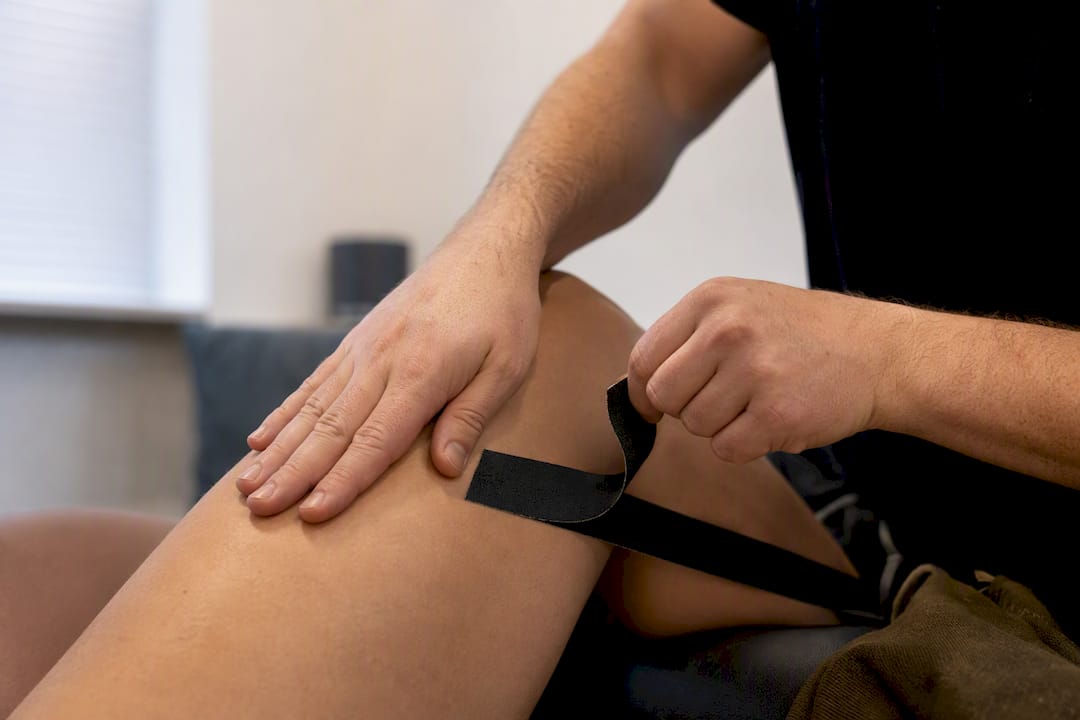
Pull in the direction your hair grows, not against it. Rolling the tape back at a low, shallow angle rather than yanking straight up spares your hair follicles a lot of unnecessary trauma, according to Gillette Children’s removal instructions. Pulling against hair growth is one of the more common reasons people describe kinesio tape removal as painful when it doesn’t need to be.
A few habits that make a real difference:
If you know your skin reacts to adhesives, tape, or bandages, patch-test before your next full application. Apply a small strip to your forearm and leave it for at least one hour, a precaution recommended by the Hospital for Special Surgery even though kinesio tape is designed to be hypoallergenic.
Watch for these signs that point to an adhesive allergy rather than ordinary irritation:
While kinesiology tape is built to be hypoallergenic, some people still develop a reaction. A one-hour forearm patch test before broader use is the safest way to find out in advance, according to HSS.
If a reaction shows up anyway, remove the tape gently using the oil-and-roll method above, clean the area, and skip reapplying until it’s fully calmed down. If symptoms persist or worsen, check the symptoms of a soft tissue issue and talk to a clinician rather than guessing at home.
Once the tape is off, wash away the leftover residue with warm water and mild soap. Skip the aggressive scrubbing and skip the hairdryer entirely. Heat can reactivate the adhesive and make things stickier, not cleaner.
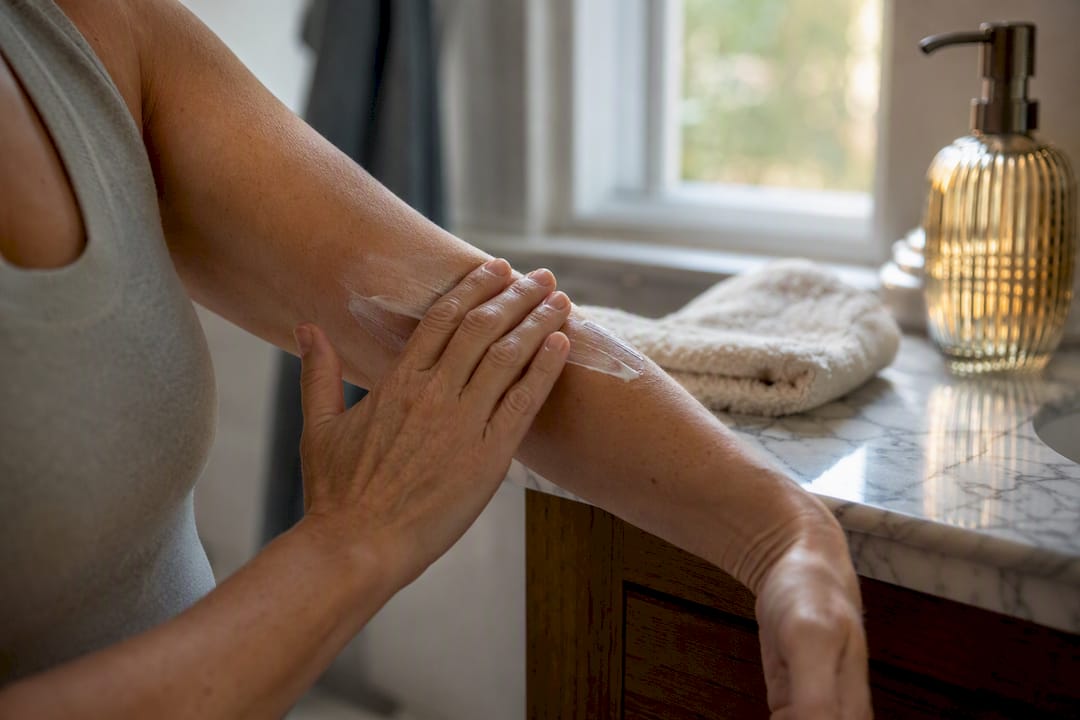
If your skin feels dry or tight afterward, a light moisturizer helps it recover. But hold off on retaping the same spot immediately, especially if you notice any redness. Clinical guidance generally points to at least 24 hours of rest between applications. If you see an open area, ongoing redness, or any other change in the skin, get it looked at before you tape over it again.
Pro Tip: Moisturize at night rather than right before your next taping session. Damp or oily skin doesn’t hold adhesive well, so give lotion time to fully absorb first.
Most painful removals come down to the same handful of errors. Ripping the tape off fast, especially against hair growth, tears at follicles instead of releasing the adhesive cleanly. Reaching for a hairdryer to “loosen” the tape backfires, since heat tends to strengthen the bond rather than break it. And scrubbing leftover residue with a towel or scraping at it just irritates skin that’s already been under adhesive for days. Oil and a slow roll beat force every time.
Some situations call for professional hands rather than a bottle of baby oil. If there’s an open wound under the tape, signs of a serious allergic reaction, numbness that doesn’t resolve, or the tape was applied over a recent surgical site, home removal isn’t the safer path.
At Shephard Health, clinicians use controlled adhesive removers and a slower, guided technique for cases like these, along with follow-up care if the skin needs it or if there’s an underlying soft-tissue issue worth checking, as outlined in our overview of treatments for soft tissue injuries.
If home removal has already caused skin irritation or you’re unsure whether tape is covering an injury that needs attention, a same-day clinical assessment is a faster route to peace of mind than waiting it out.
The advice that gets repeated most on this topic, “just peel it off slowly,” undersells how much technique actually matters. Slow alone isn’t the fix. Slow with the wrong pulling direction still hurts, and slow without oil on water-resistant adhesive barely helps at all. The research on hair-growth direction and oil solubility tells a more specific story: it’s the combination of softened adhesive, supported skin, and correct pulling angle that actually prevents pain, not patience by itself.
I’d also push back gently on how casually people treat wear time. Kinesio tape isn’t meant to sit indefinitely just because it still looks stuck down. Skin underneath is quietly reacting the whole time, and by day seven or eight, you’re often trading a little convenience for irritation you didn’t need. If you take one thing from this article, let it be this: reach for oil before you reach to pull, and if your skin ever looks or feels wrong after taping, don’t self-diagnose. Get it checked.
If oil, warm water, and patience still leave you with stuck edges, irritated skin, or you’re just not sure whether that redness is normal, a clinician can finish the job in minutes with tools built for exactly this. Shephard Health’s clinicians remove tape using professional adhesive solutions and controlled technique, then check the skin and any underlying injury the tape was supporting in the first place.

This matters most for anyone who was taped for a sports injury, a strain, or post-treatment support rather than casual use, since the skin underneath may need more than a home remedy. Our kinesio taping services cover both application and removal, and we offer same-day appointments with direct insurance billing where applicable. If your skin looks off or the tape simply won’t budge, book a visit and let a clinician take it from here.
How do you remove kinesio tape without pain?
Soften the adhesive with oil or warm water for 5 to 15 minutes, then roll the tape back slowly while pressing the skin flat near the edge. Pull along the direction your hair grows rather than against it.
Can you remove kinesio tape in the shower?
Yes. Warm water combined with steam loosens the adhesive, and adding a bit of oil while you shower makes stubborn edges easier to lift.
How long should you leave kinesio tape on before removing it?
Most clinical guidance suggests 3 to 7 days of continuous wear, followed by about 24 hours of skin rest before reapplying tape to the same area.
What if kinesio tape removal causes a rash or blistering?
Remove the tape gently using oil, clean the area with mild soap, and avoid reapplying. If itching, blistering, or redness persists beyond 24 hours, have a clinician take a look.
Is it bad to use a hairdryer to loosen kinesio tape?
Yes. Heat tends to strengthen the adhesive bond rather than loosen it, making removal harder and more likely to irritate the skin.
This article is general information, not a substitute for advice from a qualified doctor. Consult a qualified healthcare professional about your own circumstances before acting on anything here.
Same Day Appointments Available
We Direct Bill!